

文/Author: 四水六岗的女儿 Daughter of Chushi Gangdruk
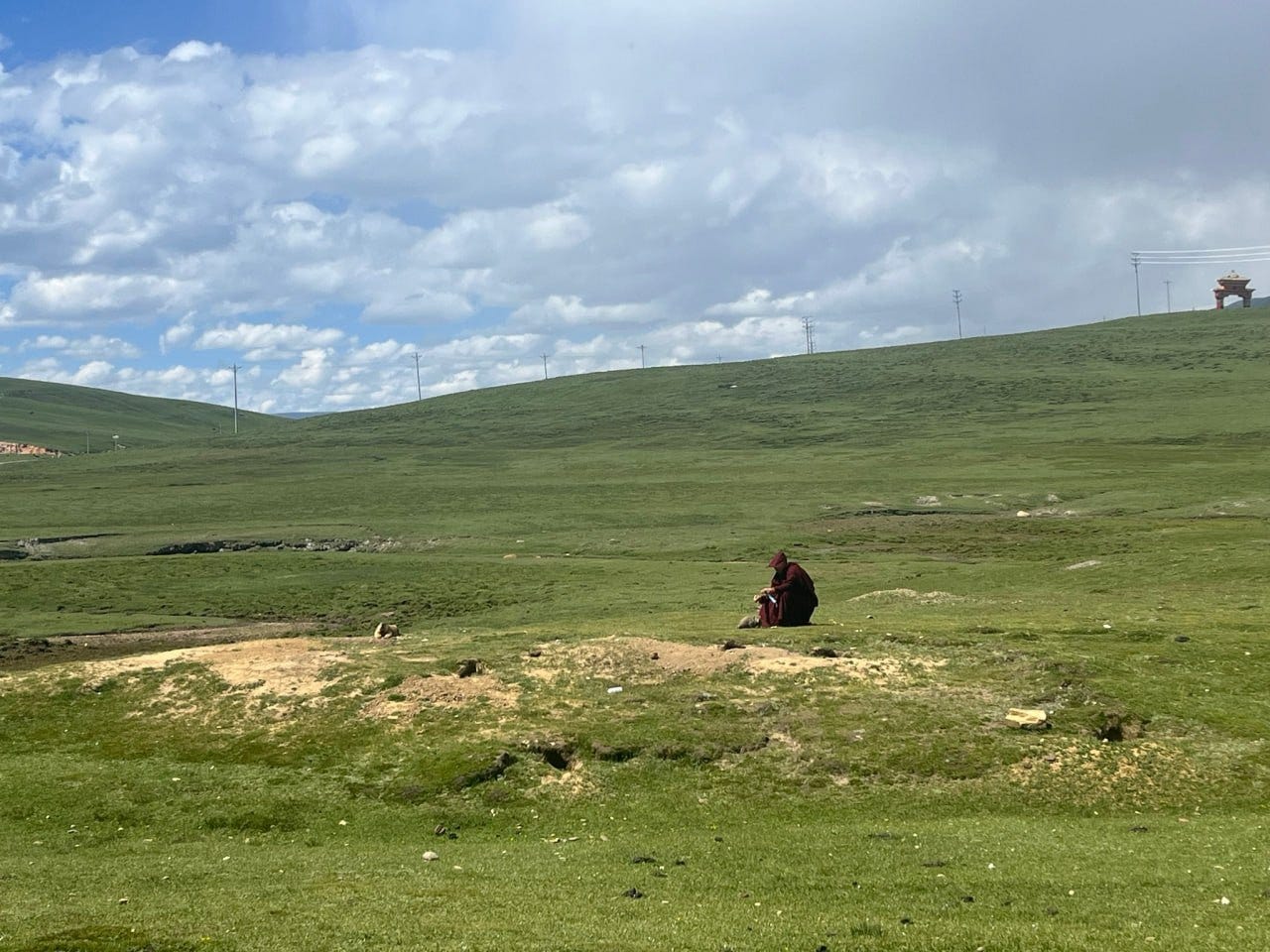
藏传佛教的活佛转世制度,从十三世纪第二世噶玛巴开始,到今天已经七百多年了。其根基立在佛教的轮回观与菩萨乘愿再来之上。高僧圆寂前留下预言,弟子们透过观湖、密访、打卦、辨认遗物、询问护法,最后由高僧大德依宗教仪轨确认转世灵童。达赖喇嘛世系始于第一世根敦珠巴,第三世索南嘉措于1578年在仰华寺会见蒙古土默特部俺答汗,获赠达赖尊号。整套体系从根上讲,合法性的来源是佛法、是教义、是藏地人民的信仰,从来不在哪一个尘世政权的玺印上。
The Tibetan Buddhist tradition of recognizing reincarnated lamas, or tulkus, began in the thirteenth century with the Second Karmapa, Karma Pakshi, and has continued for more than seven hundred years. Its foundations rest on the Buddhist understanding of rebirth and on the Mahayana belief that enlightened beings choose to return to this world out of compassion for all living beings. Before a revered lama passes away, he may leave behind prophecies. His disciples then set out to find his successor through a range of practices: gazing into sacred lakes for visions, conducting discreet inquiries in communities near and far, consulting oracles, presenting a young child with objects that once belonged to the deceased lama, and seeking guidance from protective deities. Final confirmation comes from senior religious figures acting in accordance with established ritual procedure. The Dalai Lama lineage traces back to the First Dalai Lama, Gendun Drup. The Third Dalai Lama, Sonam Gyatso, traveled to Yanghua Monastery in 1578, where he met Altan Khan of the Tümed Mongols and received the honorific title “Dalai,” meaning “ocean” in Mongolian. At its core, this entire tradition draws its legitimacy from Buddhist teaching, doctrine, and the faith of the Tibetan people. It has never depended on the seal of any worldly government.
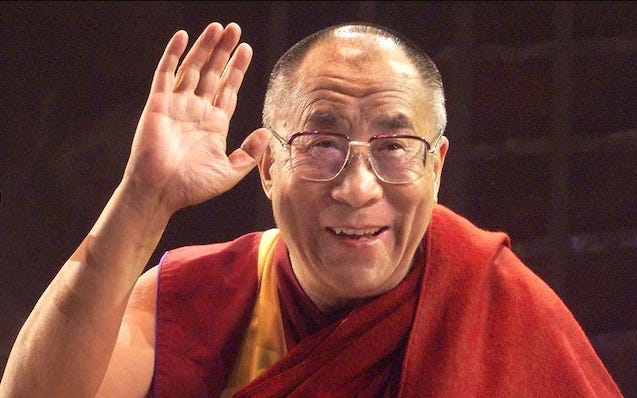
今天围绕十四世达赖喇嘛尊者转世的争论,主要就是以下三点。第一,宗教事务的归属之争:教内仪轨与世俗主权,谁说了算。第二,历史叙事的解释之争:西藏在元、明、清、民国、中华人民共和国之间,究竟处于什么样的法理位置。第三,现实政治的角力:中共需要“自己的达赖”来加固对藏地的合法性叙事。
The current controversy surrounding the reincarnation of the Fourteenth Dalai Lama centers on three separate but related disputes. The first is a question of jurisdiction: when religious procedure and state authority come into conflict, who has the final say? The second concerns the interpretation of history: what was Tibet’s actual legal and political relationship with the successive governments of China, from the Yuan and Ming dynasties through the Qing, the Republic of China, and the People’s Republic? The third is simply a contest of political power: the Chinese Communist Party needs its own Dalai Lama in order to reinforce the story it tells about its legitimacy in Tibet.
先说最荒谬的一条。一个党章明文规定党员不得有宗教信仰、官方哲学是辩证唯物主义的政党,今天居然要决定谁能转世,谁如何转世。这件事本身,已经荒谬到近乎黑色幽默。一个不相信来世的人,居然要替全体藏人决定菩萨化身投生何处。真是滑天下之大稽。马克思的著作里,也没有哪一句写过:共产党拥有管理投胎的权力。既然如此想要寻找转世,不如找找毛泽东邓小平江泽民的转世,顺便还能帮助习近平总书记解决下接班人问题。
Start with the most glaring absurdity. Here is a political party whose own charter explicitly prohibits members from holding religious beliefs and whose official governing philosophy is dialectical materialism. Yet this very party now claims the authority to determine who may be reincarnated and under what conditions. The situation borders on dark comedy. A group of people who do not believe in any afterlife has appointed itself the arbiter of where a bodhisattva’s consciousness will next take birth, acting on behalf of an entire people. Nothing in the collected works of Karl Marx contains so much as a sentence suggesting that a Communist Party holds authority over the process of death and rebirth. If the Party is so intent on locating living reincarnations, perhaps it should begin by searching for the reincarnations of Mao Zedong, Deng Xiaoping, and Jiang Zemin. That effort might even help General Secretary Xi Jinping resolve his own succession problem.
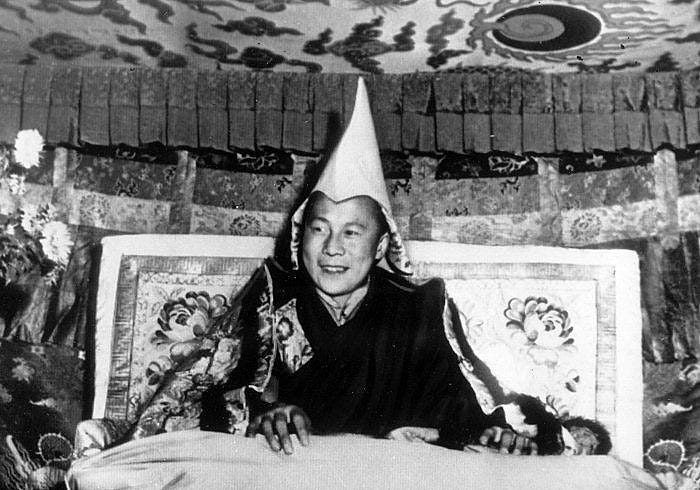
再说史料。中共论证「中央政府对达赖转世有最终决定权」时,第一条是1252年蒙哥汗赐噶玛拔希金边黑帽。可蒙哥是蒙古大汗,他治下还没有现代意义上的「中国」,也没有所谓的「中央政府」。把蒙古帝国和藏传佛教之间的施主—僧侣关系直接论证为今天北京对西藏宗教事务的主权依据,本质上是一种后来的政治叙事,而不是历史事实。第二条是乾隆设立的金瓶掣签。然而十四位达赖喇嘛尊者里只有第十、十一、十二世是经金瓶掣签产生的。这三位分别在二十岁、十七岁、十九岁圆寂,藏地史述普遍认为他们死于是政治毒杀。其余十一位达赖喇嘛,包括伟大的五世和当今第十四世,都没有经过金瓶掣签。一个总共只实施过三次、而且三次都伴随巨大争议的制度,今天却被奉为「必须坚持的历史定制」,是“祖宗之法不可变”,这是选择性使用历史。北京总说「绝无国外寻访转世先例」,可第四世达赖云丹嘉措本人就出生在蒙古土默特部,是俺答汗的曾孙。那一片土地在他出生时是独立的蒙古政治实体,与明朝之间只有羁縻朝贡关系,根本谈不上明朝的行政管辖。也足以说明,所谓“转世必须由中央政府批准”的说法,并不是藏传佛教自身传统。
Now for the historical record. When the Chinese Communist Party argues that the central government holds ultimate authority over the Dalai Lama’s reincarnation, its first piece of evidence is the claim that Möngke Khan bestowed a gold-trimmed black hat upon Karma Pakshi around 1252. But Möngke Khan was the Great Khan of the Mongol Empire. Under his rule, there was no entity that could reasonably be called “China” in the modern sense, and there was certainly no such thing as a Chinese “central government.” To take the patron-priest relationship between the Mongol Empire and Tibetan Buddhism and use it as evidence for Beijing’s present-day sovereignty over Tibetan religious affairs is not historical argument. It is a political narrative constructed after the fact.
The Party’s second piece of evidence is the Golden Urn lottery system, established by Emperor Qianlong. But of the fourteen Dalai Lamas in history, only the Tenth, Eleventh, and Twelfth were actually selected through the Golden Urn. Those three lamas died at approximately twenty-one, seventeen, and eighteen years of age, respectively, and Tibetan historical accounts widely hold that they were killed for political reasons. The remaining eleven Dalai Lamas, including the revered Fifth and the current Fourteenth, were never selected through the Golden Urn at all. A procedure that was applied in only three cases out of fourteen, and each time amid serious controversy, is now being elevated to the status of a sacred and unbreakable historical precedent. This is the selective use of history, nothing more.
Beijing also insists that there is no precedent for seeking a reincarnation outside of Chinese-controlled territory. Yet the Fourth Dalai Lama, Yonten Gyatso, was himself born in Tümed Mongolia and was the great-grandson of Altan Khan. At the time of his birth, that territory was an independent Mongol political entity. Its relationship with the Ming dynasty consisted of loose tributary ties and nothing more; the Ming exercised no administrative control over that land whatsoever. This example alone is sufficient to show that the claim that reincarnations must receive approval from a central government has no basis in Tibetan Buddhist tradition.
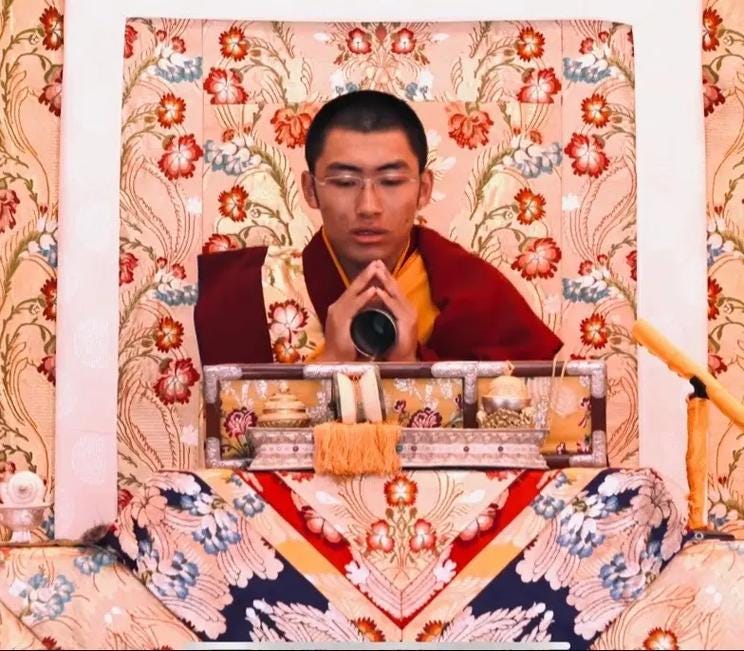
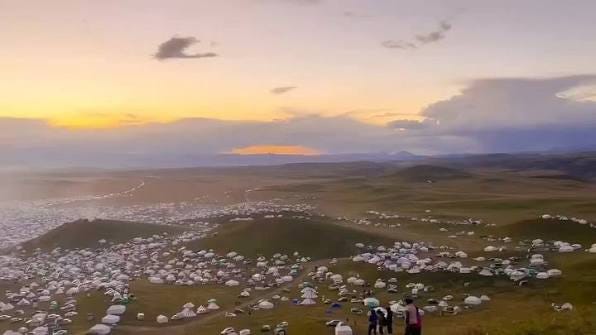
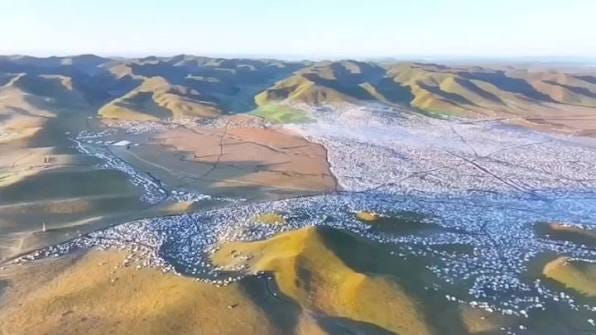
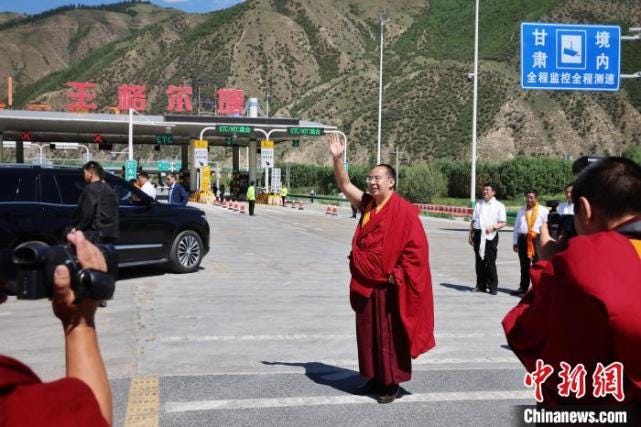
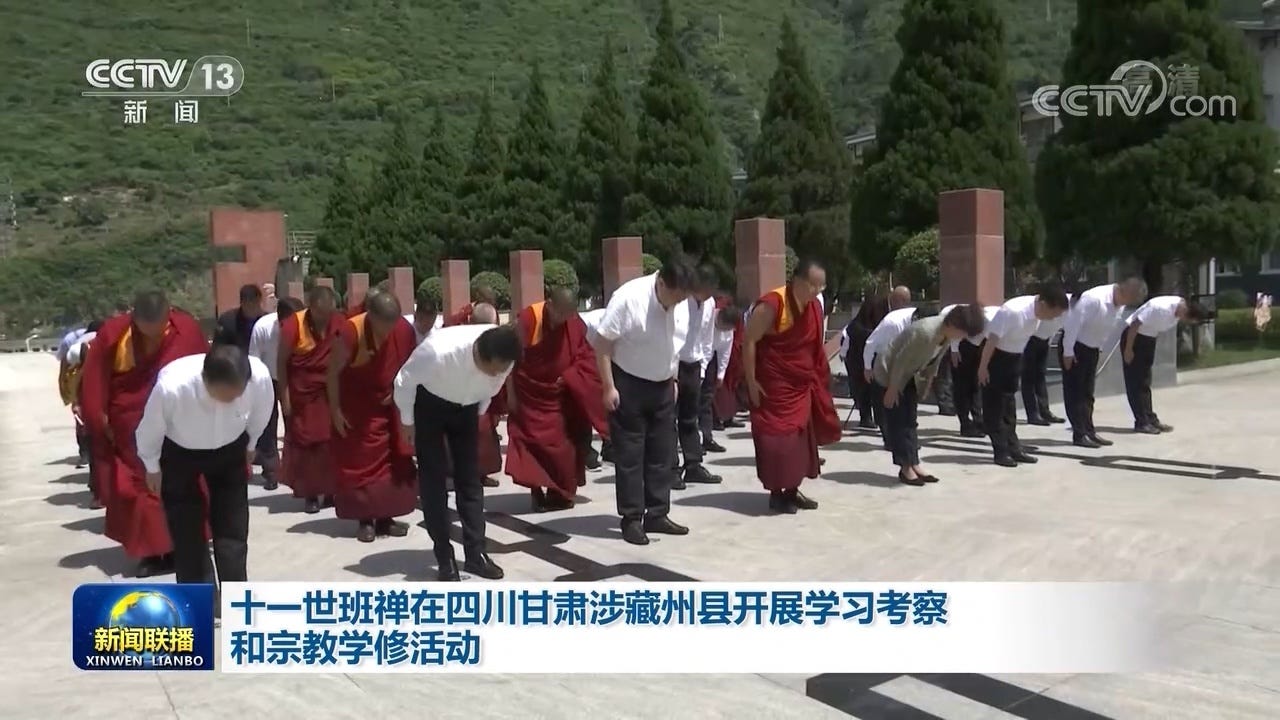
十世班禅圆寂后,达赖喇嘛尊者于1995年5月认定六岁的根敦确吉尼玛为十一世班禅,他从此消失,至今三十年下落不明。同年11月,北京方面组织金瓶掣签,确立了坚赞诺布为十一世班禅。这位「中央政府批准」的汉班禅,在藏地处于一个无比尴尬的境地。前几年第七世贡唐仓仁波切在拉卜楞寺主持法会,甘南草原上信众的帐篷绵延数里,一眼望不到头,僧俗如海。同样是在甘南、汉班禅出席活动的时候,如果不是强制要求,可能都无人到场。当然中共可以用程序立一个假的仁波切,但假的终究是假的,成不了真的。真正的信不是权力可以制造出来的。
After the death of the Tenth Panchen Lama, the Dalai Lama formally recognized six-year-old Gedhun Choekyi Nyima as the Eleventh Panchen Lama in May 1995. The boy disappeared shortly afterward, and his whereabouts have remained unknown for more than thirty years. That November, Beijing organized its own Golden Urn lottery and installed Gyaincain Norbu as the Eleventh Panchen Lama. The state-appointed Panchen Lama occupies a deeply awkward position in Tibetan religious life. A few years ago, the Seventh Gungthang Rinpoche presided over a religious assembly at Labrang Monastery. Across the grasslands of the Gannan Tibetan Autonomous Prefecture, the tents of the faithful stretched for miles in every direction, a vast sea of monks and laypeople gathered in devotion. In that same region, when the Beijing-installed Panchen Lama appears at official functions, the turnout is sparse unless attendance is compelled. A government can appoint a false rinpoche through bureaucratic procedure, but a false rinpoche remains false and cannot become true. Genuine faith is something that no political authority can manufacture.
北京最不明白的一点就在这里。它总觉得,西藏问题只是“达赖问题”。只要等十四世达赖喇嘛尊者圆寂,确立一个自己的达赖,一切就能结束。可它没意识到,真正的问题恰恰是:它从来没有真正得到过藏人的心。得其心,斯得民矣。
This is the point Beijing has never managed to understand. It believes that the problem of Tibet is, at bottom, the problem of the Dalai Lama. Once the Fourteenth Dalai Lama passes away and Beijing installs its own successor, the thinking goes, the matter will finally be resolved. What it fails to see is that the real problem is exactly this: Beijing has never truly won the hearts of the Tibetan people. Win the hearts of the people, and you win the people themselves.
一个几乎可以预见的未来:尊者圆寂之后,北京必然会推出自己的达赖喇嘛。可是藏地的僧俗大众绝不会认可他。即便有寺院被迫表态接受,那种被迫本身就是下一轮长期对抗的种子。这只是把过去三十年的班禅模式做一遍复制。中共在涉藏问题上选择的从来都是下下策。

The outline of future events is easy enough to trace. After the Dalai Lama passes away, Beijing will certainly put forward its own candidate. The monks and laypeople of Tibet will not accept him. Even if some monasteries are compelled to publicly endorse the choice, the coercion itself will plant the seeds of the next long cycle of resistance. This would be nothing more than a repetition of the Panchen Lama pattern, replayed over the next three decades. In its approach to Tibet, Beijing has consistently chosen the worst available path.
由此,我们也能看到北京的恐惧,它太害怕一个自己无法控制的东西。宗教让极权恐惧的就是:它不依赖枪、不依赖党组织任命。它存在于人的内心。而人心,从来都不是坦克能彻底征服的东西。
All of this reveals something essential about the nature of Beijing’s fear. It is terrified of anything it cannot control. What makes religion so unsettling to authoritarian regimes is precisely this quality: it does not depend on guns, on official documents, or on appointments handed down by the state. It lives in the human heart. And the human heart has never been something that tanks can fully conquer.
藏传佛教的转世制度,经历了蒙古大汗、满清皇帝、民国政府的兴衰,至今仍在运行。这个制度比中华人民共和国年长七百年,比中国共产党年长六百多年。一个本质上并不稳定的极权政权,其实没有想象中那么强大。它看起来无所不能,但恰恰因为恐惧,才想控制一切。可有些东西是控制不了的。比如信仰、比如记忆、比如一个民族心里真正认同谁。天视自我民视,天听自我民听。民心所向,才是未来的方向。藏地的命运终将由藏人自己决定。
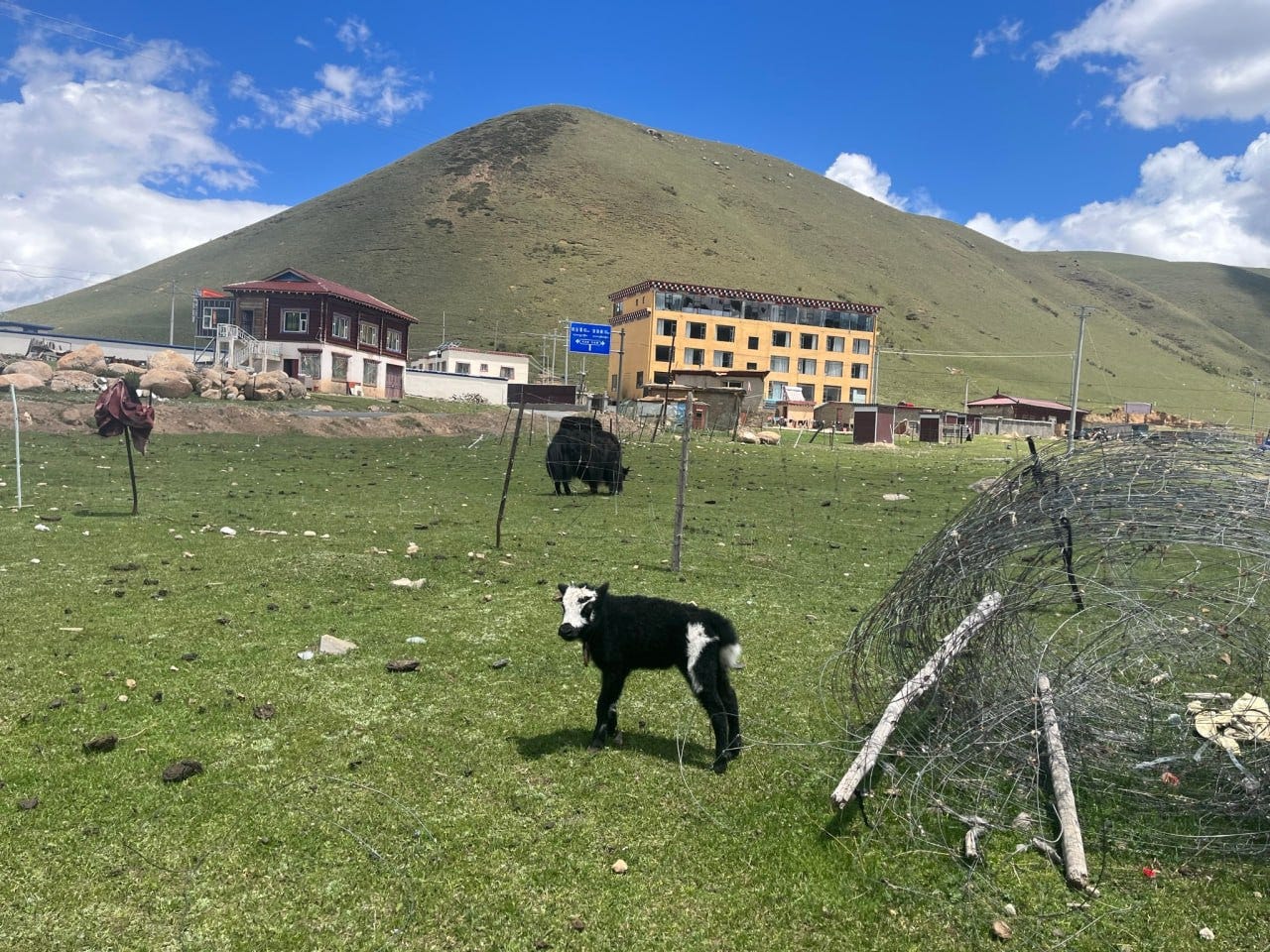
The Tibetan Buddhist tradition of recognizing reincarnated lamas has survived the rise and fall of the Mongol khans, the Qing emperors, and the Republican government of China. This tradition is seven hundred years older than the People’s Republic of China and more than six hundred years older than the Chinese Communist Party itself. A fundamentally unstable authoritarian regime is not, in the end, as powerful as it appears. It looks omnipotent precisely because it is afraid, and because it is afraid, it seeks to control everything. But some things cannot be controlled: faith, memory, and the question of whom a people truly recognize as their own. Heaven sees as the people see; Heaven hears as the people hear. The direction of the people’s hearts is the direction of the future. The fate of Tibet will ultimately be decided by the Tibetan people themselves.
以上
相关阅读:

达赖喇嘛新书《为无声者发声》书摘 Excerpts from Voice for the Voiceless

2025年3月11日,尊者发布新书《为无声者发声》。继《我的土地 我的人民》和《流亡中的自由》之后,这是他第三本自传类书籍,详细记录了自图博被中共非法占领以来,他在印度建立流亡政府及推动民主改革的历程,与中共的对话过程,对过去的反思与未来的展望,以及对华人的呼吁。
