


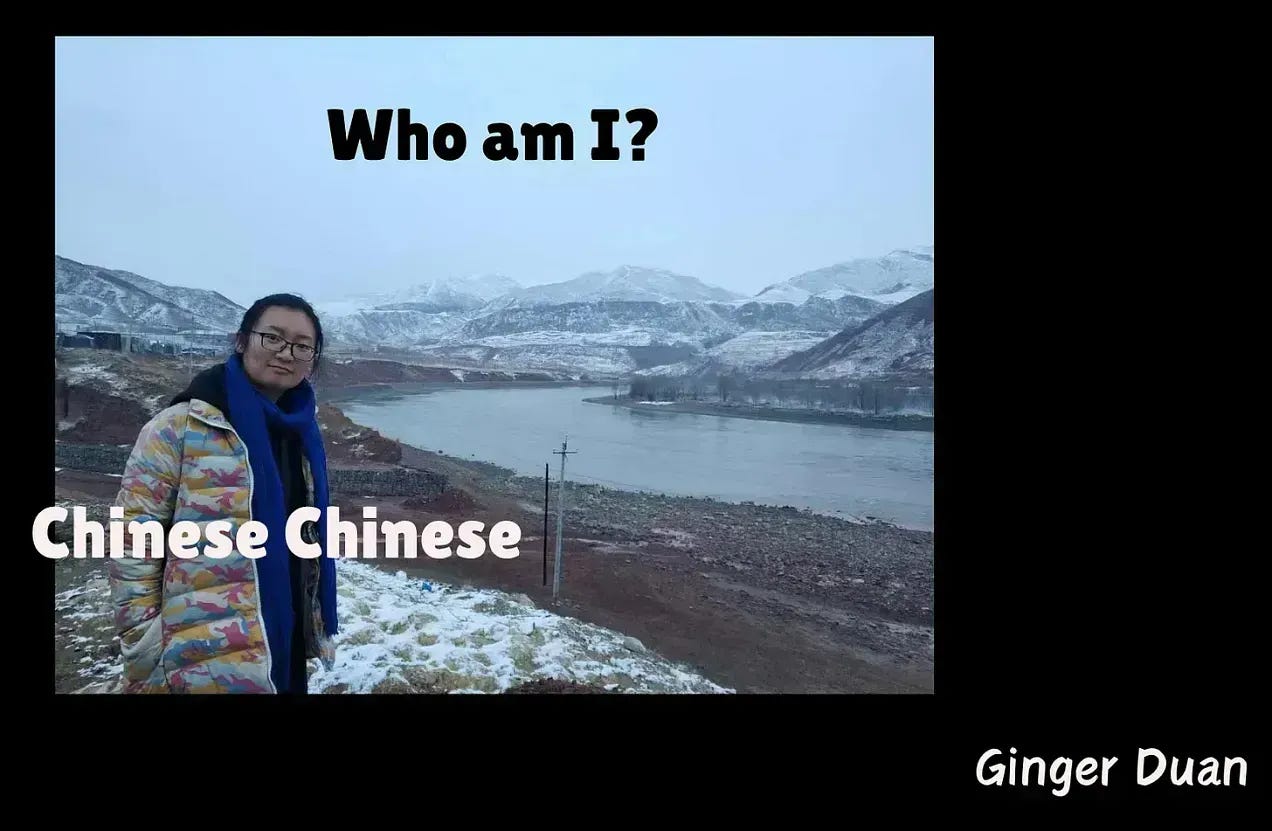
Adapted from a talk and Q&A given by Ginger Duan, founder of Chinese Youth Stand for Tibet, at a June 2026 conference in Dharamshala at the International conference on Sino-Tibet Relations.
Who I Am
I am Chinese, not Taiwanese or Hongkonger. I was born and raised in mainland China, in Yunnan, an ethnically diverse province bordering Tibet. Growing up, I was surrounded by people from many different cultures and religions, so I learned early that different communities see the world in different ways. It wasn’t until I went to college near Shanghai that I realized my perspective differed from those of many of my peers from China’s largest cities. Looking back, that difference shaped everything that followed.
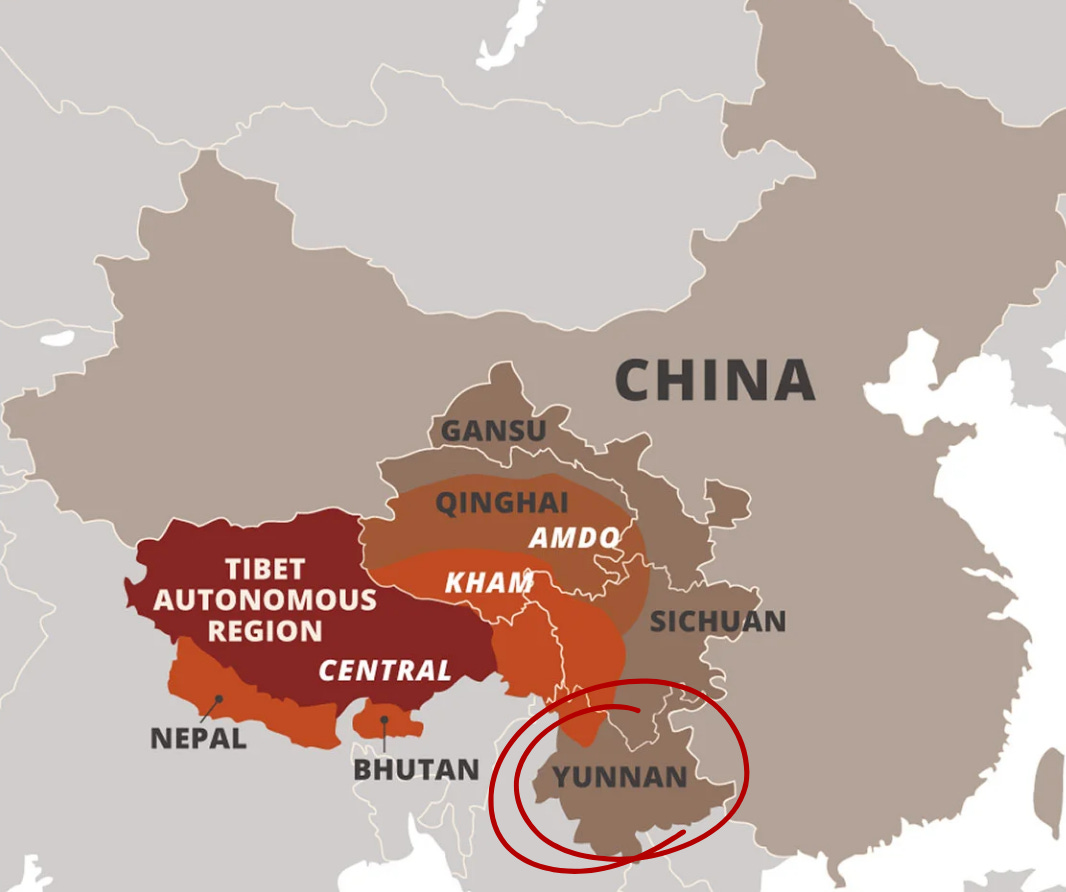
My Time Teaching in Tibet
My journey with Tibet began in 2018, when I taught at Jigme Gyaltsen School in Golok, Amdo, in eastern Tibet. I wasn’t a political science student or an activist—I studied science and technology and had started a small computer business when I was young.
Officially, I helped the digital archive setup in the school library. In practice, I became the school’s IT specialist, helping teachers and students troubleshoot laptops, phones, and other devices. I kept office hours, and those everyday interactions gave me something few outsiders ever experience: the chance to build genuine relationships and have long conversations with Tibetan teachers about their lives.
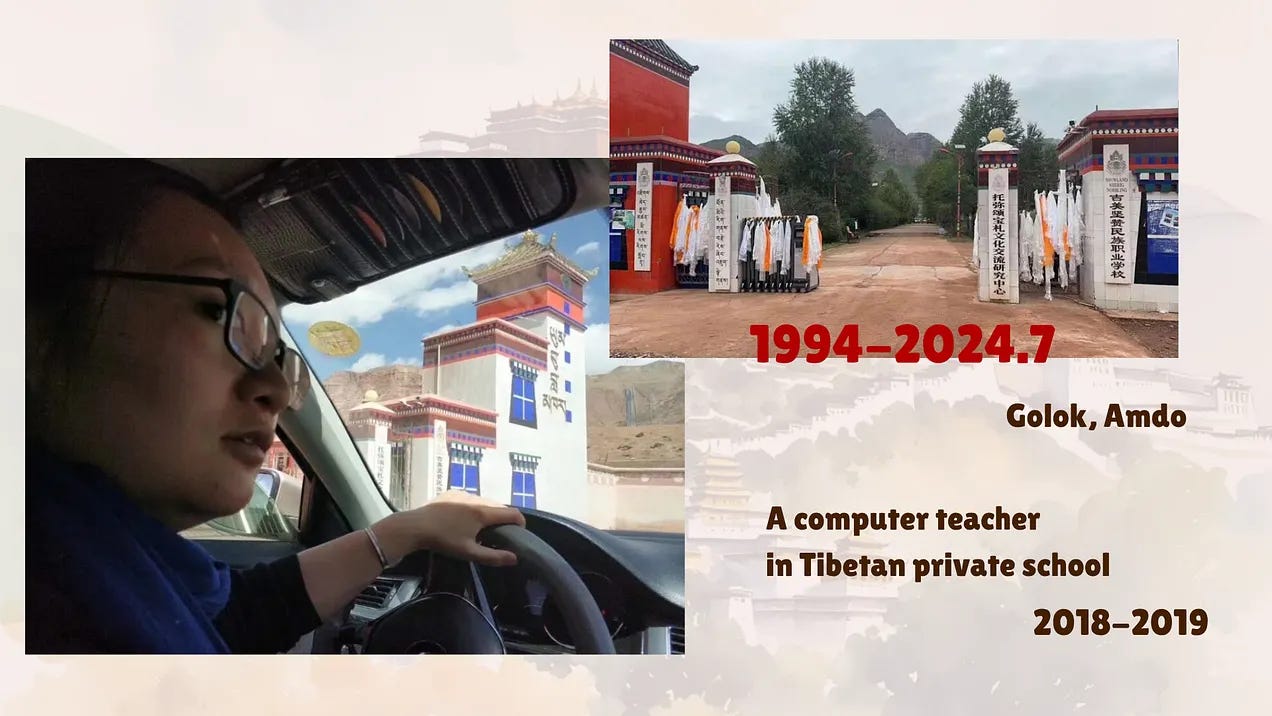
Living in Tibet changed me.
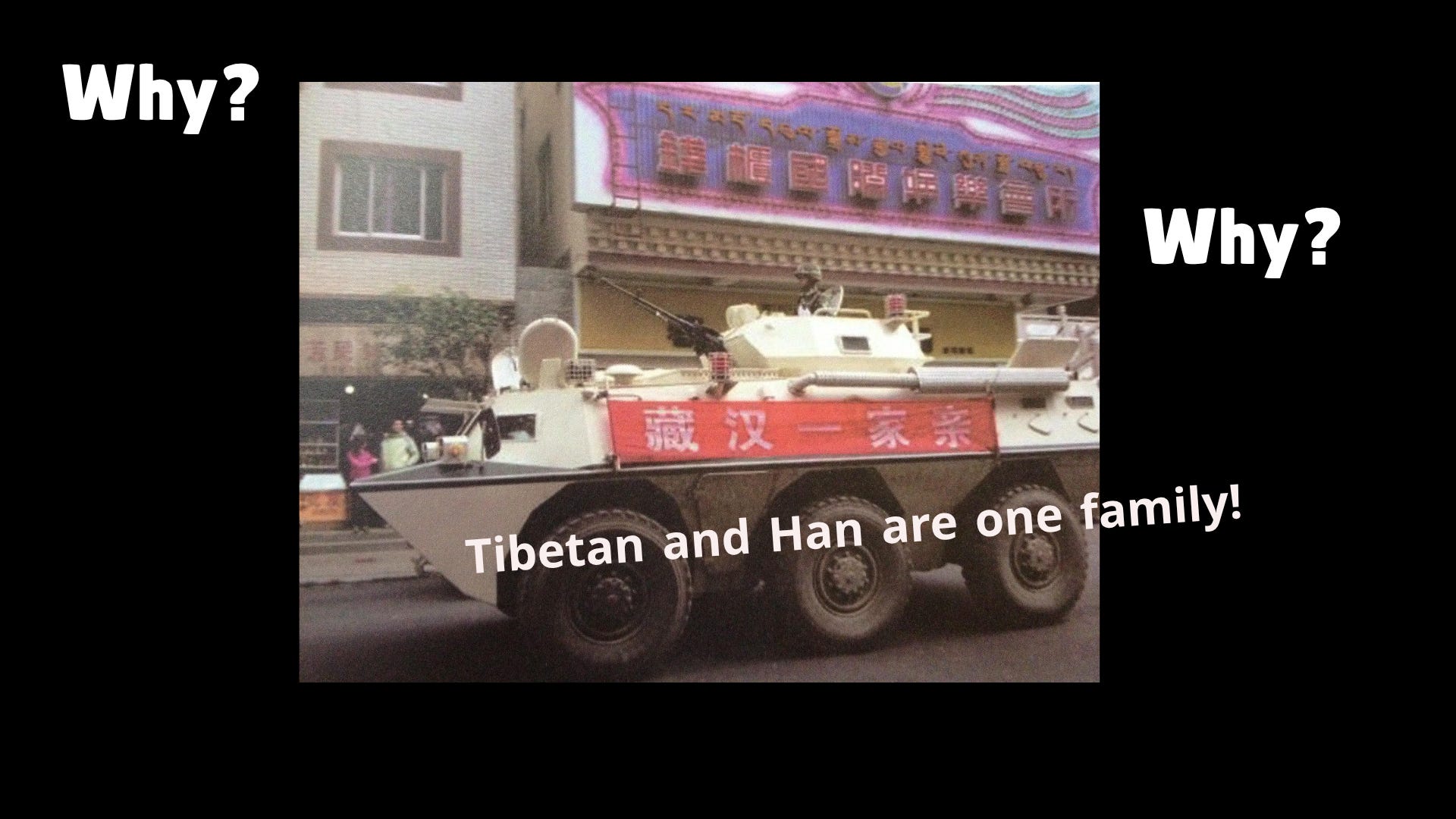
Passing through checkpoints became part of daily life. I witnessed the Chinese government discourage teachers from using the Tibetan language in classrooms. The government insists that “Tibetans and Han Chinese are one family,” yet those slogans often appeared alongside tanks deployed to intimidate and control Tibetan communities. Seeing those contradictions firsthand left me deeply unsettled.
One encounter has never left me. Because I loved photography, a police officer decided I looked suspicious. At a checkpoint, he searched my phone and interrogated me. I was only 22 years old and terrified. I spoke loudly in standard Mandarin, trying to prove I wasn’t local Tibetan and wasn’t a threat. Even then, I understood that my ability to do that was a privilege—and I still feel guilty about it.
The Information Vacuum
People often ask why I support Tibet. For a long time, I asked myself the same question. Something I witnessed there felt profoundly wrong, even if I couldn’t yet explain why. I became determined to understand what was really happening.
Inside China, that wasn’t easy.
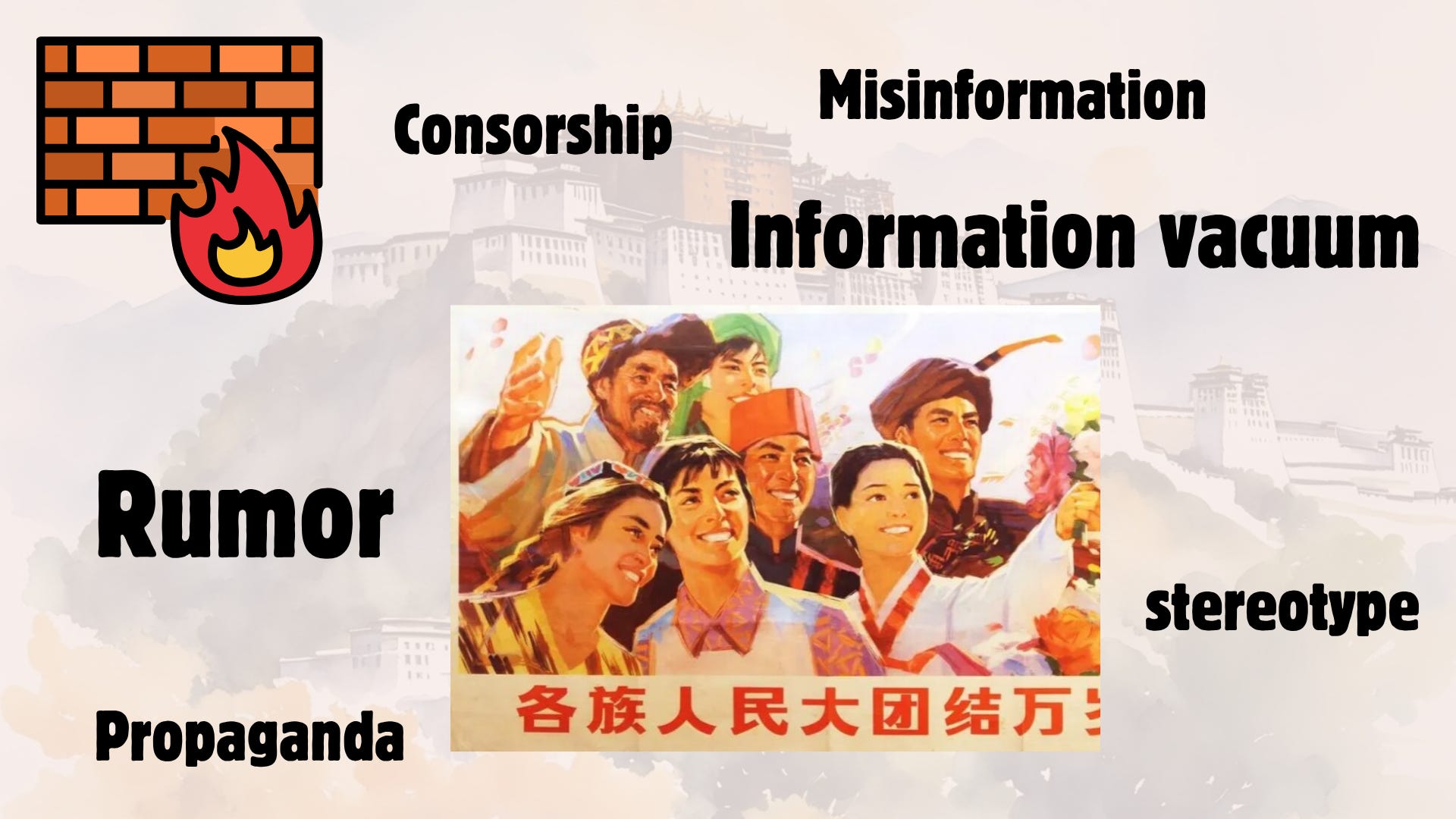
Everyone has heard of the Great Firewall, but censorship surrounding Tibet is especially severe. Search for information about Tibet on the Chinese internet, and you find almost nothing. Even with a VPN and access to Google, I struggled to verify basic facts.
I began talking to friends who worked in Tibet and other ethnic regions. What I found was an information vacuum filled with rumors. Reliable fact-checking on ethnic policy simply doesn’t exist in the Chinese internet. Instead, the official narrative is repeated over and over: 56 ethnic groups, one harmonious family, building a prosperous country together.
What I witnessed in Tibet told a very different story.
Anchor Reports
After moving to the United States, I realized I couldn’t simply walk away. I wanted to do something meaningful for Tibetans, so I began writing educational posts in Chinese on social media.
One of our earliest projects focused on Gyalo Thondup. When he passed away, there was almost no substantive Chinese-language coverage explaining who he was or why he mattered. We decided to write what we call an “anchor report.”
The idea is simple. When people are searching for reliable information and none exists, someone has to create the first trustworthy reference point. We hoped that by documenting Gyalo Thondup’s life in Chinese, we could encourage more informed conversations about Tibet and Sino-Tibetan relations.
The Noodle Maker of Kalimpong Has Passed – In Memory of Dalai Lama’s Second-oldest Brother, Gyalo Thondup

Gyalo Thondup (5th Nov. 1928~8th Feb. 2025)
Our work became much more personal last summer.
My collaborator and the primary author of this Gyalo Thondup article, Tara Zhang Yadi, was arrested after returning to China from France, where she had been studying. She had gone home to visit her family, reunite with friends, and celebrate her 22nd birthday.
She remains in custody today.
At the time, we were inexperienced activists. We had no idea how severe the consequences could be. Tara had spent more than a year helping edit our work. She is a deeply thoughtful Buddhist who never advocated for Tibetan independence, yet she was accused of “separatism” anyway.
That experience changed how we thought about our work. It reminded us that even moderate voices seeking truthful discussion can face extraordinary risks.

Independence or the Middle Way? Not Our Question
People often ask whether we support Tibetan independence or the Middle Way approach.
Our answer surprises them: we don’t take a position.
We are Chinese-speaking advocates working to improve understanding of Tibet. Whether Tibet’s political future should be independence, the Middle Way, or something else is ultimately a decision for Tibetans—not for us. Asking me to choose between those paths is like asking someone who isn’t an American citizen whether California should become independent. It simply isn’t my decision to make.
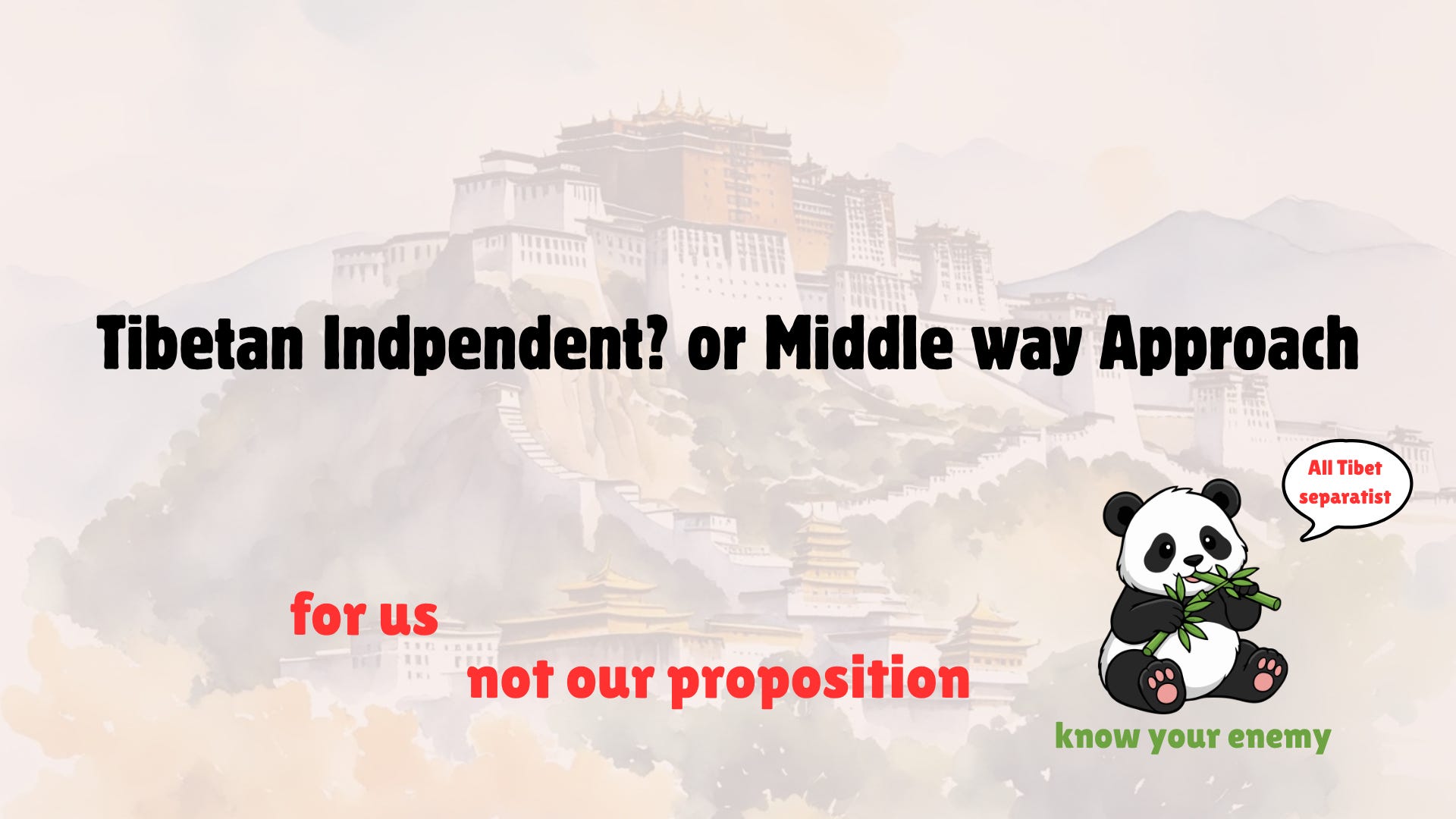
From our perspective, another reality is impossible to ignore: the Chinese government tolerates neither position. Tara never argued for independence, yet she was still charged with separatism.
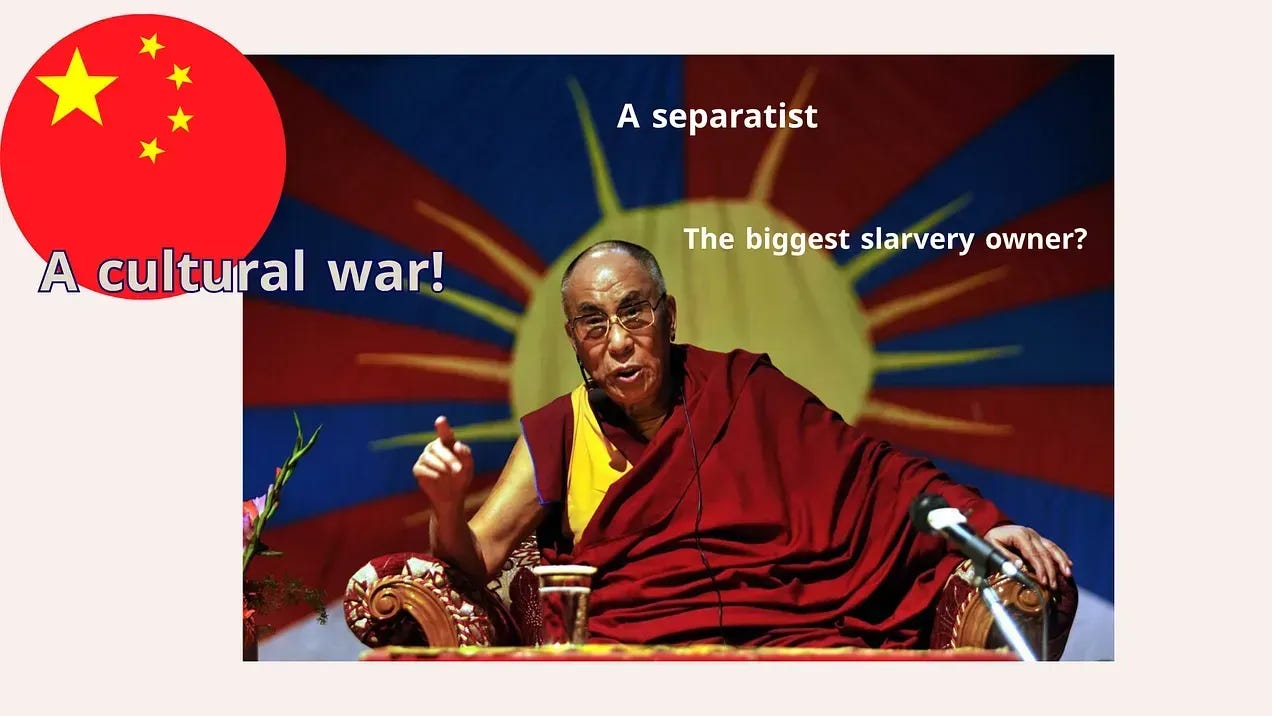
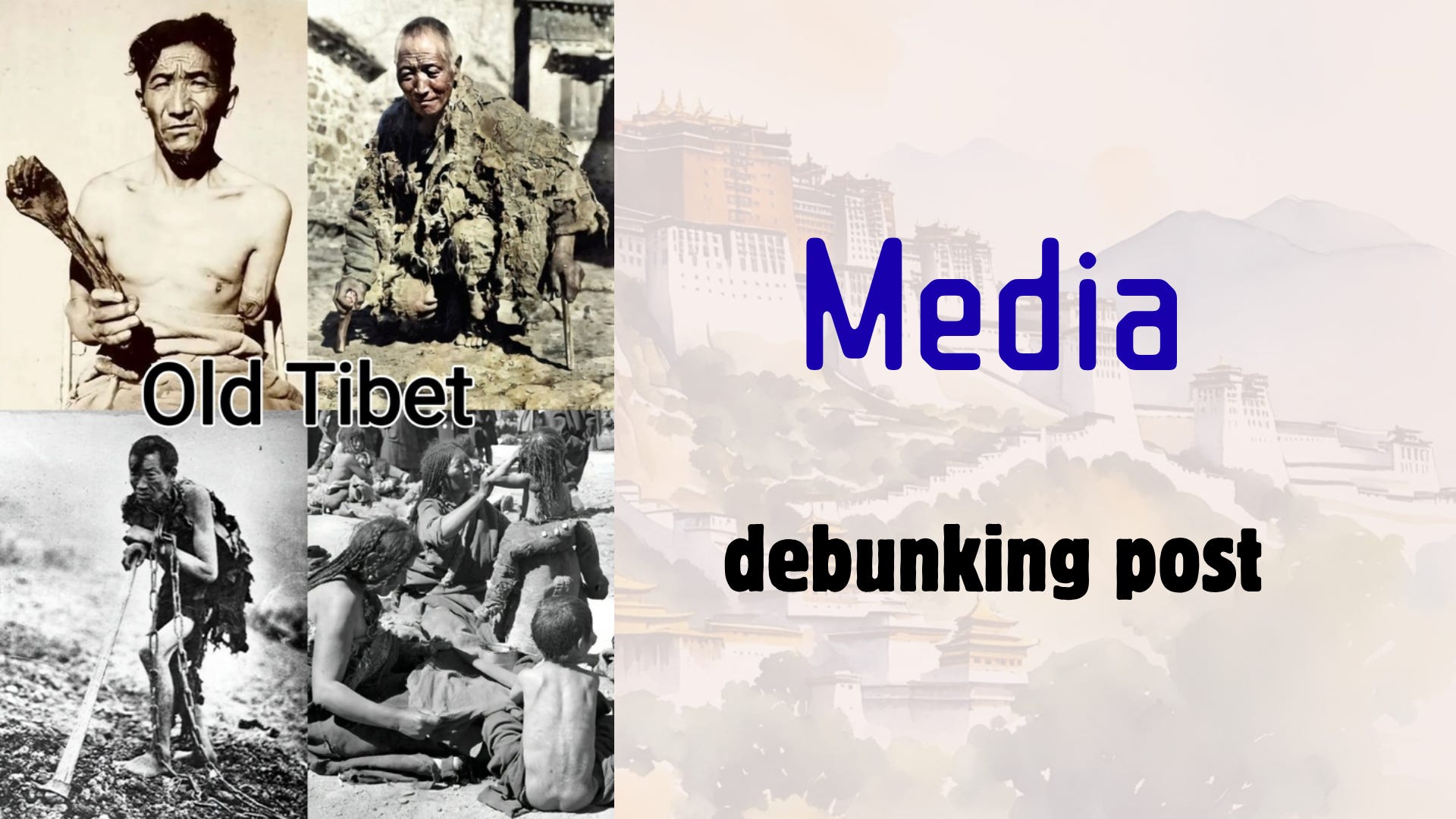
That is why we believe today’s most urgent challenge lies elsewhere. Before meaningful political conversations can happen, people need access to reliable information. Too many Chinese readers still encounter only propaganda and misinformation. Even overseas, false narratives remain widespread, including claims that His Holiness the Dalai Lama was the biggest slave owner. This is clearly a cultural war, and our efforts in this area in the past have been insufficient. We have not effectively fought back.
There is a Chinese proverb: Whoever tied the bell must untie it.
The Chinese government created this information crisis, but we believe Chinese-speaking people also have a responsibility to help address it. If we fail to engage Chinese audiences now, misunderstanding will only deepen.
That conviction led us to organize.
What We Do
Our organization brings together people from very different backgrounds who share one goal: using the Chinese language to build understanding.
Our members include Tibetans, Han Chinese, and Han Chinese members who were raised in Tibet, some former political prisoners, and journalists.
Those who are oppressing Tibetans speak Chinese. Those who attack Tibetans online speak Chinese. And the Chinese people who firmly believe the myth that Tibetans were once all “serfs” also speak Chinese. That is why using the same language is the most effective way to challenge and dismantle the misinformation and propaganda manufactured by the Chinese government.
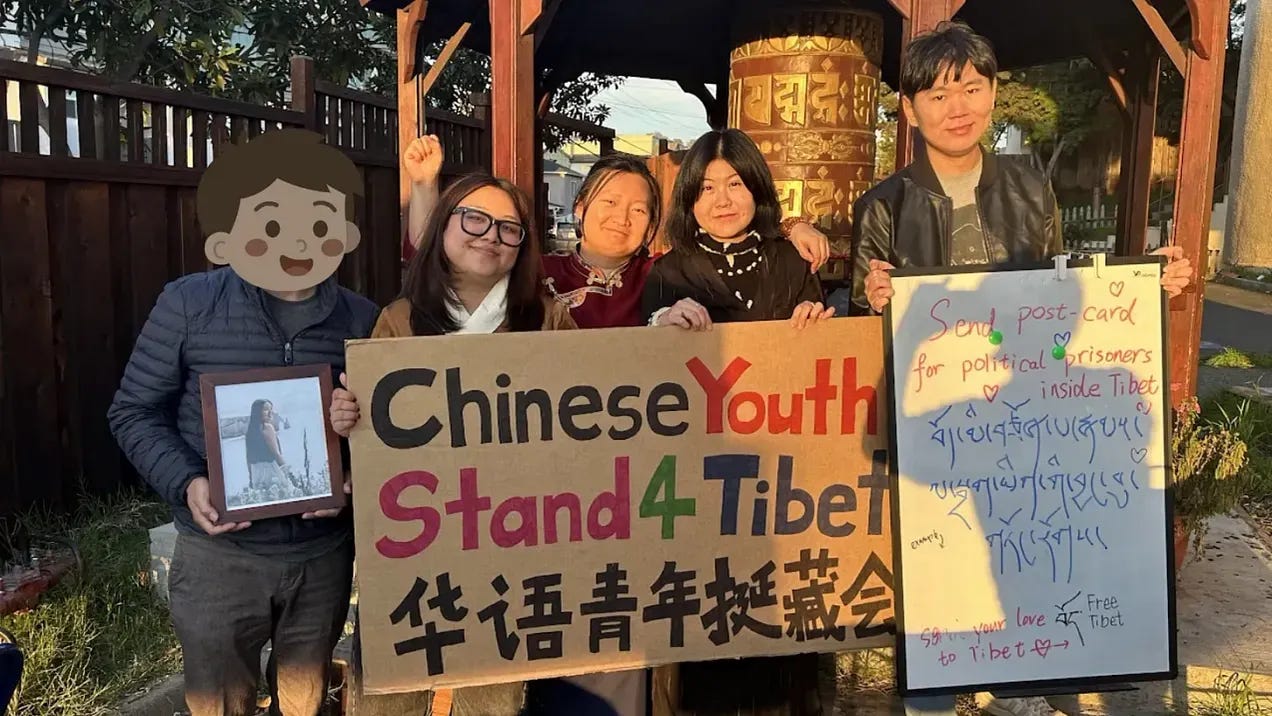
At the Northern California Tibetan community center, for example, we organized an event where volunteers wrote postcards to political prisoners in Tibet, addressed in Chinese so they could be delivered to Chinese prison.
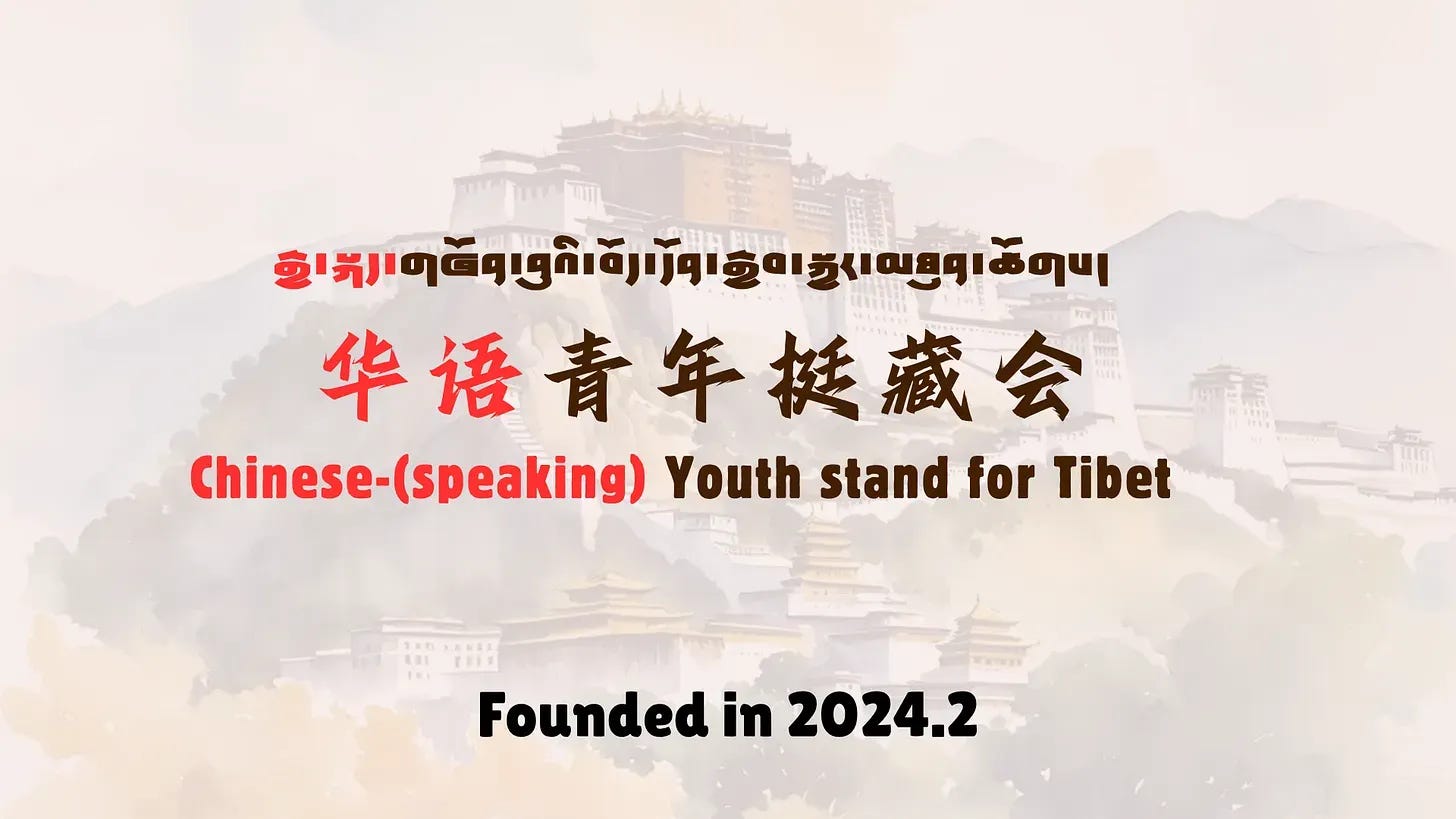
When I say “Chinese Youth Stand for Tibet,” I don’t mean “Chinese” as an ethnic identity. I mean Chinese-speaking. Language is our common tool, and we use it to reach audiences that many Tibetan organizations cannot easily reach.
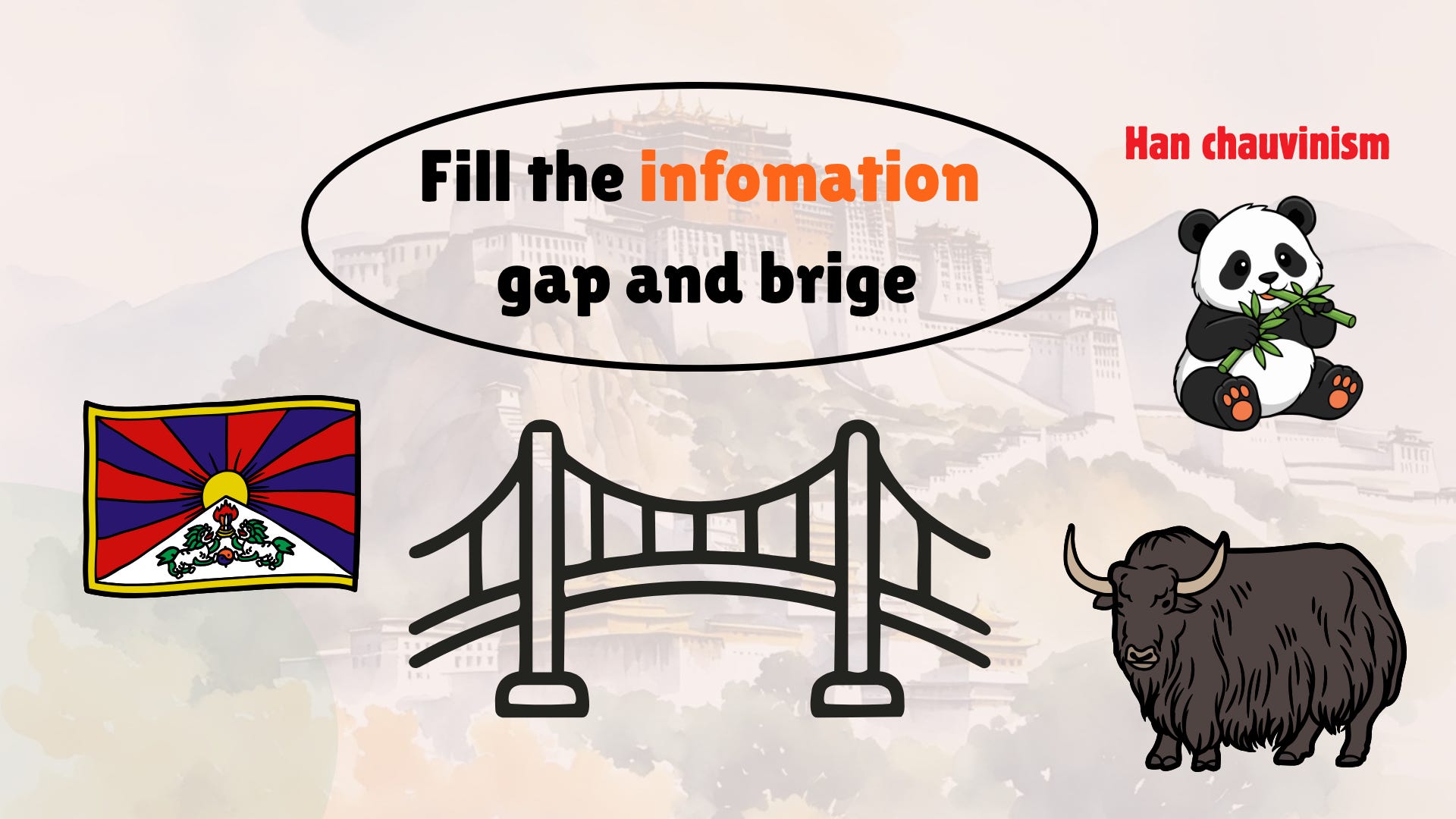
Our mission is to bridge the information gap between Chinese-speaking communities and Tibetans, both inside and outside Tibet. We also hear from Tibetans who have lost their ability to speak Tibetan but still want to reconnect with their heritage. They search online looking for reliable information about Tibet, just as I once did in Tibet. We hope our platform can help answer those questions and reconnect people with their identity and history.
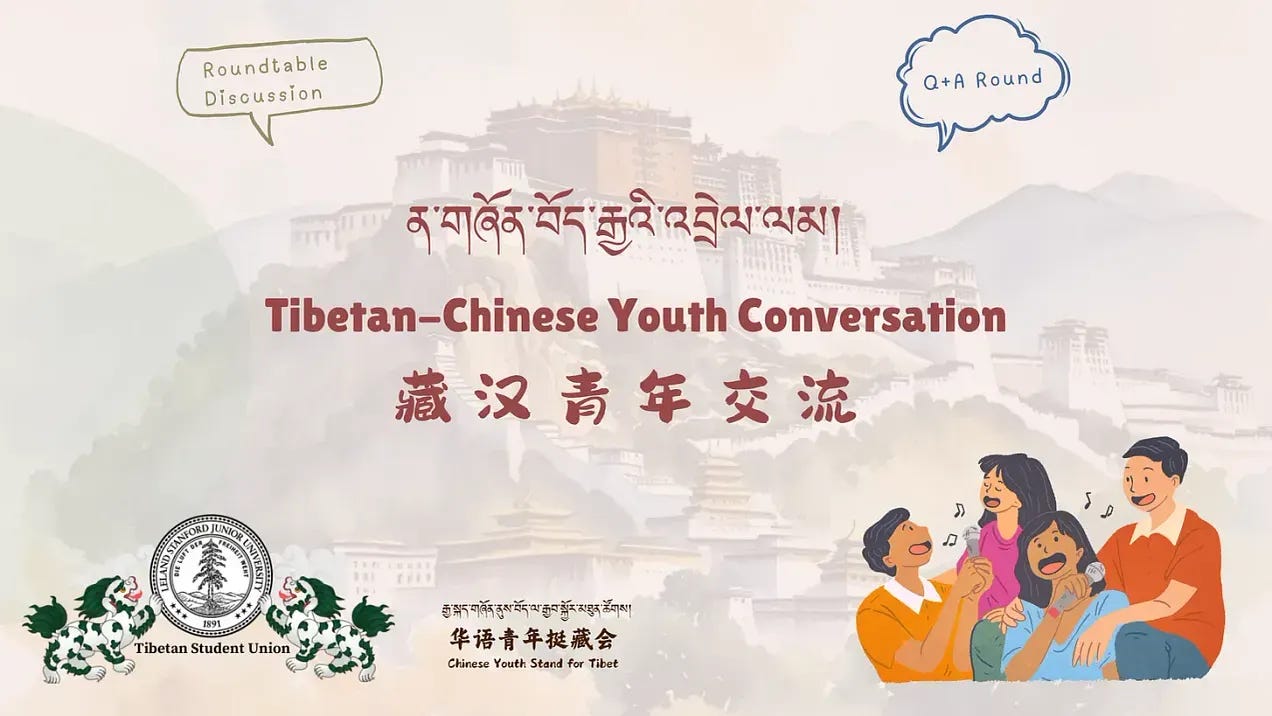
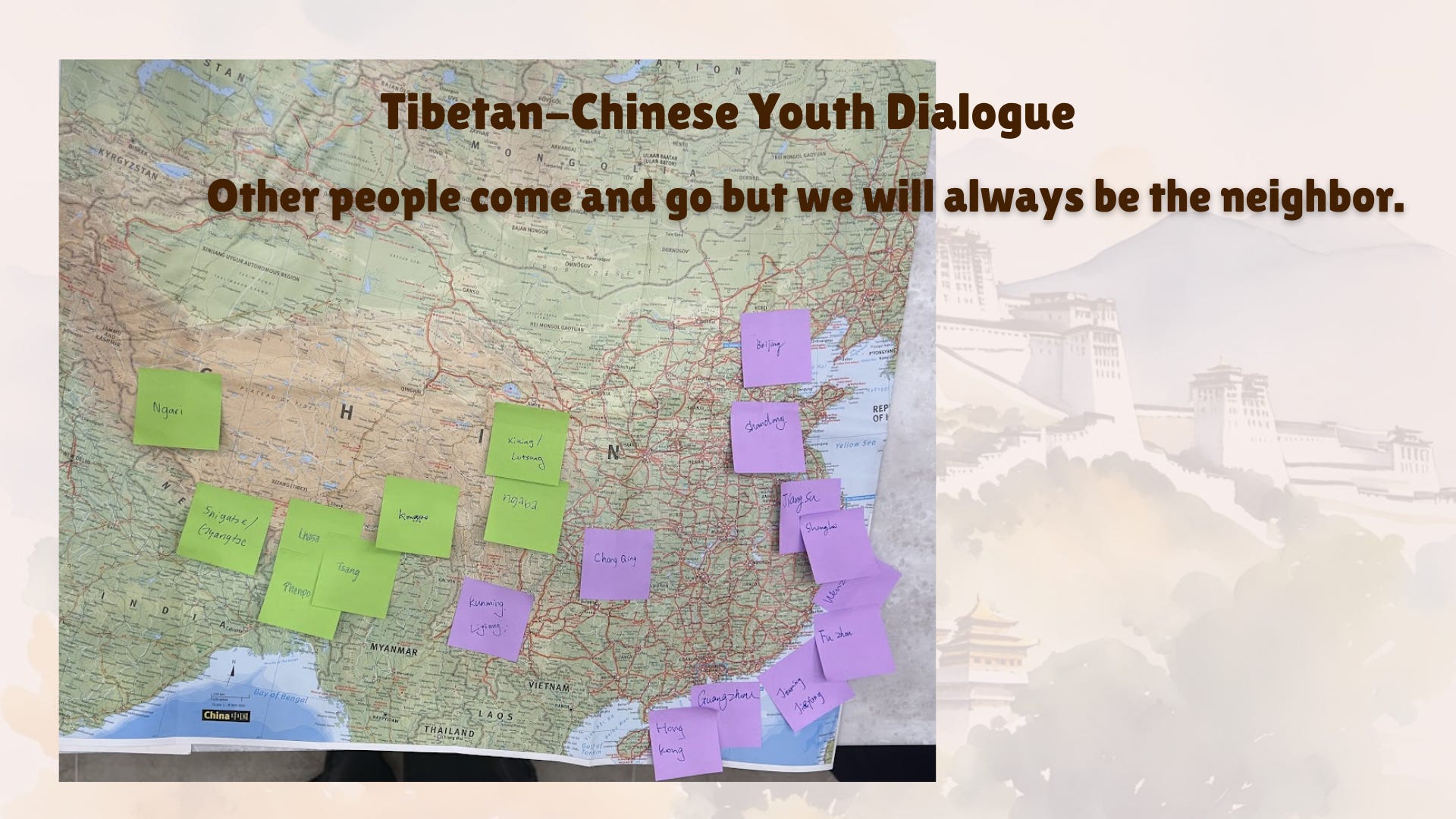
We also organize Sino-Tibetan youth dialogues. One was held at Stanford University, another at the Tibetan community center in Northern California. During one gathering, participants placed sticky notes marking their hometowns—Chinese participants in purple, Tibetans in green. Looking at the map, we were struck by how geographically close many of us had grown up.
We reached a simple conclusion: neighbors do not get to choose one another. Whatever the future holds, Chinese and Tibetans will continue living alongside each other. That makes dialogue not just worthwhile, but necessary.
Education is another major part of our work.
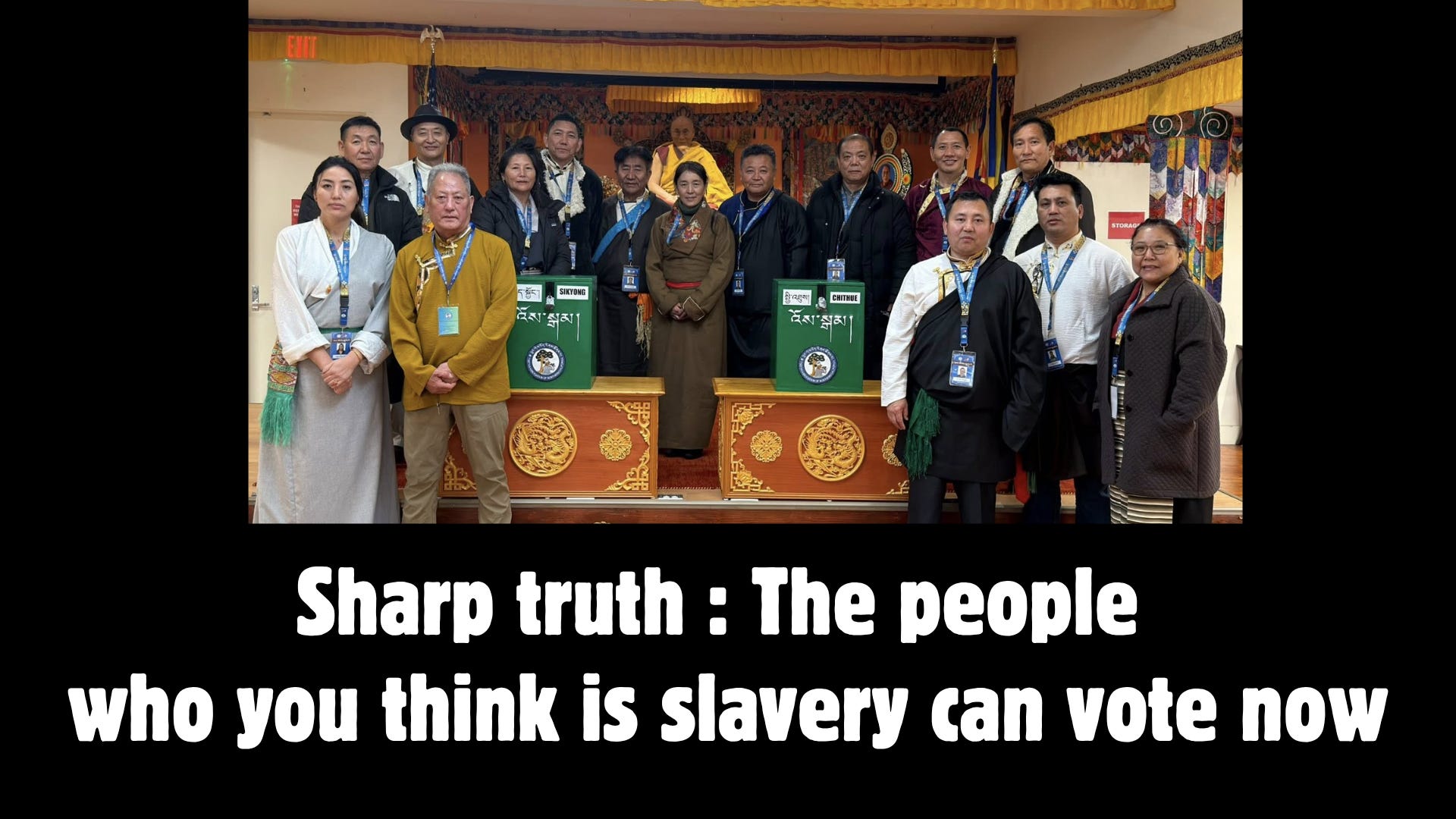
We regularly publish fact-checks and explainers that challenge common misconceptions spread through Chinese state propaganda. One of my favorite examples comes from seminars about Tibetan democracy. I often begin with a single sentence:
“The people you think are serfs can vote now.”
That line immediately captures people’s attention.
Many Chinese readers long for democracy themselves, yet still imagine Tibetans as backward or incapable of self-government. When they learn how Tibetan democratic institutions actually function well in exile, many begin questioning assumptions they had accepted for years.
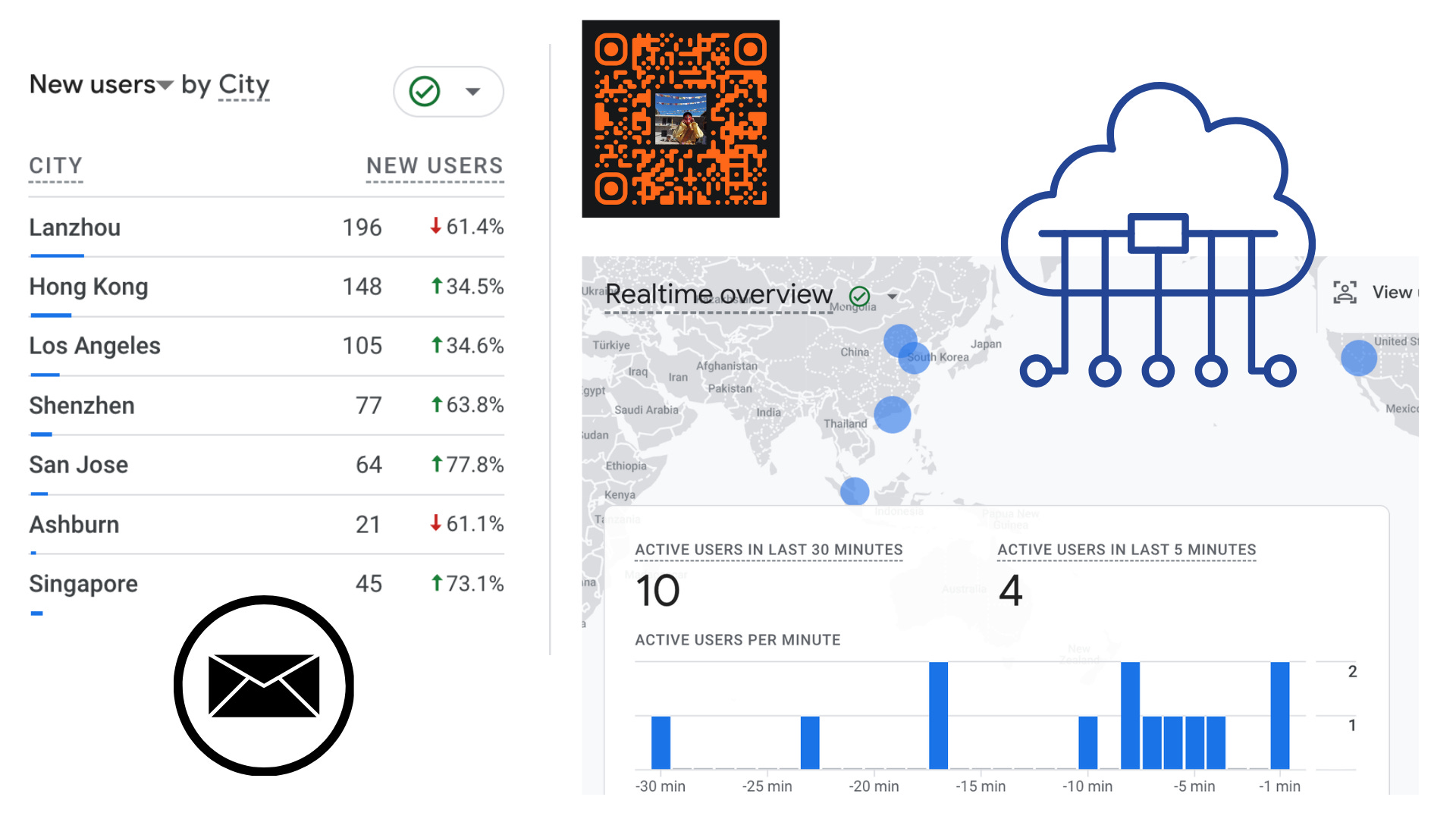
We also distribute our writing through email newsletters that can reach readers inside China despite internet censorship. Our audience includes people in Beijing, Guangzhou, Inner Mongolia, Hong Kong, East Turkestan, and even Tibet itself. Interestingly, our largest readership comes from Lanzhou, near the border of Amdo and China inland.
To us, those readers demonstrate that there is genuine curiosity inside China. Many people simply have never had access to trustworthy information about Tibet.
A Strategic Reorientation
The international movement for Tibet has achieved remarkable successes. Tibetan leaders and advocates have brought their cause to the United Nations, the European Union, the United States, and governments around the world. Today, the Tibetan flag is recognized globally, and awareness of Tibet has grown far beyond what it was a generation ago.
Those achievements matter.
But they have also highlighted a challenge that, in our view, warrants greater attention: reaching the people living under China’s rule, this include Tibetan and Chinese live inside.
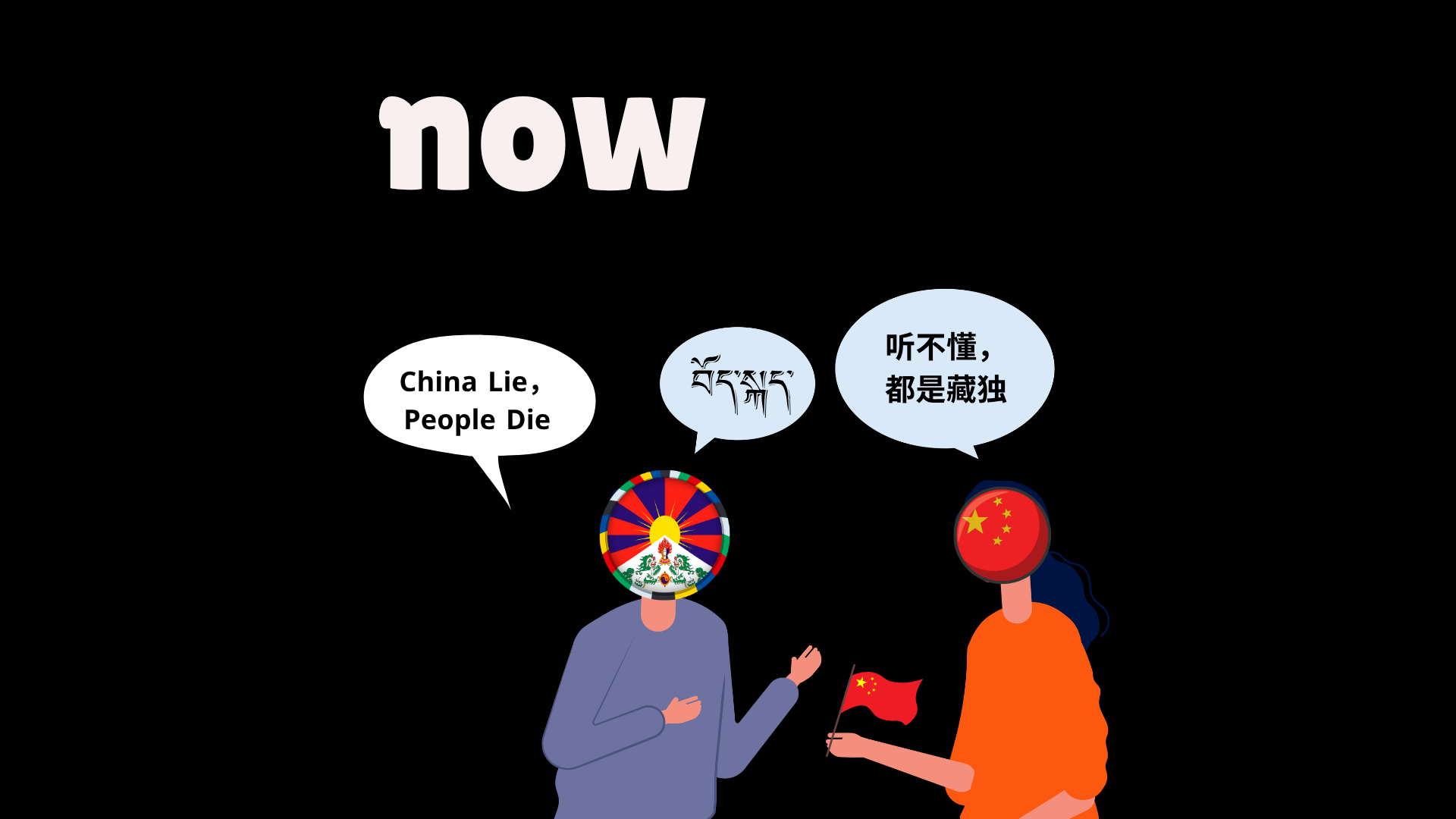
For decades, the Chinese government has shaped how its citizens understand Tibet. Most people inside China have never encountered an alternative narrative. They have been taught that Tibet was “liberated,” that all Tibetans were once serfs, and that anyone carrying the Tibetan flag must be a separatist.
If those assumptions remain unchallenged, meaningful change will be difficult.
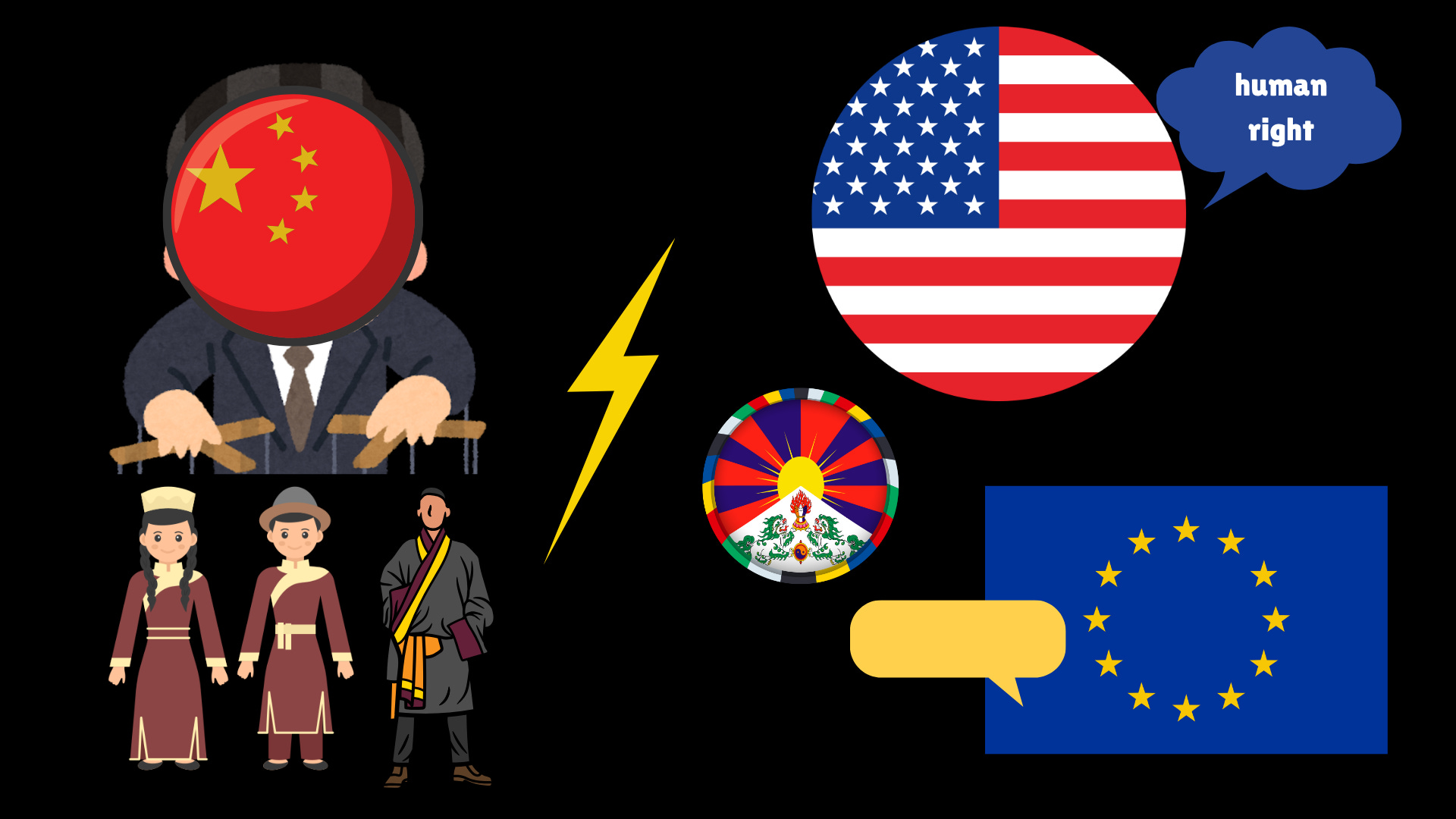
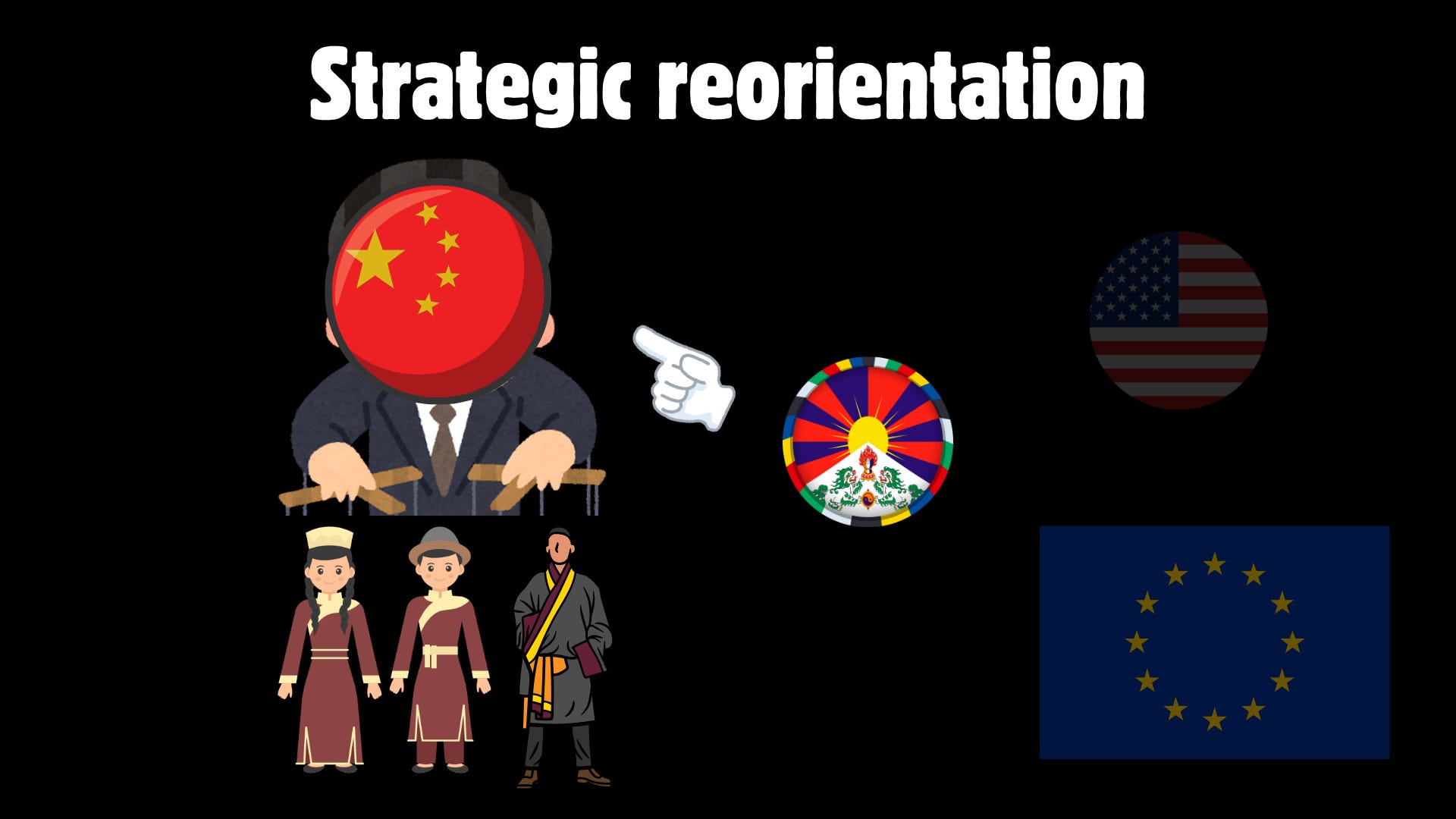
That is why we believe the next phase of advocacy must include sustained engagement with Chinese-speaking audiences.
Many demonstrations take place in English or Tibetan, which makes perfect sense for international audiences and Tibetan communities. But most people in mainland China understand neither language. If we hope to change minds there, we have to speak to people in the language they use every day.zx
That is why everything we publish is written in simplified Chinese. For most of the time we know that we are not simply translating Tibetan perspectives—we are interpreting them for readers whose political education has been shaped almost entirely by Chinese state narratives. The challenge is not only linguistic; it is cultural.
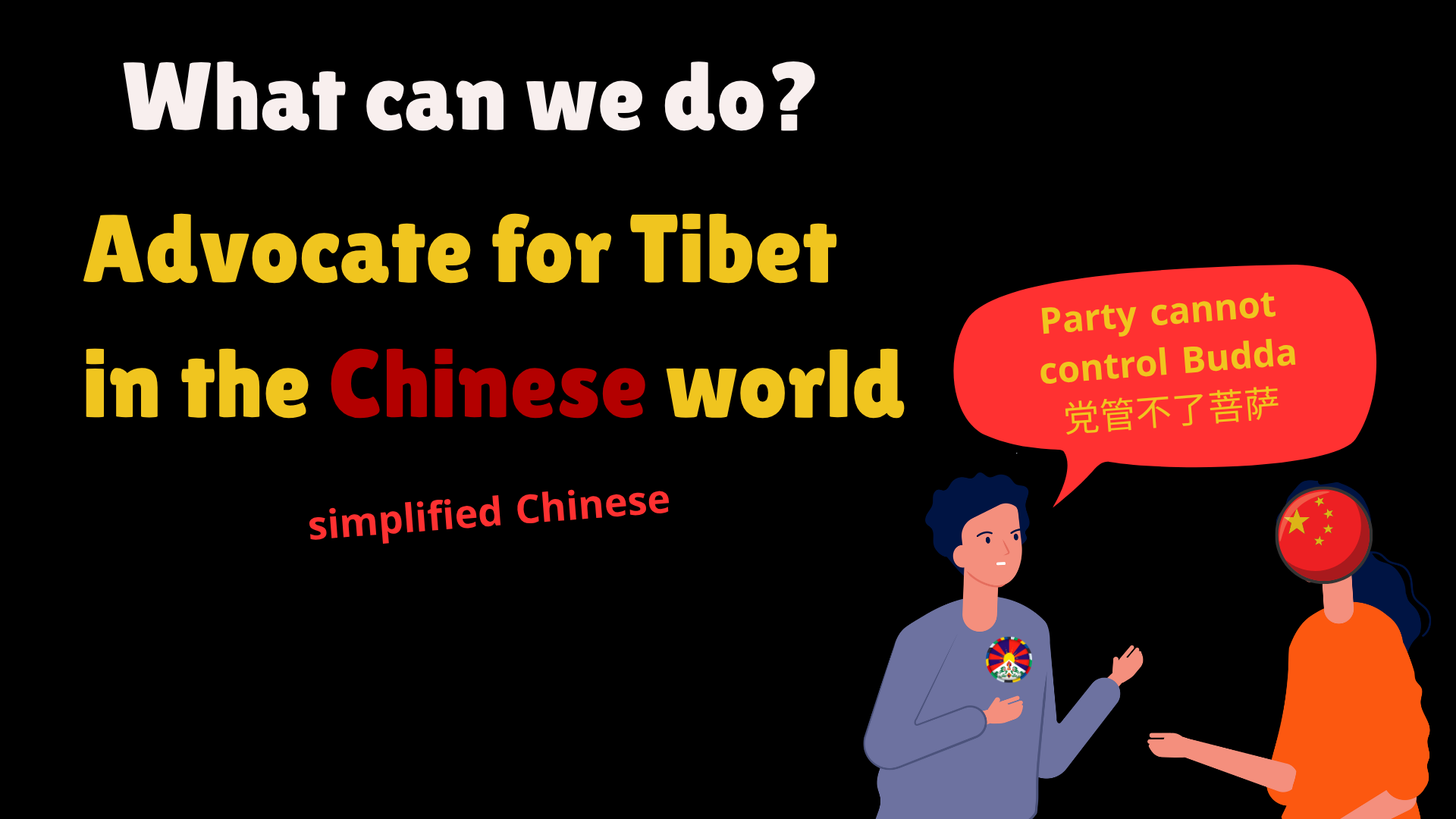
People often ask us who is most likely to listen.
Our experience suggests that some audiences are especially open to conversation: Chinese students studying overseas, people who have traveled in Tibet, those who grew up near Tibetan regions, Buddhists, and anyone who has begun questioning official narratives about Chinese history.
One conversation with a Tibetan youth has stayed with me. They asked how young Chinese people think about Tibet today.
From the dialogues we have organized, I have learned that many Tibetan participants arrive with a sophisticated understanding of the issues. They speak comfortably about self-determination, cultural genocide, or the Middle Way because these ideas are part of their lived experience.
Many Chinese students, by contrast, arrive with almost no vocabulary for discussing Tibet beyond what they learned in school. Some already suspect the official narrative is incomplete, but they lack the historical framework to understand why.
That is why dialogue matters.
Chinese International students who have studied topics such as apartheid in South Africa, colonialism, or other authoritarian systems often begin recognizing similar patterns when discussing Tibet. They may not immediately change their views, but they become willing to ask questions they had never asked before.
That willingness to question is where meaningful conversations begin.
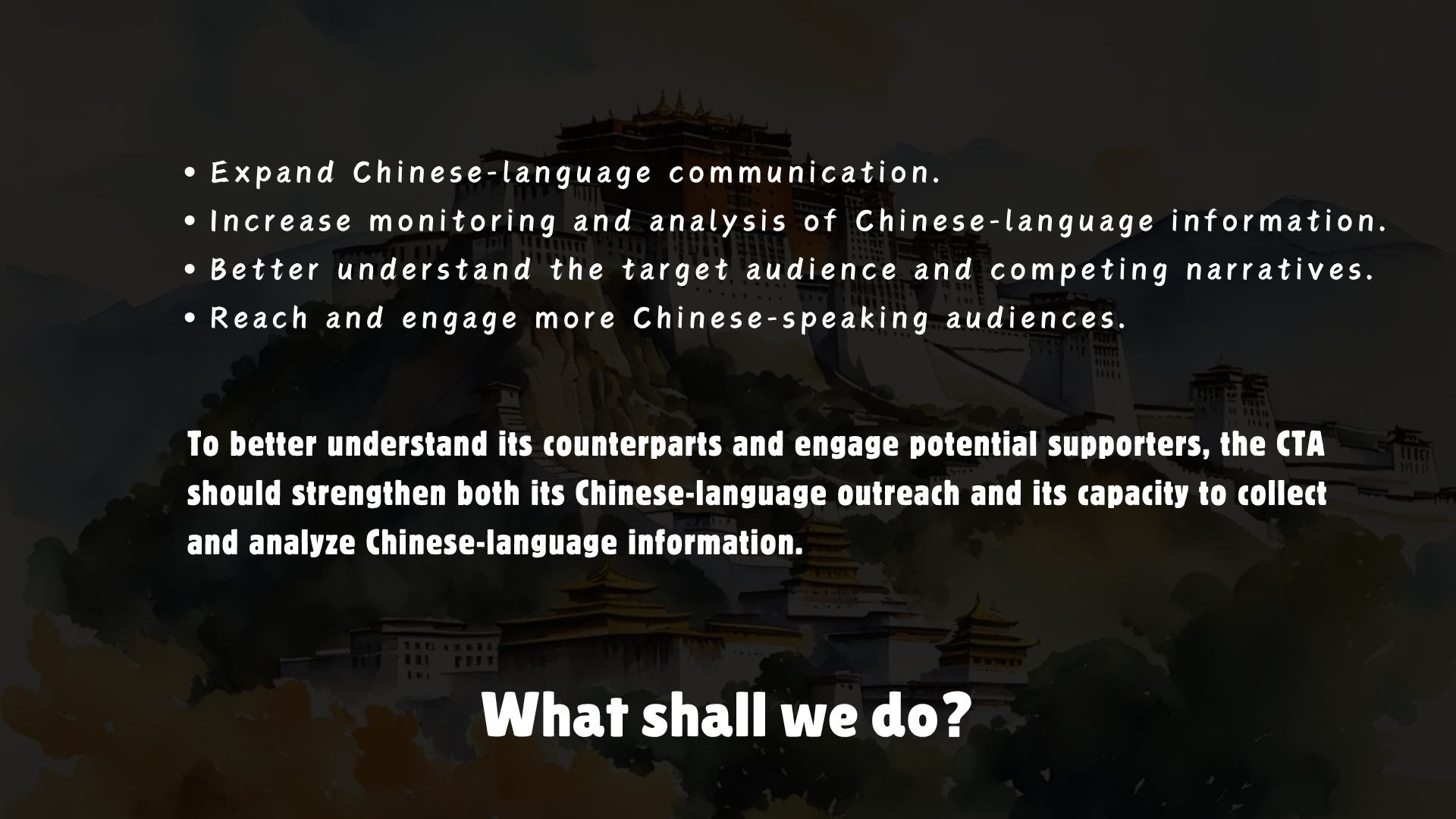
I also want to share a message that Tibetan friends inside Tibet asked me to bring here. At the heart of it is one simple message: you need to understand your opponent.
They urged overseas Tibetans to learn more about contemporary China—not only about the Chinese government, but about Chinese society and the people who live within it. Build friendships. Talk to Chinese students. Create opportunities for honest conversations.
No movement succeeds without persuading new people.
Finally, I believe there is an opportunity for closer collaboration between Tibetan organizations and younger Chinese-speaking advocates.
Many Tibetan organizations produce outstanding research and educational resources, but much of it never reaches younger Chinese readers because translation alone is not enough. Effective communication requires cultural interpretation—finding examples, language, and references that resonate with people who have grown up inside China’s information system.
That is where we hope to contribute.
Our role is not to speak for Tibetans. It is to help make Tibetan voices understandable to audiences that have rarely had the opportunity to hear them.
On Safety
During this conference, several Tibetan friends asked me the same question:
“Are you safe?”
It wasn’t the first time I had heard it.
Two years ago, the Chinese government shut down the school in Ragya where I had taught. When news broke, I recounted my experiences at school to the media, and Tibetan friends within Tibet managed to contact me. My friends in Tibet reached out with the same concern:
“Where are you? Are you safe?”
The answer is yes.
Today I live in California. I worked full time in IT, and I have built a life here. I know transnational repression is real, and I don’t dismiss those risks. But after deciding to dedicate my life to supporting Tibet, I also made another decision: I will never return to China, and I will never board a Chinese airline again.
In many ways, I have accepted that I am living in exile.
That decision allows me to continue this work without constantly looking over my shoulder.
The people I worry about most are my parents, who still live in China.
They are ordinary people. They don’t work for the government, and I am financially independent, so there is little leverage the authorities can use against them. Even so, the police have visited my family.
One day, they came to my mother’s home.
They told her, “Your daughter has written many articles criticizing our government and our ethnic policies.”
My mother asked, “What articles? Can you show them to me? I’d like to read them.”
The officers looked surprised.
“I haven’t even read them myselves,” one replied.
My mother smiled and asked, “If you haven’t read them, how do you know they’re bad?”
I have always admired her courage.
She doesn’t know what exactly I do, but she knows I am trying to do something worthwhile. And I trust her to protect herself just as she trusts me to follow my conscience.
I thought carefully about these consequences before beginning this work. None of these sacrifices was made lightly.
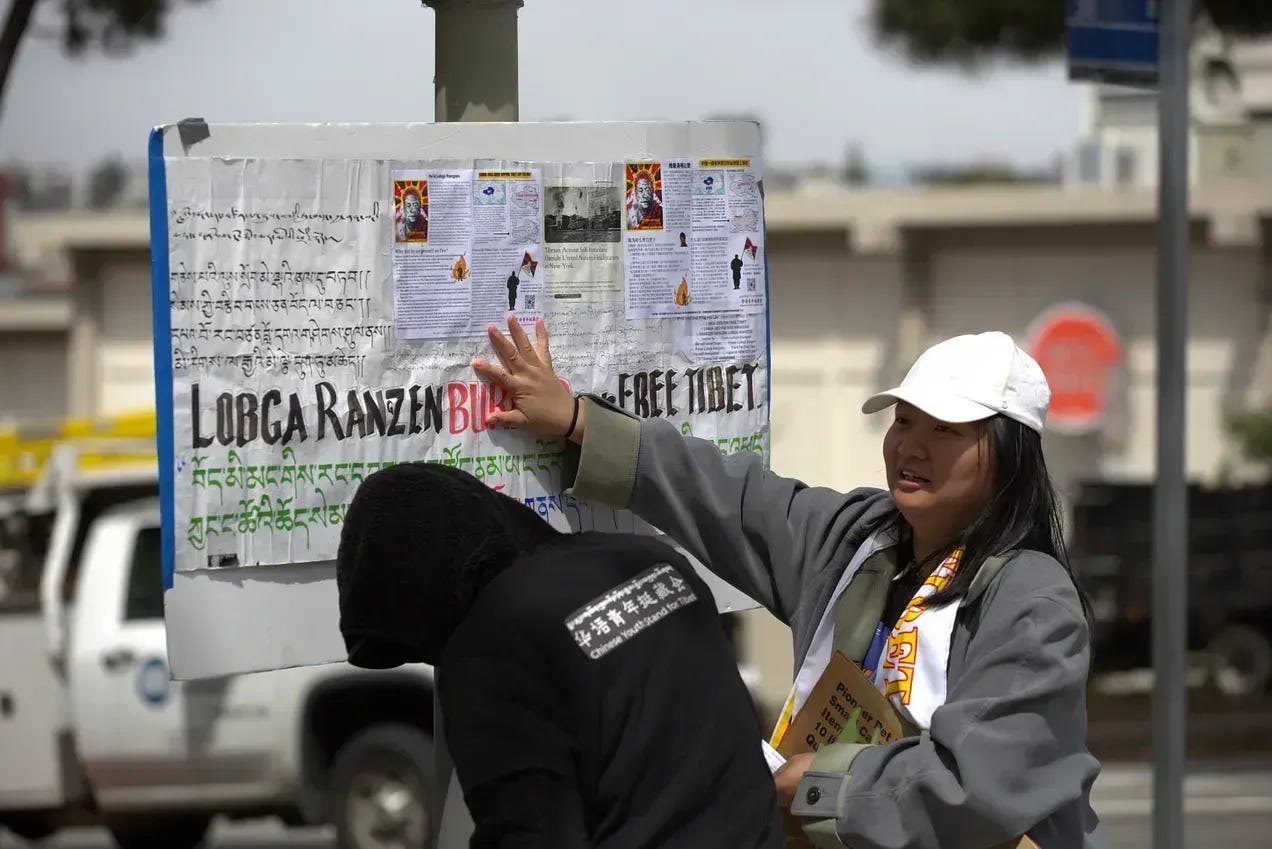
Fear Is Your Chinese Passport
The Chinese government governs through two powerful tools: lies and fear.
If fear takes root in your mind, it becomes much easier to accept whatever you are told.
That is why I often say:
“Fear is your Chinese passport. If you have no fear, you hold no Chinese passport.”
To me, that means authoritarian power depends not only on censorship but on convincing people that speaking honestly is too dangerous.
That is why reclaiming the truth matters.
His Holiness the Dalai Lama often reminds us that our greatest weapon is the truth. But for many people inside China, that truth remains inaccessible.
When I lived in Tibet, my English was limited. I spoke Chinese and only a little Tibetan. The books, research, and reporting that challenged the official narrative simply weren’t available to me.
Millions of people remain in that same position today.
That is why language matters.
I understand why many Tibetans have painful feelings about speaking Chinese. For many, it is the language of oppression.
But I would offer another way of thinking about it.
Speak Tibetan at home. Preserve it, protect it, and pass it on to the next generation.
But when you step into the world, you are also an ambassador of Tibet.
An ambassador uses whatever language reaches the audience.
Chinese is not our identity. It is our tool.
Use it to tell the truth.
Use it to build understanding.
Use it to expand the circle of people who care about Tibet!
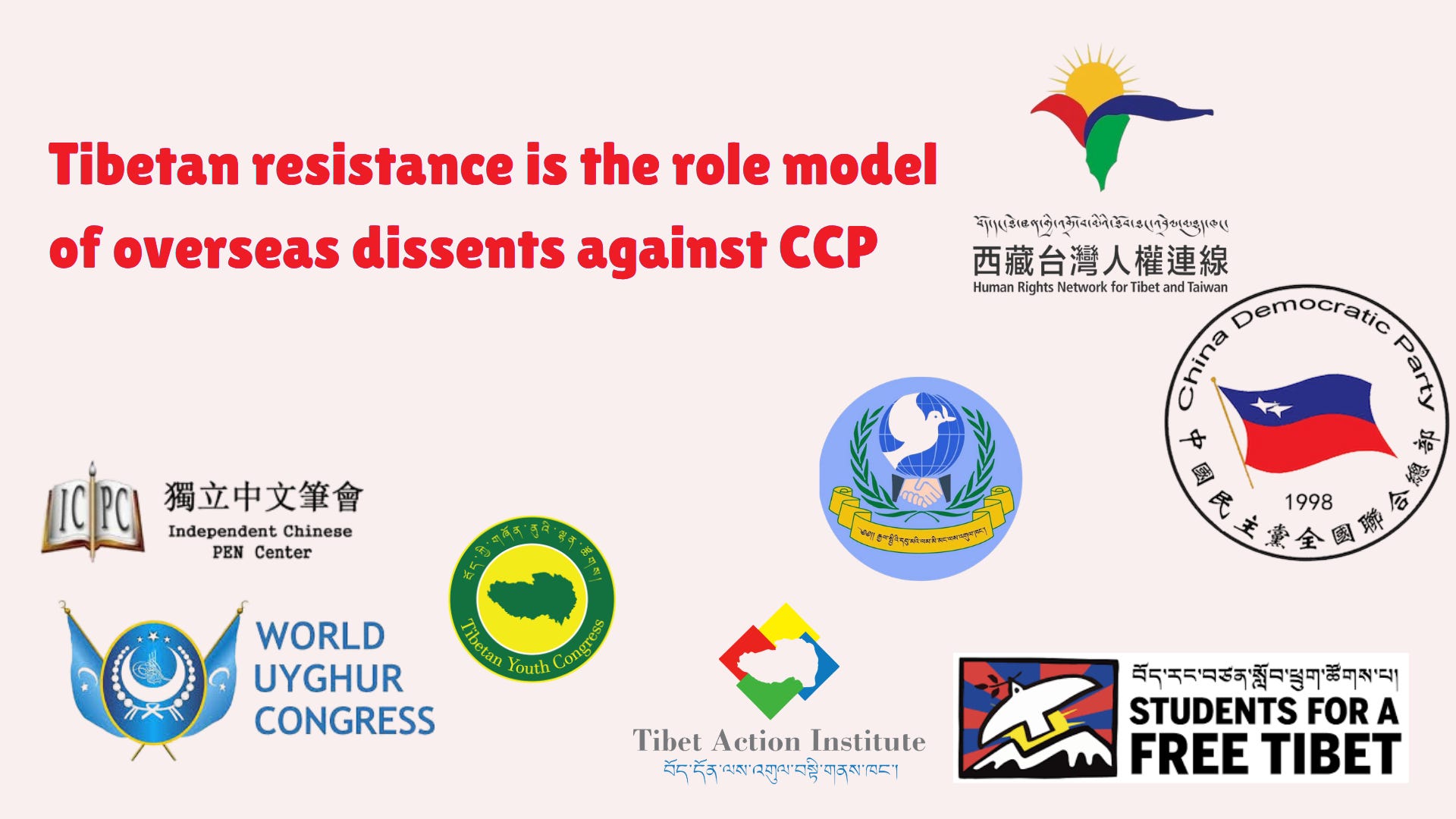
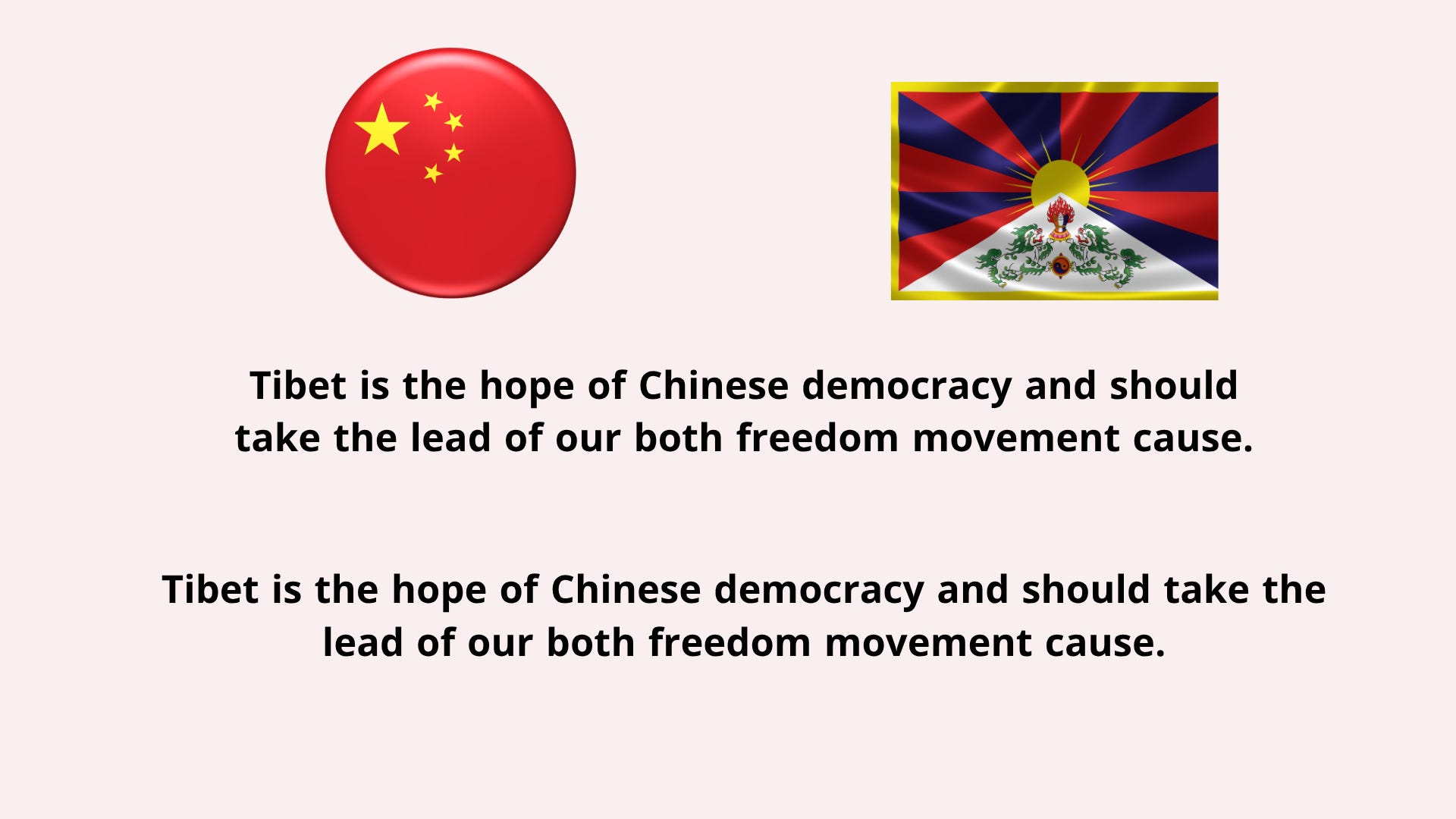
From our perspective, Tibet represents hope—not only for Tibetans, but for the future of democracy in the Chinese-speaking world. Tibetan organizations and activists have developed extraordinary experience building communities, preserving culture, and organizing across borders.
There is much that Chinese democracy advocates can learn from those efforts.
Likewise, if our experience communicating with Chinese audiences can help Tibetan organizations reach people they have struggled to reach before, we are eager to help.
If you ever need something to translate into Chinese, shared with Chinese-speaking audiences, or explained from the perspective of people inside China’s information system, please reach out to us.
We would be honored to work together.
Thank you!
Editor: Kathrine Lee
Speaker: Ginger Duan
Thanks to (Global Tibetan People’s Movement for Middle Way Approach, GTPMMA) for inviting us to give this speech!