

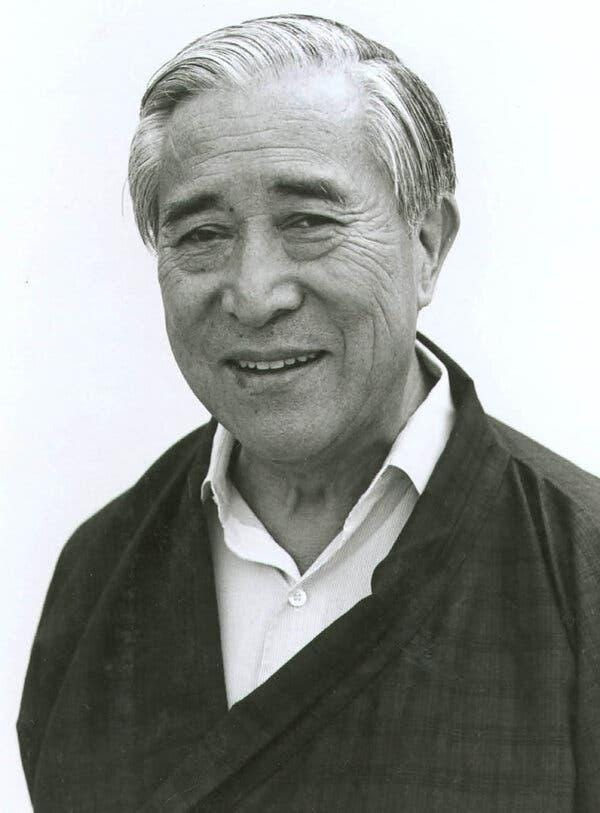
Gyalo Thondup (5th Nov. 1928~8th Feb. 2025)
Gyalo Thondup was "arguably the second-most important figure in modern Tibetan history".——Washington Post
Based on Gyalo Thondup’s autobiography The Noodle Maker of Kalimpong and interviews he gave during his lifetime, we take this opportunity to reflect on his eventful and turbulent life journey.
Early Life and Family
In late fall of 1928, Gyalo Thondup was born in the village of Taktser ༼སྟག་འཚེར། ༽, Amdo, Tibet. He was the third child of Choekyong Tsering and Diki Tsering, the second eldest brother of the 14th Dalai Lama.
His family, which had made a living through farming and horse trading, experienced a dramatic transformation after their new-born son was recognized as the 14th Dalai Lama in 1937.
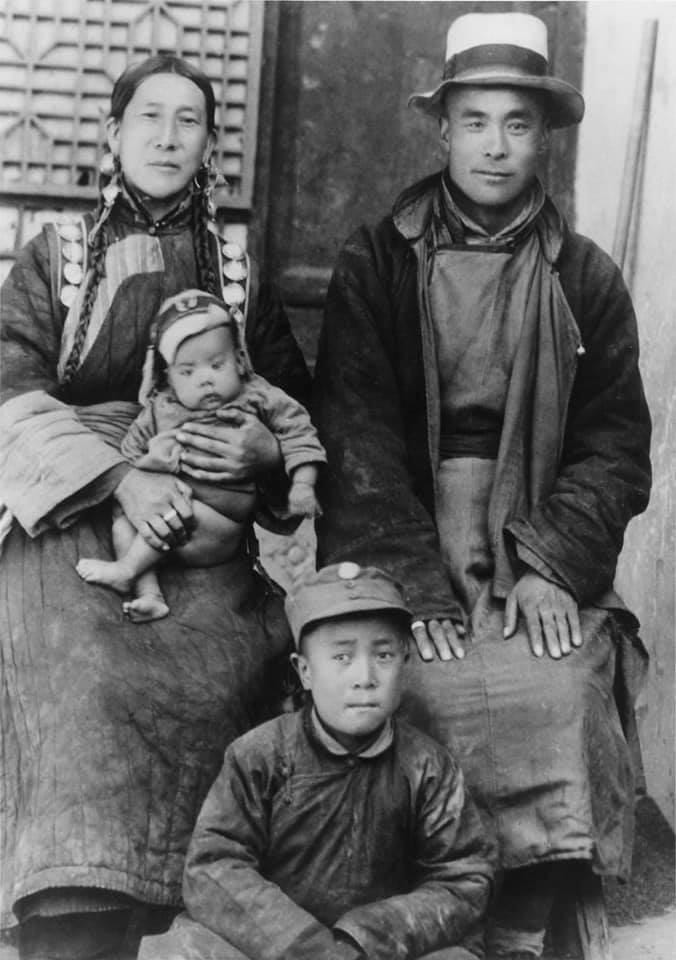
In late 1935, the young Dalai Lama with his mother, father and older brother Gyalo Thondup in Taktser
Gyalo Thondup came from a family of 7 siblings, each of whom played a significant role in modern Tibetan history. His eldest sister, Tsering Dolma, was the founder of the Tibetan Children’s Village. His eldest brother, Thubten Jigme Norbu, was recognized as the 6th Taktsé Rinpoche. Gyalo Thondup himself became a key political figure in the Tibetan resistance movement. His younger brother, Lobsang Samten, later held important positions in the Tibetan government-in-exile. His second younger brother, Tenzin Gyatso, was recognized as the 14th Dalai Lama. His younger sister, Jetsun Pema, succeeded Tsering Dolma as the head of the Tibetan Children’s Village. His youngest brother, Tenzin Choegyal, was recognized as the Ngari Rinpoche.
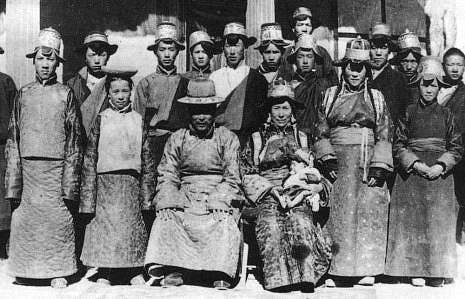
Family and servants at Lhasa estate. The Great Mother is holding the infant Jetsun Pema. Tsering Dolma and Gyalo Thondup are standing behind their parents at the right.
Education in Nanjing
In 1939, Gyalo Thondup moved in Lhasa at the age of 11, where he received traditional Tibetan training to be prepare to become the lead advisor to the 14th Dalai Lama in the future.
After the passing of the 13th Dalai Lama, who had advocated for modernization, the regent Reting Rinpoche recognized the crucial need for Tibet to establish diplomatic relations with China. At that time, the Lhasa aristocracy had a highly insular understanding of global affairs and, in particular, lacked sufficient knowledge about China. To maintain a delicate balance between the influence of China and British India, it was imperative to gain a deeper understanding of this neighboring state. As a progressive leader, Reting Rinpoche insisted that Gyalo Thondup pursue his studies in China—an unprecedented move among the Tibetan aristocracy of that era.
At 14, he travelled to Nanjing, the capital of Republican China, at the invitation of General Chiang Kai-shek to study.
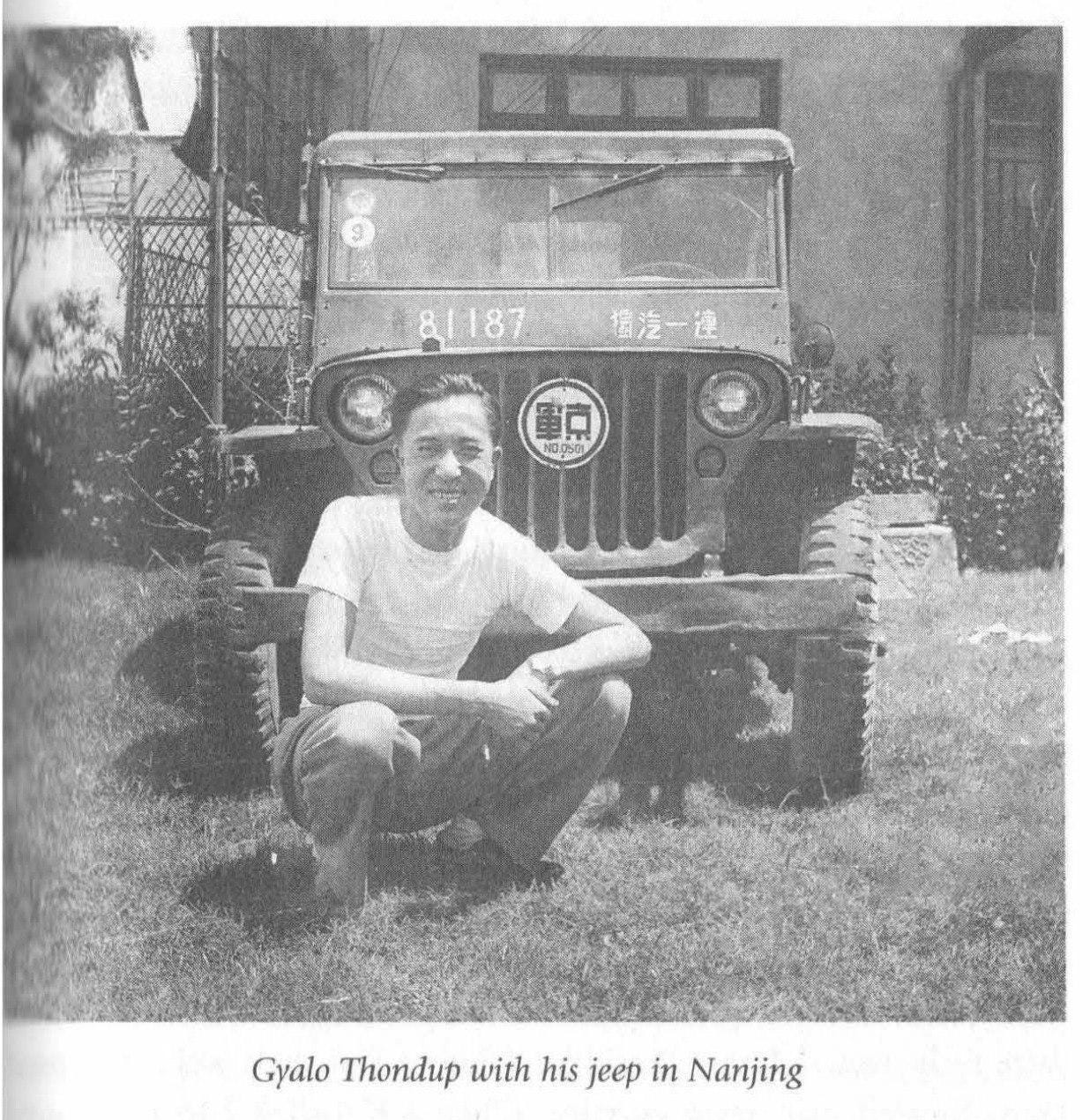
Gyalo Thondup began his studies at the Central University of Politics in Nanjing in 1946. Between April 1947 and the summer of 1949, he was a regular guest at Chiang Kai-shek’s house, educated by selected tutors from Chiang. There, he was taught history and politics from a Chinese point of view, which greatly broadened his horizons. He has since become fluent in Tibetan, Chinese and English.
Thondup maintained a close relationship with Mr. and Mrs. Chiang, who, according to him, treated him like their own son.
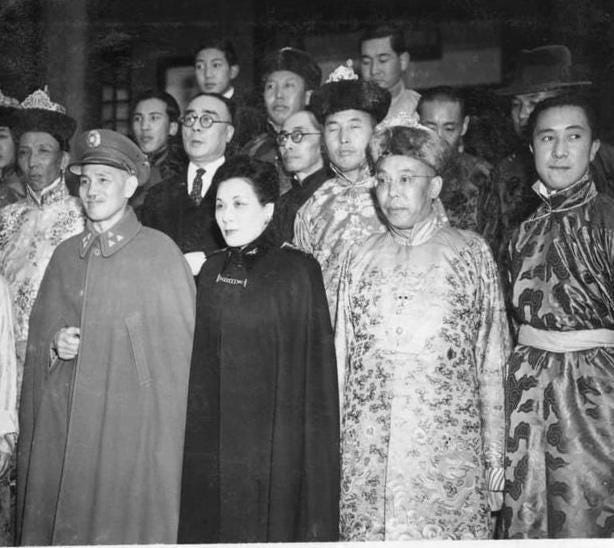
President Chiang Kai shek, Madame Chiang, Tibetan official Thupten Samphel and Gyalo Thondup in Nanking in 1946 (from left to right)
A Love That Breaks Through Racial Barriers
While studying in Nanjing, Gyalo Thondup met Zhu Dan, an administrator at the Baptist hospital in Nanjing. Zhu Dan had studied at National Southwestern Associated University and was the daughter of General Zhu Shigui, a lieutenant-general in the Kuomintang army. They soon fell in love, and began to spend time together, traveling and participating in various activities, and in 1948, Thondup proposed to Zhu Dan. In his autobiography, he said, “Many Tibetans had hoped that I would marry a Tibetan woman, or a princess from Bhutan or Sikkim. But I married for love.”
At a time of political turmoil, with Tibet facing an imminent threat of invasion from China, Thondup, as the elder brother of the Dalai Lama, insisted on marrying a Han Chinese woman, undoubtedly facing immense pressure.
After their marriage, Zhu Dan—later given the Tibetan name Diki Dolker by the Dalai Lama—shared the fate of the Tibetan exile community. Following Thondup exile to India, she founded the Tibetan Refugee Self-Help Center in Darjeeling. The center grew from just four people to 2000, becoming a self-sufficient refugee community with schools, hospitals, nurseries, and carpet workshops. She upheld the principle of self-help, refusing foreign aid and instead training refugees in skills like carpet weaving to make a livelihood. Zhu Dan devoted her life to the welfare of Tibetan refugees. She passed away in Darjeeling in 1986. Until her final moments, she refused to return to her hometown in Jiangsu, China.
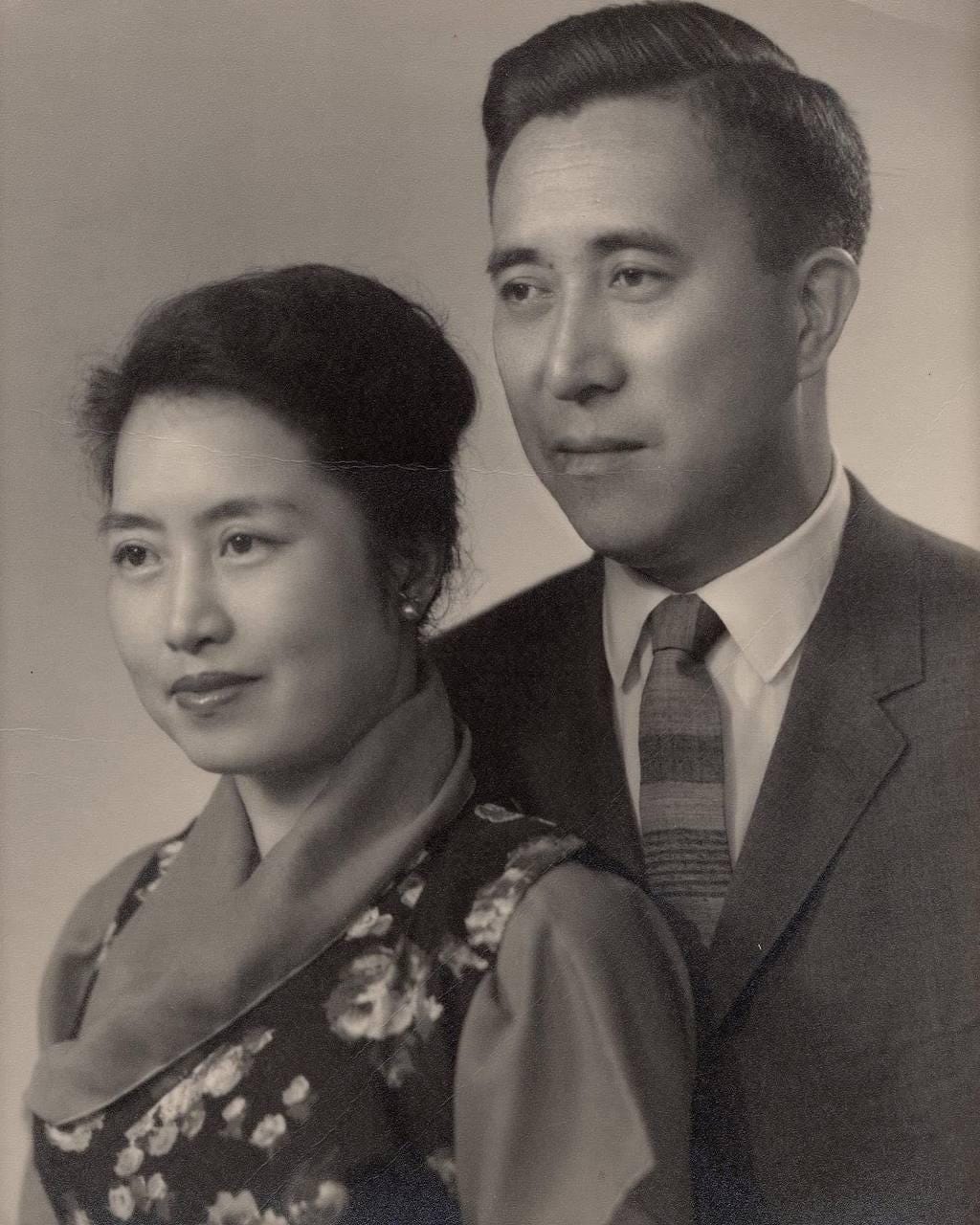
Gyalo Thondup with his wife Zhu Dan
From New Delhi to Taipei to Washington
In 1949, following the fall of Nanjing to the Communist forces, Chiang Kai-shek and other high-ranking Kuomintang officials fled to Taiwan. Gyalo Thondup also planned to return to Tibet with his wife. However, while transiting through Kalimpong, India, he learned of a severe power struggle within the Kashag government. His father and the former regent, Reting Rinpoche, had been assassinated, and the new regent, Taktra Rinpoche, driven by his thirst for power, saw Gyalo Thondup as a serious political threat.
As a result, Gyalo Thondup was forced to remain in India. During this period, he became an intermediary between foreign governments and Tibet. He first met with Indian Prime Minister Jawaharlal Nehru, who was deeply concerned about Tibet’s precarious situation. Skeptical of the newly established CCP regime, Nehru urged the Tibetan government to prepare for a possible invasion, emphasizing the urgent need to reform Tibet’s military. He also indicated that India was willing to provide military aides.
Around the same time, the U.S. ambassador to India approached Gyalo Thondup, conveying that the United States was also prepared to help Tibet counter the imminent threat. Gyalo Thondup telegraphed these messages back to Lhasa, but for months, the Kashag remained silent.
At that time, the Tibetan leadership was still immersed in internal struggles, completely unaware of the drastic changes in the external situation. The ruling noble class was ignorant and complacent, refusing to believe that China would launch an invasion. All of this left Gyalo Thondup extremely disappointed, angry, and frustrated.
Then, in July 1949, likely under the influence of British diplomat Hugh Richardson, the Kashag abruptly ordered the expulsion of all Chinese from Lhasa. This reckless move antagonized both the Kuomintang and the CCP. Shortly thereafter, for the first time, the Chinese Communist Party officially declared its intent to “liberate” Tibet from imperialist influence—a clear signal of the coming invasion.
By March 1950, as the threat of invasion loomed ever closer, Taktra Rinpoche finally realized the seriousness of the situation. and urgently sought advice from Gyalo Thondup. However, by then, it was too late—India had already established diplomatic ties with CCP, making any potential assistance from India unlikely.
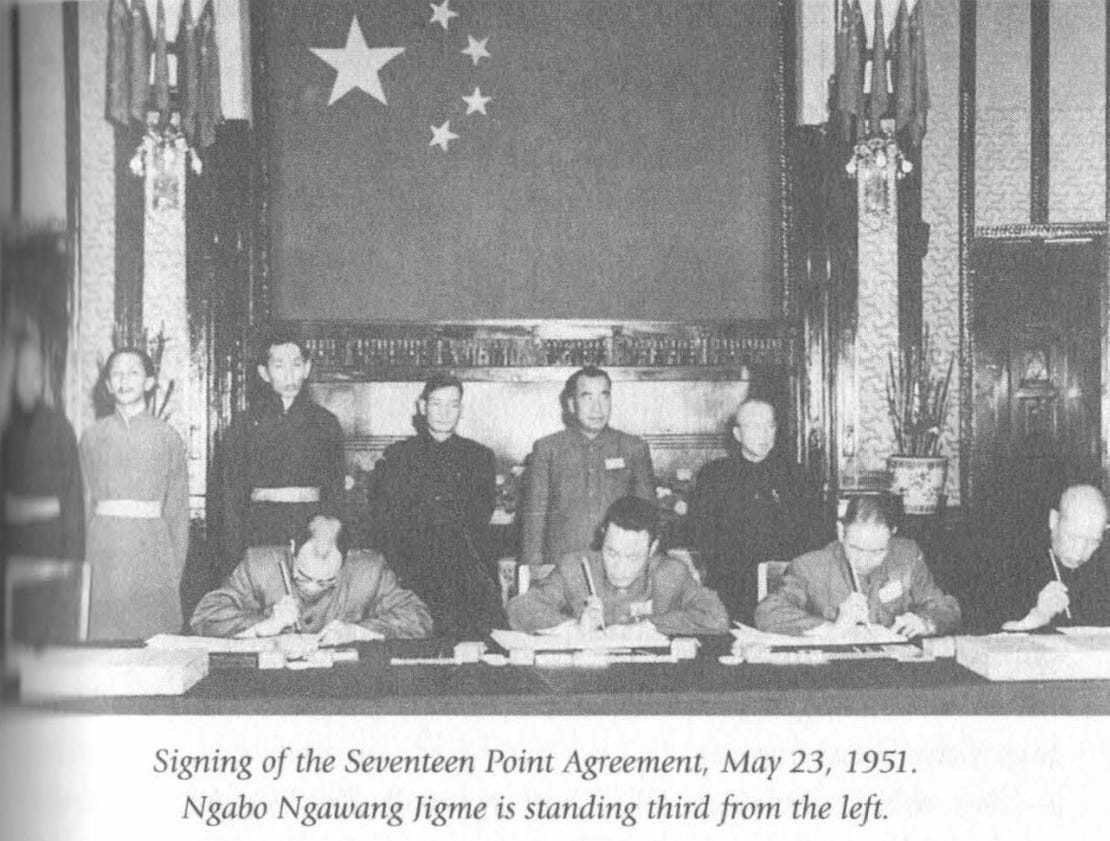
Soon, the well-equipped and numerically superior Chinese People’s Liberation Army advanced into Chamdo, swiftly defeating the Tibetan army, which was poorly equipped, inadequately trained, and severely understaffed. The Tibetan commander in Chamdo, Ngabo Ngawang Jigme, fled the battlefield but was captured by the PLA. Under pressure, he was forced to travel to Beijing, where he later signed the Seventeen-Point Agreement, formalizing Communist China’s claim over Tibet.
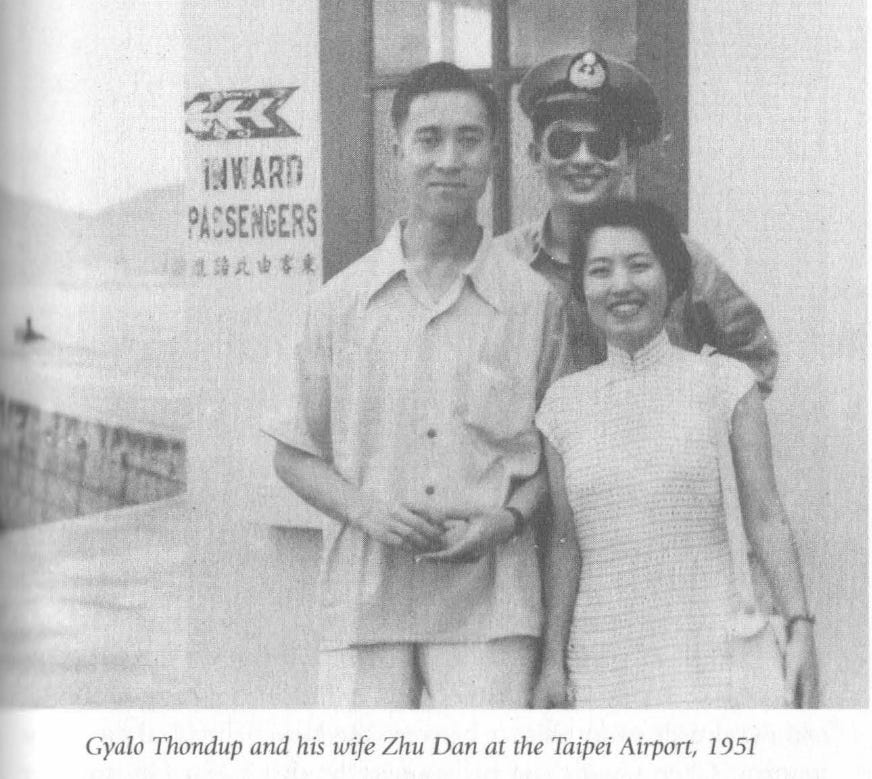
Gyalo Thondup, his wife Zhu Dan, and their three-month old daughter Yangzom Doma were in Taiwan when they learned about the People’s Liberation Army’s invasion of Tibet. However, the intelligence in Taiwan discovered a letter addressed to him by Communist Marshal Zhu De, promising that nothing in Tibet would change after the CCP came to power and inviting the regent and Kashag to send a delegation to visit Beijing. He was suspected by the Kuomintang of being a spy in the pay of the CCP. While being stranded in Taiwan, he met some American citizens who suggested that he travel to the United States. Gyalo Thondup left Taiwan with his wife and daughter for the United States in 1951.
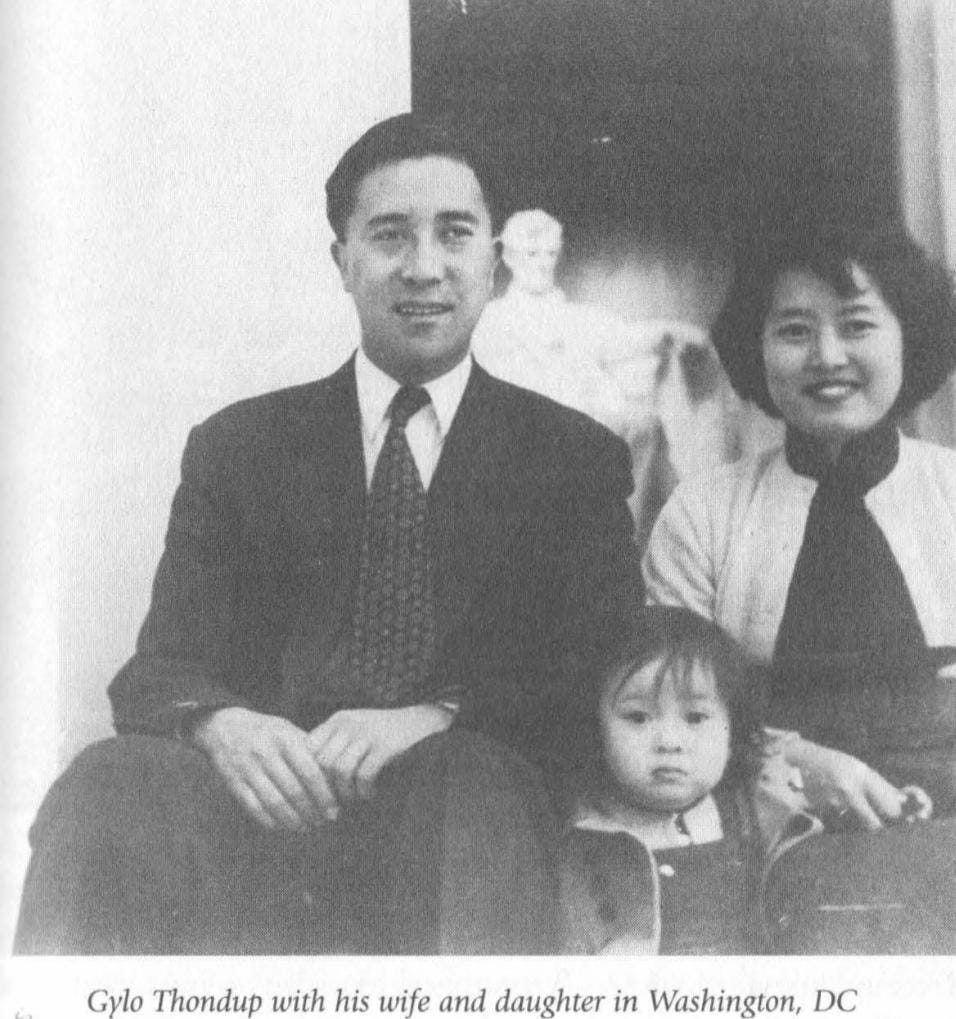
There, he became the primary informant on Tibetan affairs for the United States Department of State. It was the first time that he had connections with the American Committee for Free Asia, an organization he later discovered to be a branch of the newly established Central Intelligence Agency.
Some of his contacts in Washington offered him a four-year, fully paid scholarship to Stanford University. But he did not accept this opportunity and decided to return to Tibet to help his imperiled family and country.
Returning Home
After spending five months in the United States, Gyalo Thondup returned to Lhasa in February 1952 with his mother from India. On the journey from Southern Tibet to Lhasa, he saw Chinese Communist soldiers carrying the Chinese Flag and military encampments filled with PLA officers and troops. This stark reality made him realize that his homeland had already fallen into the hands of invaders.
Upon learning about the brutal land reforms in China, he proposed a similar but fairer reform for Tibet to the Tibetan prime ministers, Lukhangwa and Lobsang Tashi. He believed land redistribution was urgent to prevent the Chinese from implementing it harshly. Willing to set an example, he even offered to relinquish his family’s estates. However, the prime ministers advised him to keep his views discreet due to widespread espionage in Lhasa.
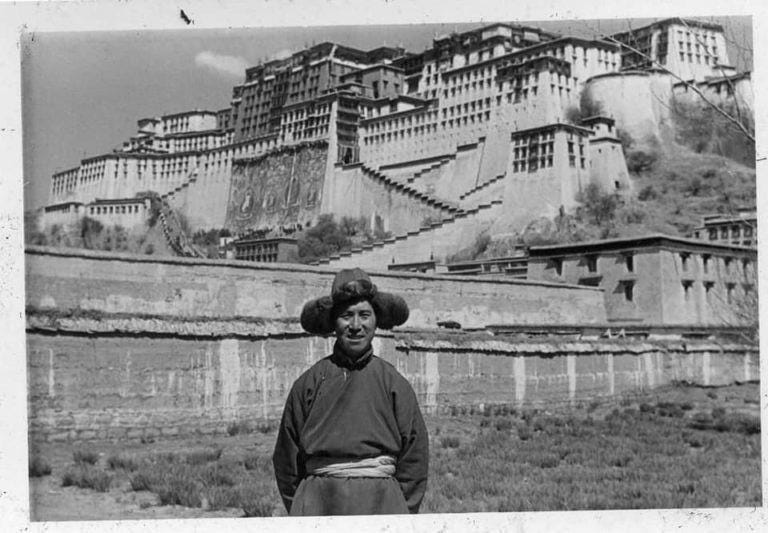
The 14th Dalai Lama, eager to modernize Tibet and address wealth inequality, shared Gyalo Thondup’s views on land reform. He envisioned an independent judiciary, education system, and infrastructure development. Despite opposition from the aristocracy and Chinese authorities, Gyalo Thondup pushed for the Dalai Lama’s reforms, personally transferring his own lands to 400 households of peasants who worked them and burning down the promissory notes of their debts passed down through generations.
The arrival of a huge number of Chinese troops made life unbearable for ordinary Lhasa people. As large quantities of food were diverted to supply the PLA forces, inflation skyrocketed, and the prices of goods soared, further fueling public resentment toward the Chinese. In response, protests erupted with angry Tibetans demanding the withdrawal of Chinese forces from Tibet. However, frustrated CCP officers dismissed these civilian demonstrations as “counterrevolutionary uprisings instigated by foreign forces” and sought to suppress them with force.
In an effort to de-escalate the situation, Gyalo Thondup attempted to negotiate with General Zhang Jingwu, but instead of resolving tensions, the CCP authorities responded by demanding the dissolution of the Kashag government and forcing its two prime ministers to resign—a direct violation of the Seventeen-Point Agreement, which had guaranteed that Tibet’s existing political system would remain unchanged.
Going into Exile
Shortly after, Mao Zedong invited Gyalo Thondup to lead a Tibetan delegation to Beijing for a Communist Youth League conference, but he decided not to serve as a puppet of the CCP any longer.
Seeking to advocate for Tibet abroad, he decided to leave for India to urge China toward moderation and secure external support. In June 1952, he approached Sumal Sinha, the Indian representative in Lhasa, who promptly informed him that Nehru had granted him political asylum.
In autumn 1956, the Dalai Lama traveled to India for the Buddha Jayanti Celebrations, where he reunited with Gyalo Thondup. He met with Prime Minister Nehru, describing the destruction of Tibetan culture and religion in Kham and Amdo under Chinese land reforms and warning that it could spread to Central Tibet. He urged India to press China to withdraw troops from Lhasa and sought political asylum. Nehru initially agreed but later reversed his decision after being persuaded by Chinese Premier Zhou Enlai, insisting that the Dalai Lama return to Lhasa under Chinese control.
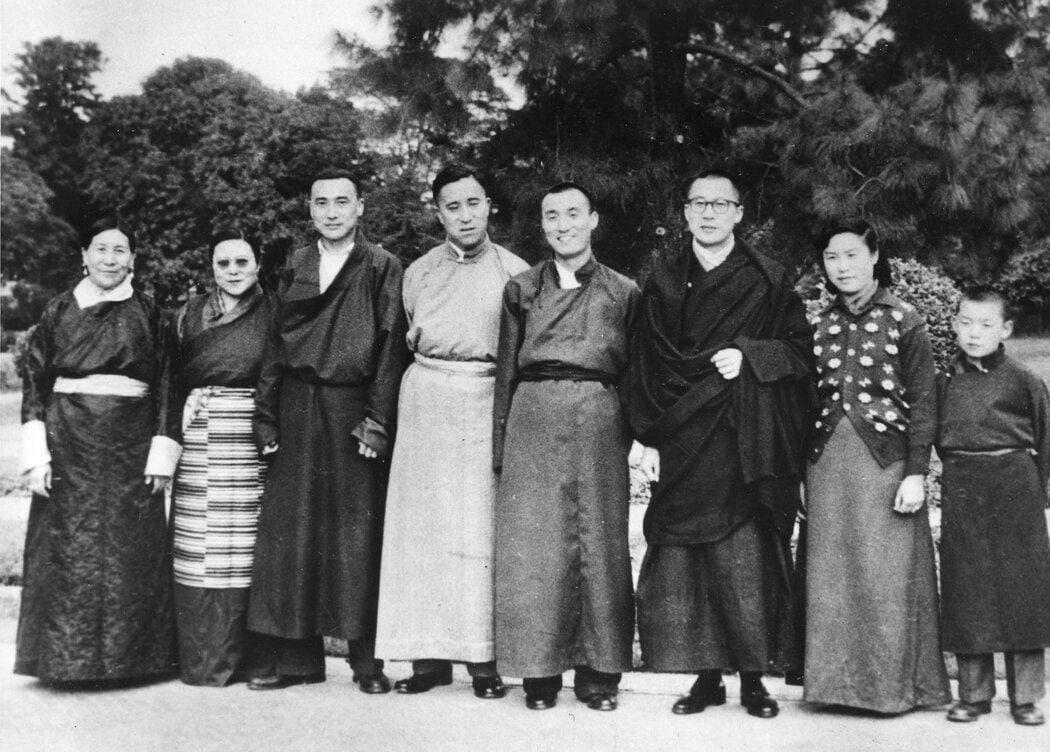
The Great Mother, Dalai Lama, Gyalo Thondup together with other siblings reunited in India in 1956.
Between 1955 and 1956, the CCP’s brutal land reforms in Amdo and Kham sparked widespread Tibetan resistance. In response, local guerrilla groups emerged. Under the pretext of “suppressing the rebellion,” the Chinese army bombed Lithang Monastery, killing hundreds of monks, further fueling Tibetan anger and triggering an armed uprising in Kham at 1958. The CCP blamed Gyalo Thondup, accusing him of orchestrating the rebellion from India under “imperialist influence” and demanded his expulsion from the Tibetan community.
Helping the Dalai Lama Gain Political Asylum
In 1959, as clashes between Tibetan resistance forces and the People’s Liberation Army (PLA) intensified, many Tibetans fled Kham for Lhasa. At the same time, the Monlam Festival drew thousands of Tibetan pilgrims to the capital. Meanwhile, China’s repression in Lhasa pushed tensions to a breaking point.
On March 10, Tibetan discontent erupted into open revolt. The immediate trigger was a Chinese military official’s invitation for the Dalai Lama to attend a “cultural performance” at their headquarters, forbidding him from bringing bodyguards or Tibetan officials. Suspecting a trap, Tibetans feared a kidnapping attempt.
That morning, thousands of Tibetans gathered outside Norbulingka, vowing to protect the Dalai Lama. The protest escalated into an uprising, with Tibetans chanting “China out of Tibet!” The PLA surrounded the demonstrators, and Lhasa descended into chaos. Realizing the crisis, the Dalai Lama held an emergency meeting and decided to secretly leave Lhasa.
On March 17, disguised as an ordinary soldier, the Dalai Lama quietly left Norbulingka with a small group of family members. Escorted by guerrilla fighters, they rode south. Initially, he planned to stop at Lungtse Dzong, near the Indian border, to negotiate with the CCP. But on arrival, he learned that the PLA had bombed Norbulingka, killing thousands of protesters. Lhasa was in bloodshed.
On March 28, Premier Zhou Enlai formally dissolved the Kashag government, eliminating any possibility of negotiations. With no other choice, the Dalai Lama requested asylum in India. Upon hearing this, Gyalo Thondup rushed to New Delhi to meet with Prime Minister Nehru and relay the Dalai Lama’s request. Nehru immediately agreed to grant asylum. On March 30, 1959, the Dalai Lama successfully crossed into India, marking the beginning of Tibetan exile. The Dalai Lama shortly announced the establishment of the Tibetan government-in-exile, with Gyalo Thondup appointed as the Foreign Minister.
Bringing the Tibetan Issue into the International Spotlight
In 1959, when Ireland and Malaysia raised the Tibet issue at the UN General Assembly, Thondup traveled to New York to support the resolution. The UN adopted Resolution 1353 on October 20–21, calling for respect for human rights and Tibet’s cultural and religious identity, however, it made no mention of the People’s Republic of China.
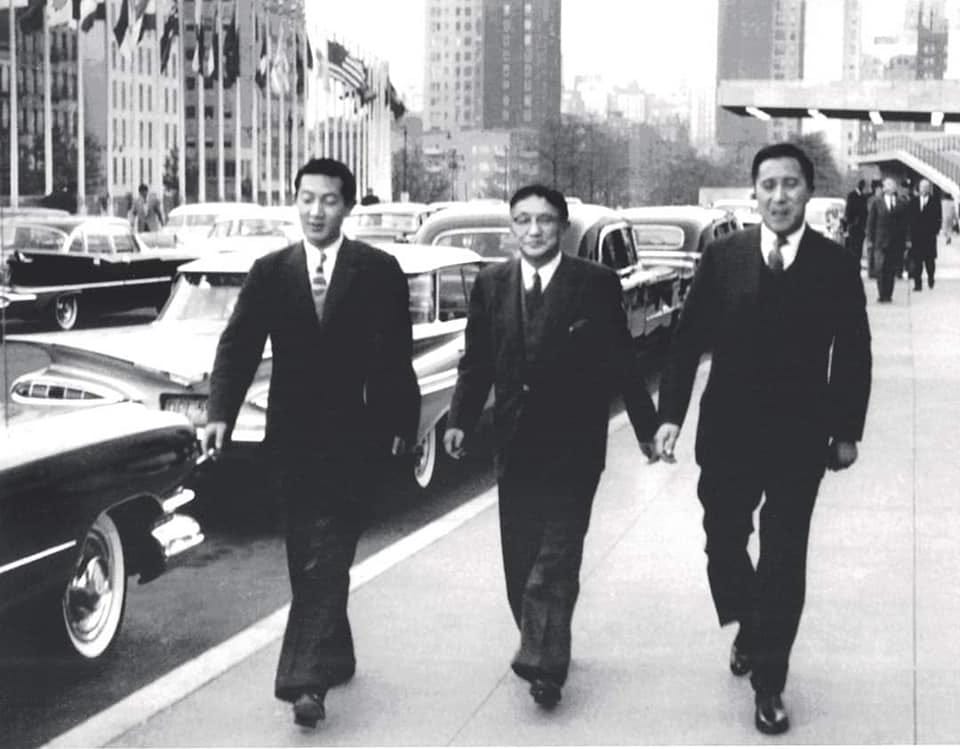
In the fall of 1960, Gyalo Thondup made another trip to New York, seeking support from the Afro-Asian Conference on Tibet and anti-colonialism. He managed to introduce a UN resolution for Tibet’s self-determination, but due to procedural delays, it was only reviewed in the spring of the following year.
The Secret Guerrillas of the Snowland
In 1953, the CIA secretly contacted Gyalo Thondup in Darjeeling. They promised support for Tibetan guerrilla forces, pledging assistance in their armed struggle for independence against Chinese Communist rule.
In the late 1950s and early 1960s, the CIA supplied the Tibetan resistance forces with rifles, ammunition, grenades, and radio equipment, which were air-dropped into Tibet. Gyalo Thondup helped recruit around 300 soldiers from the three Tibetan regions, who were trained at Camp Hale in Colorado before being airlifted back into Tibet. These fighters later trained thousands of others, forming the Chushi Gangdruk resistance army, led by Kham trader Adruktsang Gompo Tashi.
However, the CIA’s weapons support was highly limited. Reflecting on the resistance years later, Gyalo Thondup noted that while around 40,000 fighters joined the struggle, they received only a few hundred pieces of air-dropped equipment. The lack of sufficient support and the complex international situation ultimately doomed the movement.
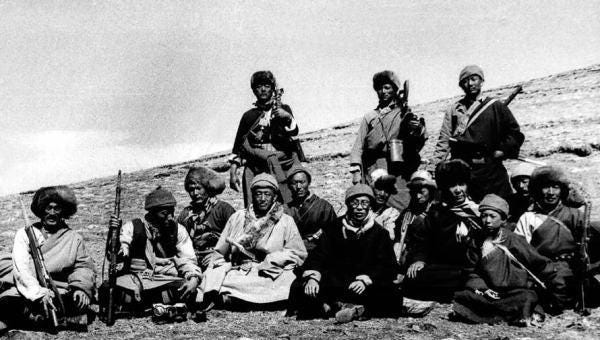
By 1970, after the CIA abandoned support for Tibet as a condition of China’s offer to allow Nixon to visit China and the U.S. ceased aid entirely, Gyalo Thondup, disillusioned, withdrew to Hong Kong.
In his later years, he expressed in his autobiography his regret for cooperating with the CIA, accepting various aids and training the Chushi Gangdruk guerrillas on its behalf:
Initially, I genuinely believed that the Americans wanted to help us fight for our independence. Eventually, I realized that was not true. It was misguided and wishful thinking on my part. The CIA’s goal was never independence for Tibet. In fact, I do not think that the Americans ever really even wanted to help. They just wanted to stir up trouble, using the Tibetans to create misunderstandings and discord between China and India. Eventually they were successful in that. The 1962 Sino-Indian border war was one tragic result.
Emissary between Exiled Tibetan Government and CCP
In the 1980s, following the death of Mao Zedong and the end of the Cultural Revolution, Tibet experienced a period of relative political relaxation. The 10th Panchen Lama, after enduring 14 years of imprisonment, was finally released. He advocated for improving the living standards of Tibetans and encouraged the Dalai Lama to send representatives to engage with Deng Xiaoping and other central leaders, creating an opportunity for exiled Tibetans to visit Tibet once again. And Gyalo Thondup was considered by both His Holiness and Deng Xiaoping to be the suitable delegate.
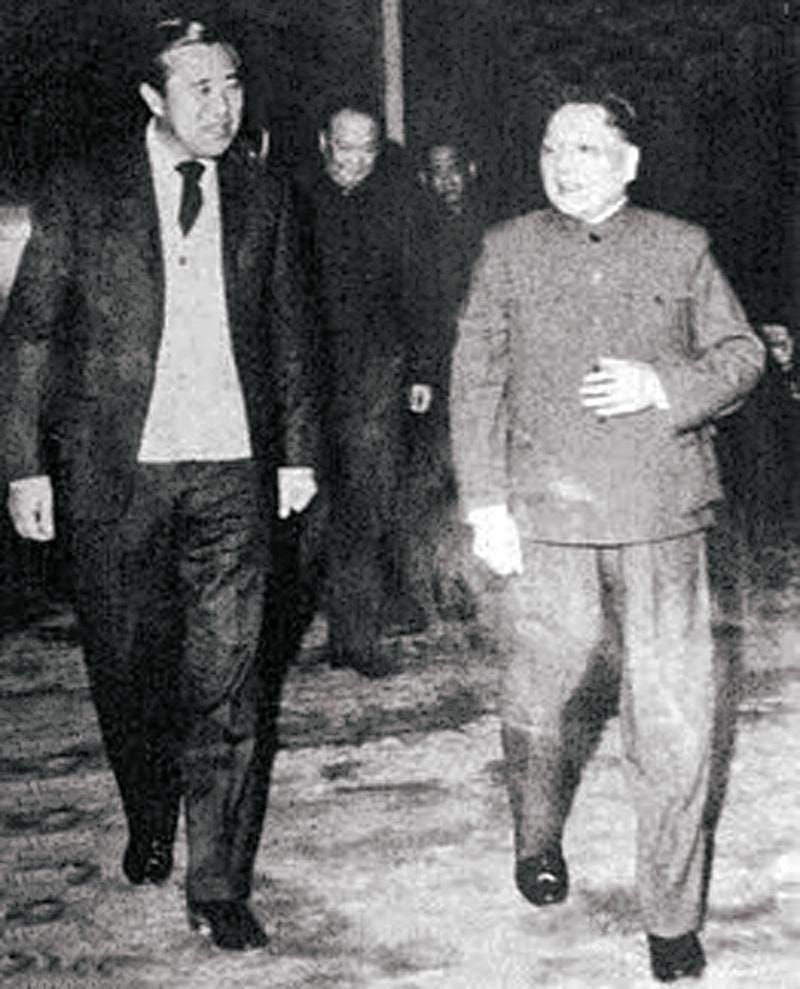
Gyalo Thondup with Deng Xiaoping in 1979
Encouraged by his brother, the Dalai Lama, Gyalo Thondup decided to proceed. On March 12, 1979, he traveled to Beijing in a private capacity to meet Deng Xiaoping. Deng warmly received him and stated, “Whatever happened had already happened… But except for independence, everything is negotiable. Everything can be discussed.” He also expressed his wish for the Dalai Lama to return to China, promising to restore his former position.
Gyalo Thondup presented four requests: allowing Tibetans inside and outside China to communicate, rehabilitating the Panchen Lama, sending Tibetan language teachers to Tibet to revive education disrupted by the Cultural Revolution, and permitting the exile government to establish a Tibetan office in Beijing. Deng agreed to all the proposals and even invited the Tibetan exile government to send a delegation to Tibet to assess the situation firsthand.
On August 2, 1979, the Dalai Lama sent a delegation to Tibet, marking the first official visit by exiled Tibetans since China’s occupation in 1959. The first delegation, accompanied by United Front officials, traveled across Amdo, Kham, and Ü-Tsang. Contrary to the Chinese government’s expectations, the Tibetan people welcomed them with great enthusiasm. Many were overjoyed to see representatives of the Dalai Lama, while others were heartbroken over the tragedies of the past two decades.
People secretly passed handwritten notes to the delegation members during handshakes. Some messages were addressed to the Dalai Lama or relatives in exile, while others contained names of those who had died, been tortured, or imprisoned. Upon returning, the delegation carried back at least 7,000 letters written by Tibetans inside Tibet to their relatives and the Dalai Lama.
The CCP government was shocked by the public reaction. Deng Xiaoping realized that decades of political propaganda had failed to win the Tibetan people’s hearts. If not handled carefully, the situation could become unstable. As a result, China changed its stance and restricted interactions for the second and third delegations, preventing meaningful contact with Tibetans inside Tibet. This shift strained relations between the Chinese government and the Tibetan exile leadership.
In 1981, Gyalo Thondup met with 胡耀邦 Hu Yaobang, who presented him with the “China's five conditions for the Dalai Lama's return to China.” The fourth point stated that if the Dalai Lama returned to China, the Chinese government suggested that he live in Beijing with occasional visits to Lhasa. This proposal was unacceptable to both the Tibetan exile government and ordinary Tibetans. The growing suspicion that Beijing intended to control the Dalai Lama further deepened the exile government’s distrust of the CCP.
The Dalai Lama and Gyalo Thondup consistently advocated for peaceful dialogue with Beijing. Although China’s military occupation of Tibet was widely recognized, by the 1980s, the Dalai Lama introduced the “Middle Way Approach” to keep negotiations alive. This proposal called for high autonomy for Tibetans within Tibet, while foreign affairs and defense would remain under Chinese control. For the Tibetan exile government, this was a compromise aimed at sustaining dialogue with China.
As the Dalai Lama’s international influence grew, global attention on the Tibet issue also increased. Inside Tibet, Tibetans were able to receive his messages through tapes and secret communications. In September 1987, Tibetans in Lhasa took to the streets in support of the Dalai Lama. China responded with a violent crackdown, accusing the Tibetan exile government of inciting the uprising.
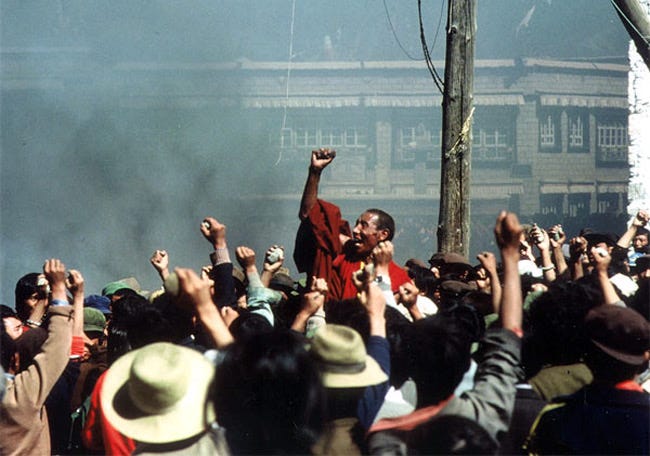
Tibetan monk Jampa Tenzin and protesters in Tibet capital Lhasa, 1987 (Photo courtesy: John Ackerly)
Investigating the incident, Gyalo Thondup found that some foreigners had visited monasteries before the protests, displaying Dalai Lama’s photos and encouraging demonstrations—actions not sanctioned by the exile government. He suspected international intelligence agencies were deliberately undermining Sino-Tibetan dialogue. Despite this, China grew increasingly wary of the exile government, leading to a halt in dialogue until 2002.
In 1989, shortly after delivering a harsh response to China's policies in Tibet, the 10th Panchen Lama suddenly passed away. Days later, the Chinese government invited the Dalai Lama to China to personally lead the memorial service. However, the Kashag discouraged him from going, fearing a possible kidnapping. Gyalo Thondup later regretted this decision, believing it was a missed opportunity to build trust with Beijing.
During the search for the Panchen Lama’s reincarnation, China arranged for Chadrel Rinpoche to collaborate with the Dalai Lama in selecting the candidate. Chadrel Rinpoche compiled a list of potential candidates, while the Dalai Lama was to make the final decision, following traditional procedures. However, after making his choice, the Dalai Lama announced it publicly the next day without first informing China, which saw this as a challenge to its authority.
In response, China rejected the Dalai Lama’s selection, placed his chosen reincarnate, Choekyi Nyima, under arrest, and declared another boy from the candidate list as the official Panchen Lama. Gyalo Thondup expressed regret, believing the Tibetan exile government should have consulted Beijing before making the announcement.
Despite numerous obstacles, Gyalo Thondup served as the Dalai Lama’s emissary to the Chinese leadership for 14 years, facilitating discussions on the Tibet issue and engaging with several top Chinese officials during the negotiations.
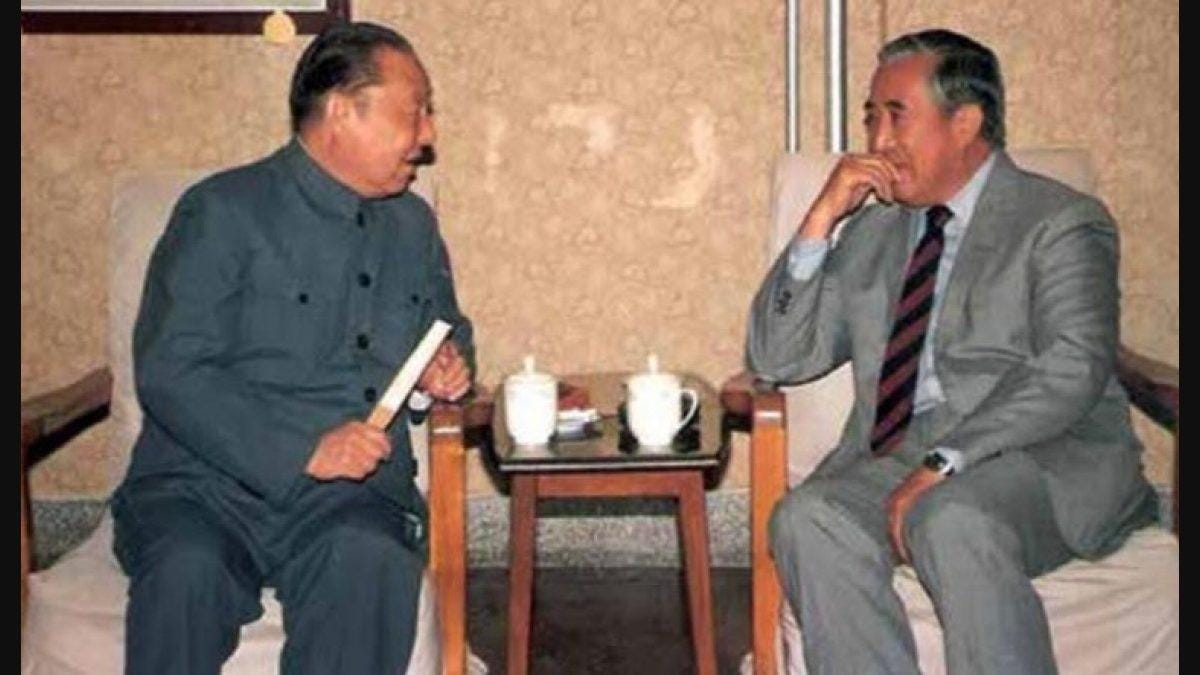
Gyalo Thondup (right) with Xi Jinping’s father, Xi Zhongxun.
In 2002, Gyalo Thondup was finally granted permission to visit Tibet, 50 years after he had last left Lhasa in 1952. He felt numb at the sight before him—his homeland had changed beyond recognition. Since the Dalai Lama’s exile, his family home had been demolished and rebuilt, while the temple of Taktser Rinpoche had been destroyed. In Jokhang Temple, apart from the statue of Shakyamuni Buddha, nearly all other relics had been obliterated.
In an interview with RFA broadcast in 2003, Thondup said neither India nor the U.S. would be able to solve the Tibetan issue, and that progress could only come through face-to-face talks with Beijing.
Gyalo Thondup dedicated his life to resolving the Tibetan issue through direct dialogue with the CCP. He believed that Tibetans, Han Chinese, and Indians would continue to live alongside one another, and that, in time, the Chinese people would come to understand that the Tibetan demand for autonomy was both legitimate and reasonable.
A Key Figure in the Tibetan Diaspora
Thondup also played a pivotal role in the Central Tibetan Administration, he served as Kalon Tripa (chairman) and later as Kalon(minister) of the Department of Security of Kashag, contributing to building a democratic Tibetan society in exile.
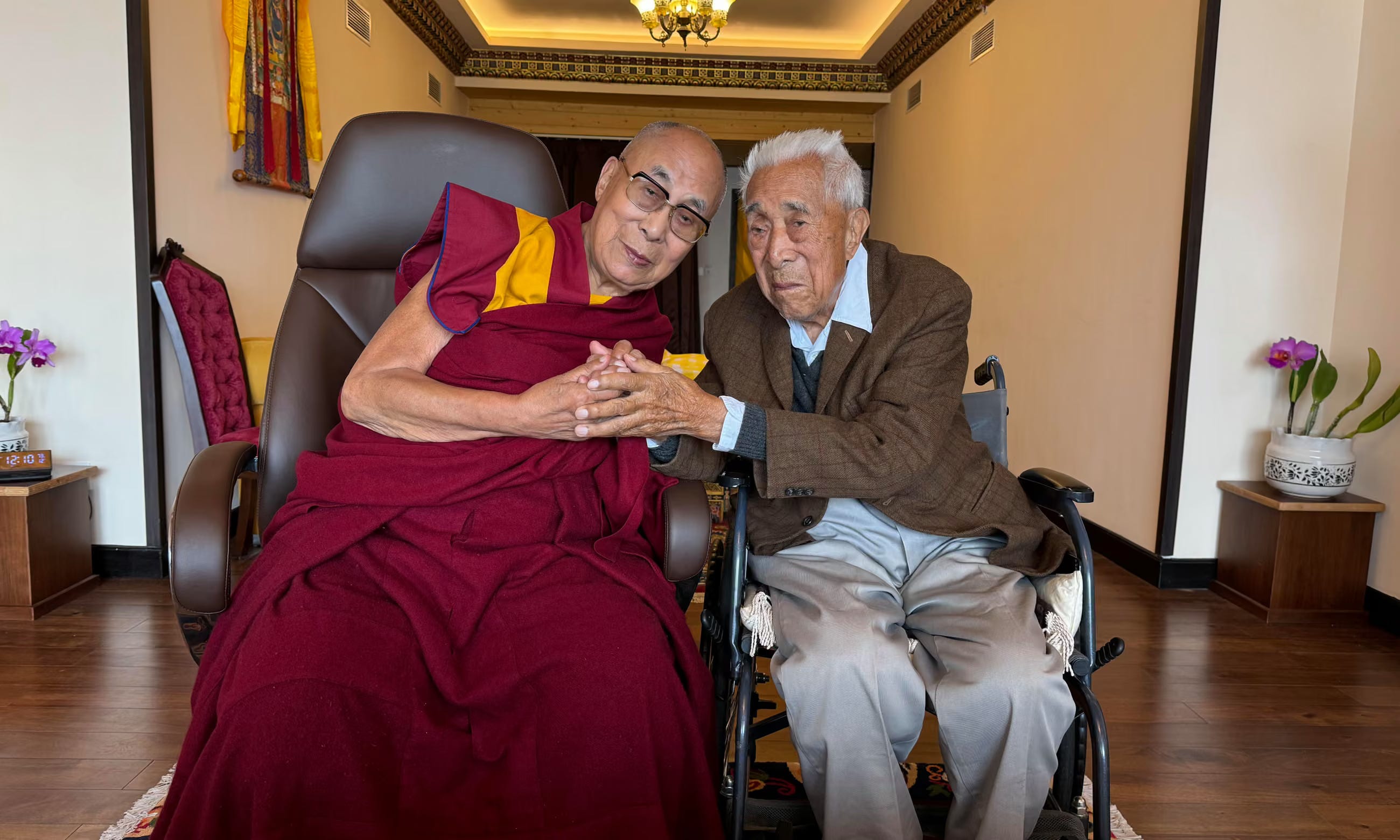
In His Twilight Years
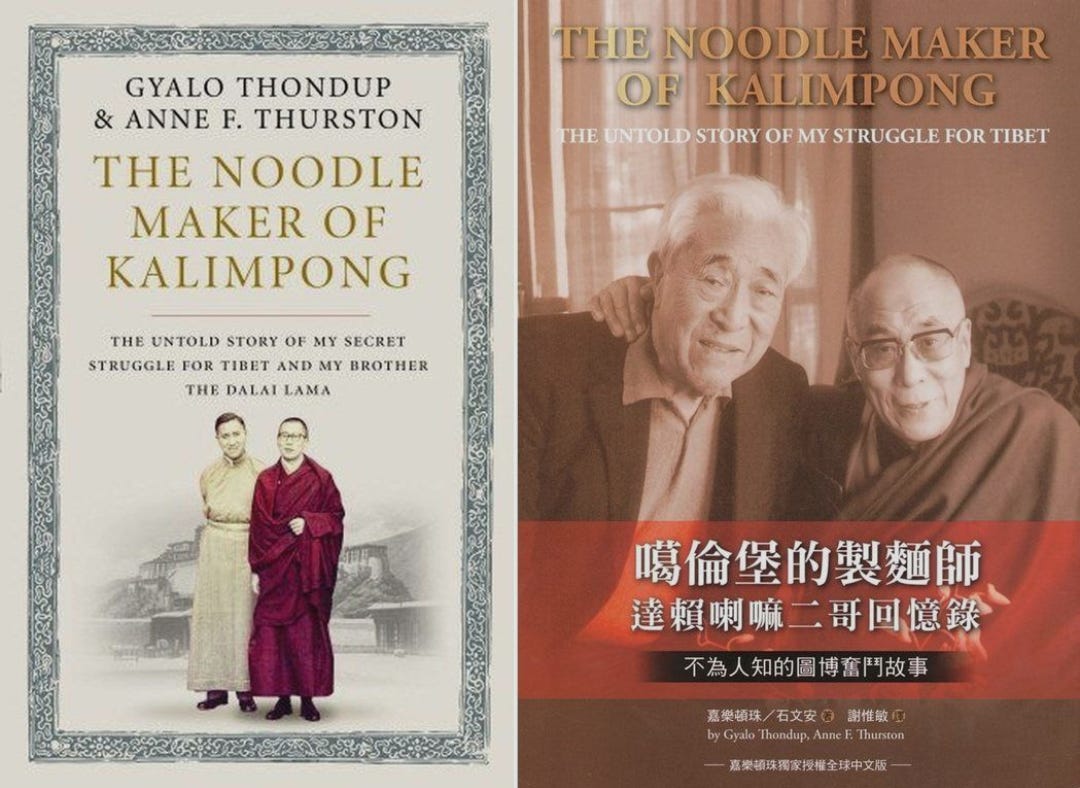
In his later years, Gyalo Thondup settled in Kalimpong, a hill town at the foothills of the eastern Himalayas in West Bengal, India. He made a living by managing the noodle factory founded by his late wife, a venture that also inspired the title of his autobiography “The Noodle Maker of Kalimpong”.
His wife, Zhu Dan, and his daughter, Yangzom Doma, passed away before him. His sons, Kedroob Thondup and Ngawang Tanpa Thondup, along with their families, survive him. Kedroob Thondup serves as a deputy of the Tibetan Parliament-in-Exile, while his wife, Chow Mei-li, is a Taiwanese politician. Together, they are dedicated to advocating for the Tibetan cause in Taiwan.
On the evening of February 8, 2025, Gyalo Thondup passed away at his home at the age of 97. The following day, his younger brother, the Dalai Lama, presided over his memorial service, praying for his “swift reincarnation” and acknowledging that he had “made great efforts in Tibet’s struggle.” The Dalai Lama expressed gratitude for his brother’s contributions.
We, Chinese Youth Stand For Tibet, deeply mourn the passing of Gyalo Thondup. Throughout his legendary life, he bore witness to nearly a century of political upheaval in Tibet and dedicated entire life to the freedom of his people.
At the conclusion of his autobiography, he wrote:
“I still believe that eventually the truth will prevail, that justice will be done, that Tibet will survive, and that we Tibetans will return home together.”
His passing in exile fills us with profound sorrow, yet his efforts will not be in vain. The bridges he built for dialogue between Tibet and China and his unwavering commitment to negotiation will continue to inspire future generations. May we carry on his legacy and bring the truth about Tibet to the world. With deepest respect, we honor his memory and pray for his eternal peace. May he soon reincarnate and once again bring hope to his beloved homeland Tibet.
Author:Tara Freesoul
Proofreaders:Hazel, Lobsang Sanggye
Editor: GD
Sources:
[1] Gyalo Thondup with Anne F. Thurston, The Noodle Maker of Kalimpong: The Untold Story of the Dalai Lama and the Secret Struggle for Tibet, PublicAffairs, 2015
[2]https://fr.wikipedia.org/wiki/Gyalo_Thondup?wprov=sfti1#
[3]https://en.wikipedia.org/wiki/Gyalo_Thondup?wprov=sfti1#
[4]https://www.chinesepen.org/blog/archives/69152
[5]https://savetibet.org/kasur-gyalo-thondup/
[6]https://fr.wikipedia.org/wiki/Khedroob_Thondup?wprov=sfti1#Biographie
[7]https://www.rfa.org/english/tibet/2025/02/10/gyalo-thondup-cia-tibetan-resistance/
[8]https://tibet.net/important-issues/sino-tibetan-dialogue/an-overview-of-sino-tibetan-dialogue/