

The Dossier
A Documentary by Zhu Rikun
A Huangniutian Production
Fanhall Films
Film Festivals:
Locarno Film Festival
Vancouver International Film Festival
International Film Festival WATCH DOCS
Hong Kong Indie Film Festival
Dharamshala International Film Festival
Documentary
Audio: Stereo
Color
Subtitles: English
Running Time: 129 min
Country: China
Year: 2014
Director / Producer: Zhu Rikun
Cinematography: Zhu Rikun, Wang Wo
Editor: Xu Xin
Post-production: Primo Films
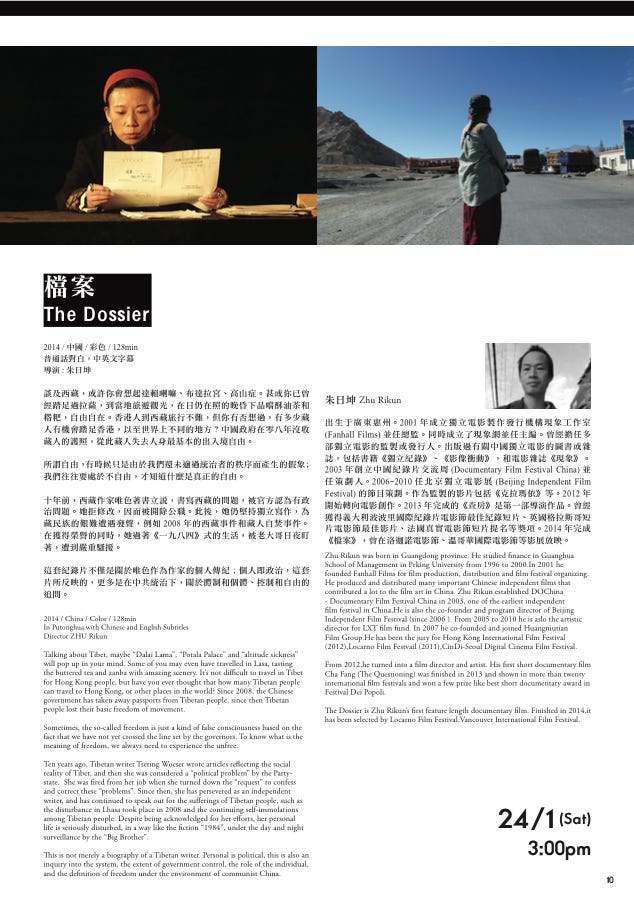
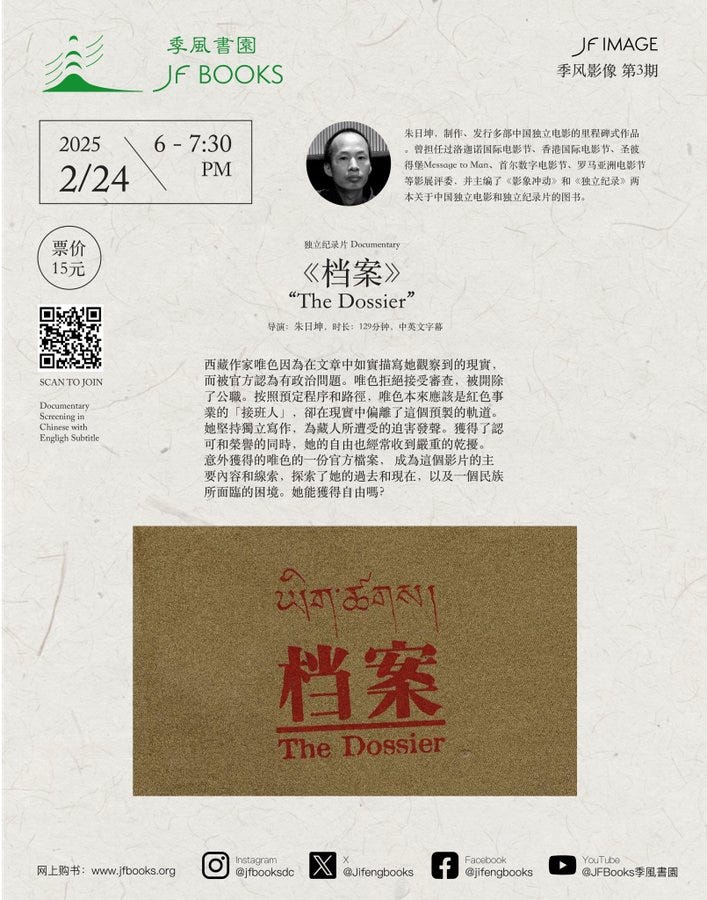
Film Synopsis: Ten years ago, Tibetan writer Tsering Woeser’s efforts to document and present the reality of Tibet was considered a “political problem” by the Party-state. She was fired from her job when she turned down the “request” to confess and correct these “problems”. Since then, she has persevered as an independent writer and has continued to speak out for the sufferings of Tibetan people. Ever since the disturbance in Lhasa took place in 2008, and as the number of self-immolations among Tibetan people has risen dramatically, her writing and her blog have become an essential channel for the world to see Tibet. But despite being acknowledged for her efforts, her personal life and freedom have been seriously disturbed. As an unexpected event, we came into possession of Woeser’s official dossier, which then became the main thread of this film. Through this lengthy and dull dossier, we see how a supposedly well-shaped screw and successor of the Chinese communist cause went off the premade track in reality. Has she obtained freedom?
25mins short version:
Click the button to watch the full 2-hour film!
Password: Freedom Available until March 8, 2026
Produced by Zhu Rikun | The Broken Egg Under the Red Flag: Tsering Woeser and Her Dossier
Author: Liu Yanzi, Chinese-Japanese bilingual writer, translator, and teacher
The Dossier: The Tool for Totalitarians to Control the People
What exactly is a “dossier”? Whenever this word appears in translation, there is always someone who asks if it’s equivalent to Japan’s “My Number Card”. Explaining this to a naive person living under a free and democratic system takes much effort, like reciting a tongue twister.
Starting in 2016, the Japanese government has been using personal identification numbers in social security, taxation, and disaster prevention, issuing a 12-digit “My Number” to citizens and foreigners holding resident registration certificates. Although the government emphasizes that the purpose is to improve administrative transparency and to achieve social equality and justice, it has faced criticisms and opposition from various groups and individuals, including the Japan Federation of Bar Associations (JFBA) and the Japan Chamber of Commerce and Industry (JCCI). The reasons given are that it infringes on personal privacy, with some elevating it to the level of the pre-war Special Higher Police’s surveillance. Therefore, even now, there are still online calls demanding: “Do not expand the use [of My Number], abolish opposition associations.” Last year, as part of the economic countermeasures against COVID-19, the government distributed 100,000 yen to each citizen (including foreigners), without requiring a “My Number Card” to receive it.
However, “dossiers” are not ordinary personal records; they are an invisible black hand jointly created by various institutions under the socialist banner, such as schools, work units, and even the party and youth league organizations at the bottom of the pyramid, which control the person’s transfer, promotion, insurance, housing, social security, and even life and death.
Mr. Xu Fen once pointed out: dossiers are tools of power; they are an “objective record” constructed and preserved for an individual. However, the materials were provided secretly by informers driven by human depravity and sordid motives–jealousy, fear, flattery, betrayal, and treachery.
The Egg Under the Red Flag was Suddenly Smashed: Woeser’s Dossier
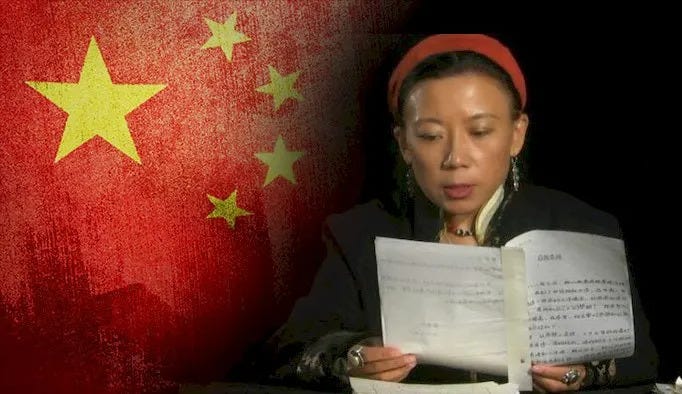
In 2014, the Tibetan writer Tsering Woeser miraculously obtained her political dossier after being expelled by the Tibet Autonomous Region Federation of Literary and Art Association (西藏自治区文学艺术界联合会) for ten years on the grounds of “unauthorized resignation”. But Woeser’s former employer soon regretted it and tried to take it back from her mother. Upon hearing the news, independent filmmaker Zhu RiKun immediately recognized its importance and rushed to Lhasa, taking the dossier back to Beijing, and asked Woeser to face the camera and slowly pull out page after page from a large kraft paper envelope covered with the word “DOSSIER” in large red characters in both Chinese and Tibetan, reading its contents aloud word by word.
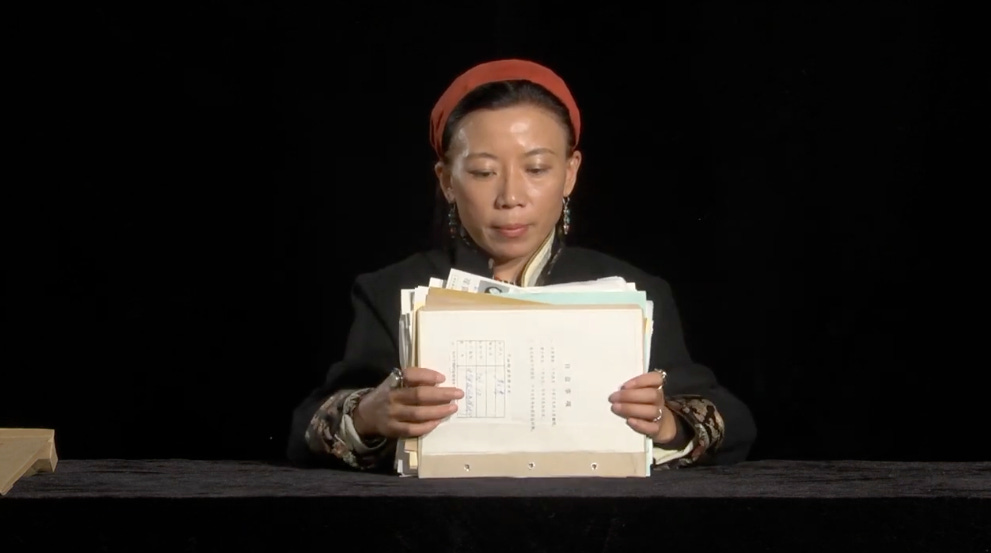
This 128-minute documentary, titled The Dossier, has been screened at several international film festivals.
The dossier envelope includes ten types of files, including a “Resume”, “Political Appraisal”, “Reference”, “Party Youth League Membership Application”, “Awards or Punishments”, and “People’s Hospital Physical Examination Form”, which contain information such as date of birth, weight, height, education, specialties, ethnicity, spouse, political affiliation, prominent family members and social relations, and whether the individual supports the Party’s policies. The period covers her time from attending kindergarten in Woeser’s early childhood, through primary school, middle school, high school, the preparatory program at Southwest Minzu University, her undergraduate majored in Chinese Language and Literature, her job assignment at Garzê Newspaper after graduation, she transfer to Tibet Literature two years later, and finally up to her departure from Lhasa in 2004.
I have always kept quiet, because I do not know anything.
I grew up amidst the bugle calls of the Liberation Army since the moment that I was born,
I am fit to be a successor of communism.
Woeser once wrote in a poem.
Woeser’s mother was born into a manor family, but later became an ethnic minority cadre trained by the Party. Her father was a high-ranking Tibetan military officer, and he left behind hundreds of precious photos of Tibet during the Cultural Revolution. Her uncle begged her mother to distribute her private properties to the servants and farm laborers, and even put a small Five-Star Red Flag on the horns of each ox. He studied at the Central Institute for Minzu University of China (MUC), becoming a graduate student, and then joined the Party while working in Chamdo Prefecture, and later became a Tibetologist
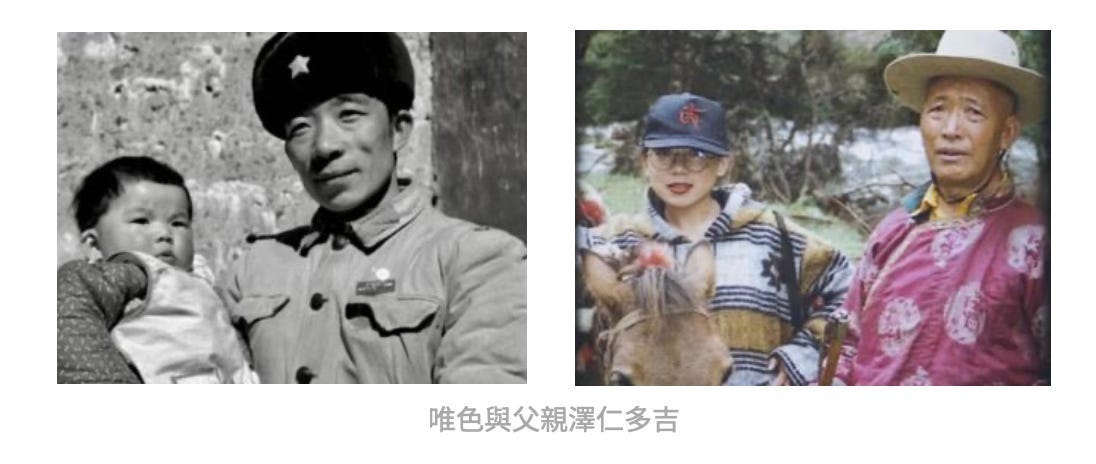
Woeser and her father
Woeser excelled academically and morally from a young age, earning the titles of “Three Virtue” student and “Outstanding Communist Youth League Member”. Her “Political Evaluations” for her university preparatory and undergraduate studies stated that, “This student is skilled at writing, actively participates in creating wall newspapers, follows the spirit of Zhang Haidi, loves the socialist system, and offers a sincere and loyal heart to the great Chinese Communist Party”; and that she “deeply appreciates the Party’s care for me as a minority student”. Her “political vetting” for her job transfer stated, “[She] upholds the Party’s Four Cardinal Principles and the Third Plenary Session of the 11 Central Committee”, among other platitudes. Her shortcomings included “emotionally driven and having once equated personal struggle with ideals”, and “believing her IQ was too low”.
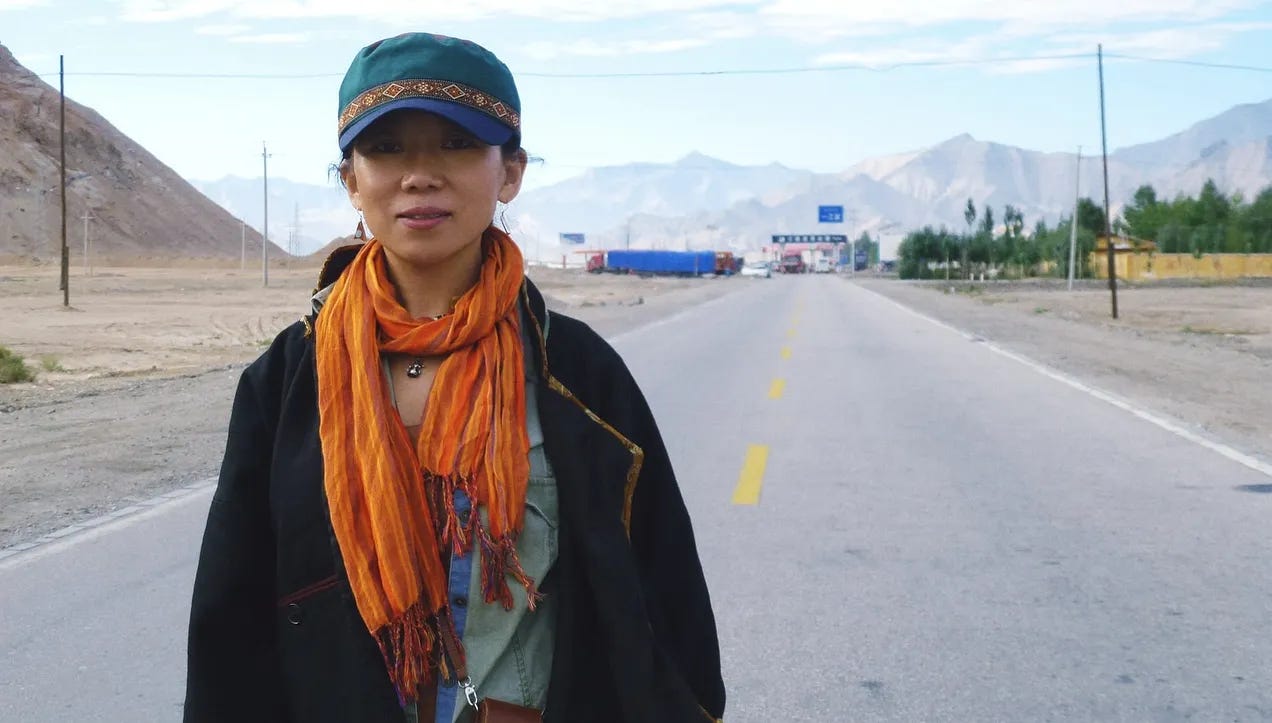
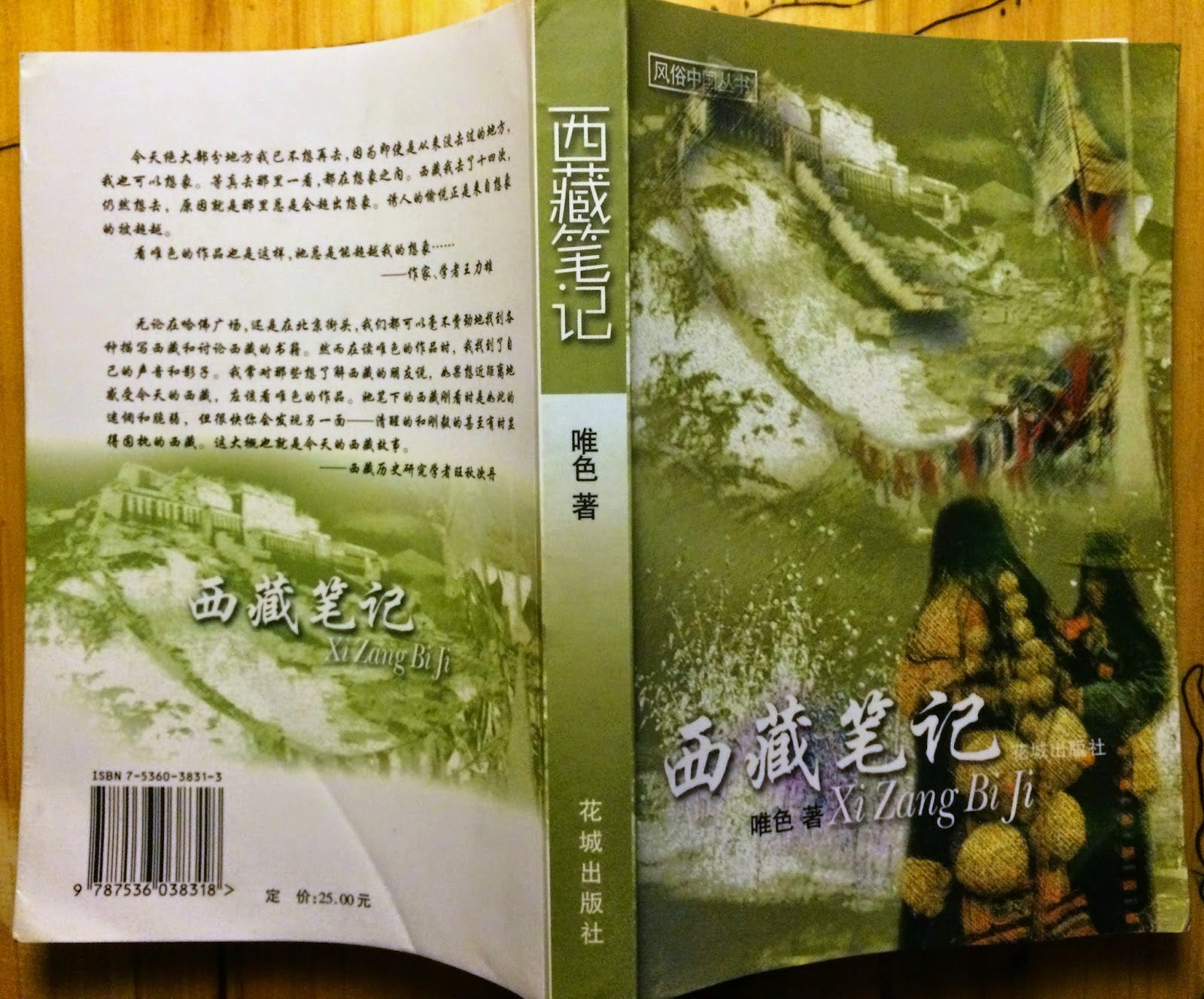
However, in January 2003, Woeser’s collection of essays, Notes on Tibet, was labelled a “serious political error” by the CCP’s Central Propaganda Department and the United Front Work Department. Generally, if a Han Chinese writer “violates the ban”, only the Central Propaganda Department issues the order, but since Woeser is a Tibetan writer, she was doubly and completely banned.
The Tibet Autonomous Region Federation of Literary and Art Association also concluded that: “[She] exaggerates and glorify the role of religion in social life; some essays reveal faith and reverence for the Dalai Lama; and even exhibit narrow nationalist ideas and views that are detrimental to national unity and ethnic solidarity. [She] turns a blind eye to the tremendous achievements during the decades of reform and liberation in Tibet, and indulges too much in hearsay and nostalgia for Old Tibet, making erroneous judgements in value, deviating from the correct political principles, and have failed to fulfill the social responsibility that a contemporary writer should bear and the political responsibility that should be borne in building advanced culture.
Initially considered a “Potential Communist successor” by the Party, Woeser was branded with the scarlet letter of original sin. The Party launched a relentless “re-education” campaign against her, using her relatives and work unit to attempt to force her to say things against her conscience, such as “the Dalai Lama is a separatist”. In other words, when someone violated the Party’s hidden rules, they were not only punished within the system but also removed from their family, friends, and kinship ties, while simultaneously intimidating others into remaining silent and distancing themselves. Finally, they gave Woesar a “Fumi-e”: to write an article praising the Qinghai-Tibetan Railroad.
Woeser left a letter for the Party Committee of the Federation of Literary and Art Association, titled “I Will Always Be a Tibetan Writer with a Buddhist Faith,” frankly admitting, “I cannot get past this ‘hurdle,’ nor do I want to ‘get past’ it, and in my view, such ‘getting past’ goes against a writer’s duty and conscience.”
From then on, Woeser was “deprived of everything except being imprisoned.”
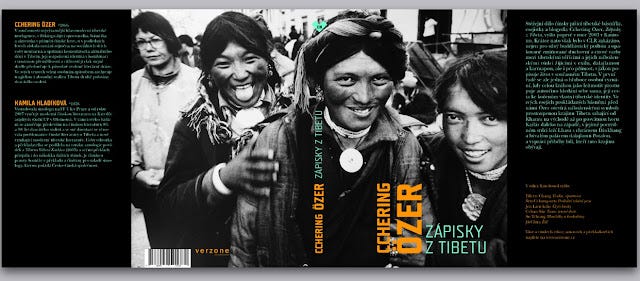
Notes on Tibet (Czech translation)
The banned book Notes on Tibet
So, what kind of book is Notes on Tibet ? Opening the book reveals the author’s own words:
“To me, the words I write are the words that flow from my heart. I am but a recorder of my heart, I heed to the call of my soul. When my heart was moved, touched, stirred, startled, shaken, and deeply moved… I know it is time to record it. And in Tibet, my heart often exists in such a state.”
This book consists of several sections: “Foreword: Tibet Above,” “Travels in Tibet,” “The Tibetan World,” “Thoughts on Tibet,” and “Postscript: The Difficulties of Describing Tibet.”
According to Japanese scholar Okamoto Masahiro, when the People’s Liberation Army (PLA) first entered Tibet in the 1950s, the primary language in Lhasa’s elementary education was still Tibetan because the Tibetan cadres didn’t understand Mandarin. There was even a class called “Basic Religious Knowledge” on Saturday afternoons. However, this was merely a “strategic concession” by the CCP. By 1958, religious time was abolished entirely; the political class consisted only of Mao Zedong, the Party, the PLA, and the Seventeen-Point Agreement. After the establishment of the Lhasa Middle School, there was even greater emphasis on deleting “content detrimental to national unity”. Because the Tibetan language was unsuitable for teaching the sciences such as mathematics, chemistry, and biology, all classes were taught in Mandarin. The “Suppression of the Rebellion” in 1959 led to a large-scale exodus of monks and nobles who were the elite in Tibetan education; the remaining monks and nobles were criticized as “The Three Major Lords”. Monasteries originally had an educational function, such as teaching literacy, literature, astronomy, and more. However, with the large-scale destruction of monasteries, how can they sustain without the foundation? If this is the case in the Tibet Autonomous Region (TAR), one can only imagine the situation of the surrounding Tibetan areas. In the Tibetan regions of Sichuan Province (Garzê and Ngawa Autonomous Prefectures and Muli Autonomous County), Tibetan-language education was abolished entirely for 20 years, from 1958 to 1978, and classes were taught only in Mandarin. Compared to Qinghai and Gansu provinces, the impact of the Sinicization of Tibetan culture in Sichuan Province was far stronger.
The fundamental question of identity, “Who am I ?” has long perplexed Woeser. From attending primary school in Dawu County (རྟའུ་རྫོང་།), Garzê Tibetan Autonomous Prefecture, middle school in Kangding, Dartsedo (དར་རྩེ་མདོ།), and then university preparatory and undergraduate programs in Chengdu, she has never received any education in Tibetan language, culture, or history.
In Notes of Tibet, Woeser records her profound pain and arduous spiritual journey regarding her homeland, lineage, personal identity, and ethnic identity, “For a long time, I’ve been filled with confusion, anxiety, and a sense of inferiority. Why is that? Is it because I have a fear of being accepted by either Tibetans or Han Chinese, or because, as a destined impure Tibetan, I have lost all the apparent signs of being a Tibetan?
From Chengdu to Kangding, and finally back to the homeland Lhas,a that she has left for many years, the first thing she did was to change her Mandarin name “Cheng Wen Sa” (程文萨)to her Tibetan name, given to her by her dad when she was born: Tsering Woeser, meaning a light that shines forever. In the river of these names—a metaphor—she traces back to her ancestral home, settles down, lives, takes root, and begins learning Tibetan.
“Yet, being a Tibetan myself, Tibet’s colossal but suffering figure presses heavily on my back like a giant boulder. ‘Glory’ or ‘incompetence’, I can only choose one, it’s either one or the other!”
Freed from the constraints of her dossiers, Woeser gained the freedom of expression, chose the thorny path of “glory”, chose exile, and chose literature as a testament.
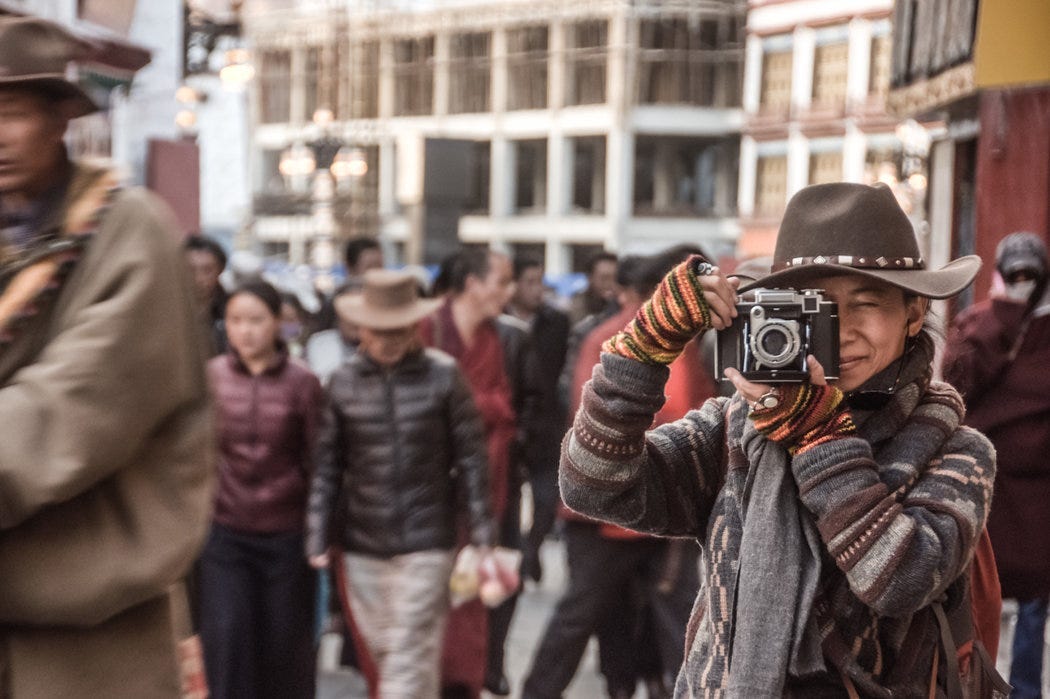
Image by Pazu Kong
To this day, her writings remain hidden within China, and it is also impossible for her to receive a passport to travel abroad. However, she has already published a dozen books in Taiwan; her blog, “Invisible Tibet”, shines like a beacon of conscience, illuminating the corners of society that people try to forget and unsee. Her writings have been translated into multiple languages and have gained worldwide acclaim.
I am most afraid of pain; even a slap to the face would destroy me.
Following the “March 14 incident” in 2008, Woeser’s situation became increasingly complex, and she even briefly lost her freedom. Not only was she threatened, searched, and summoned for questioning, but the Party even used medieval collective punishment to affect her relatives and friends. This, for her, caused her more heartache than her own situation.
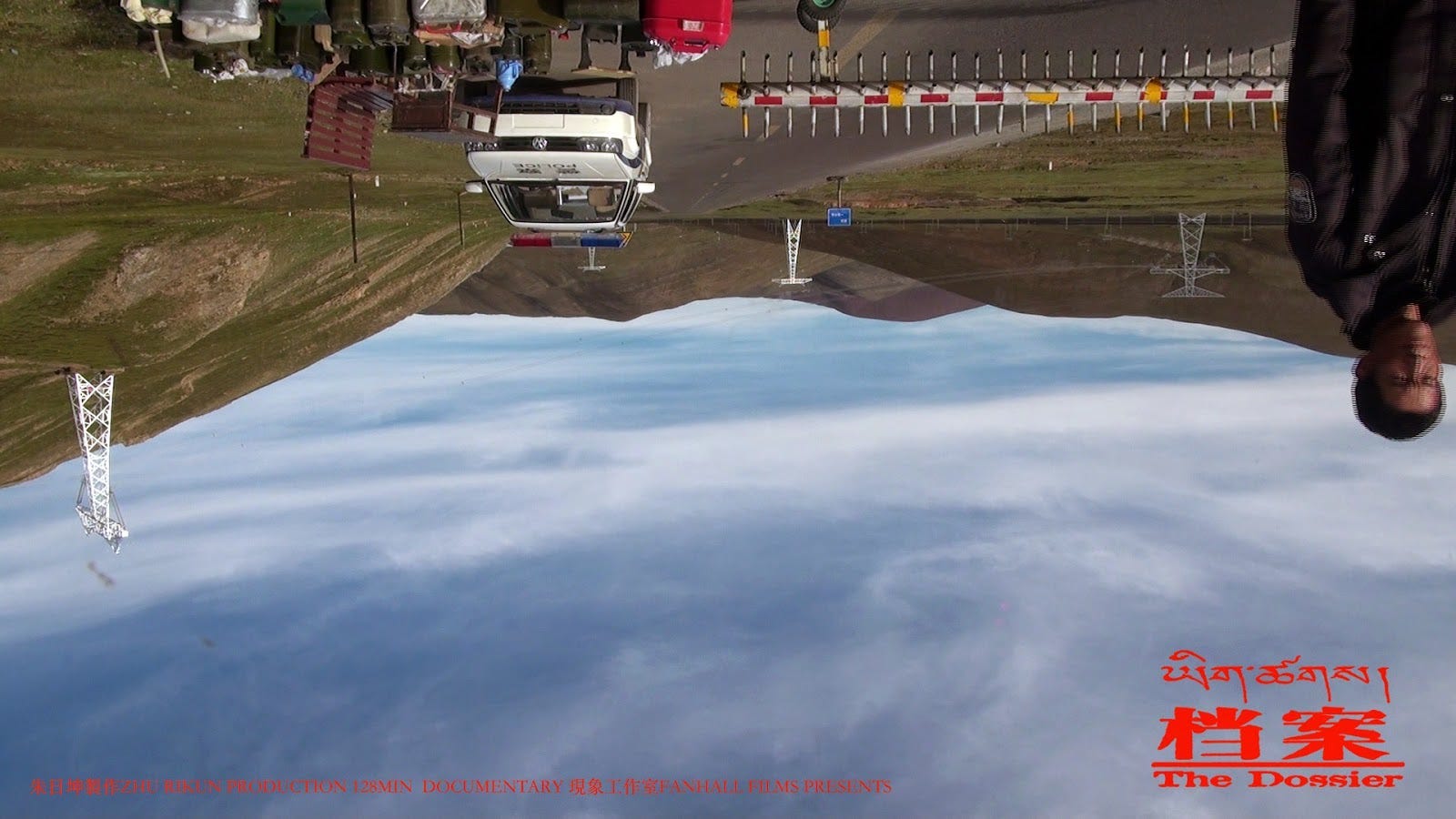
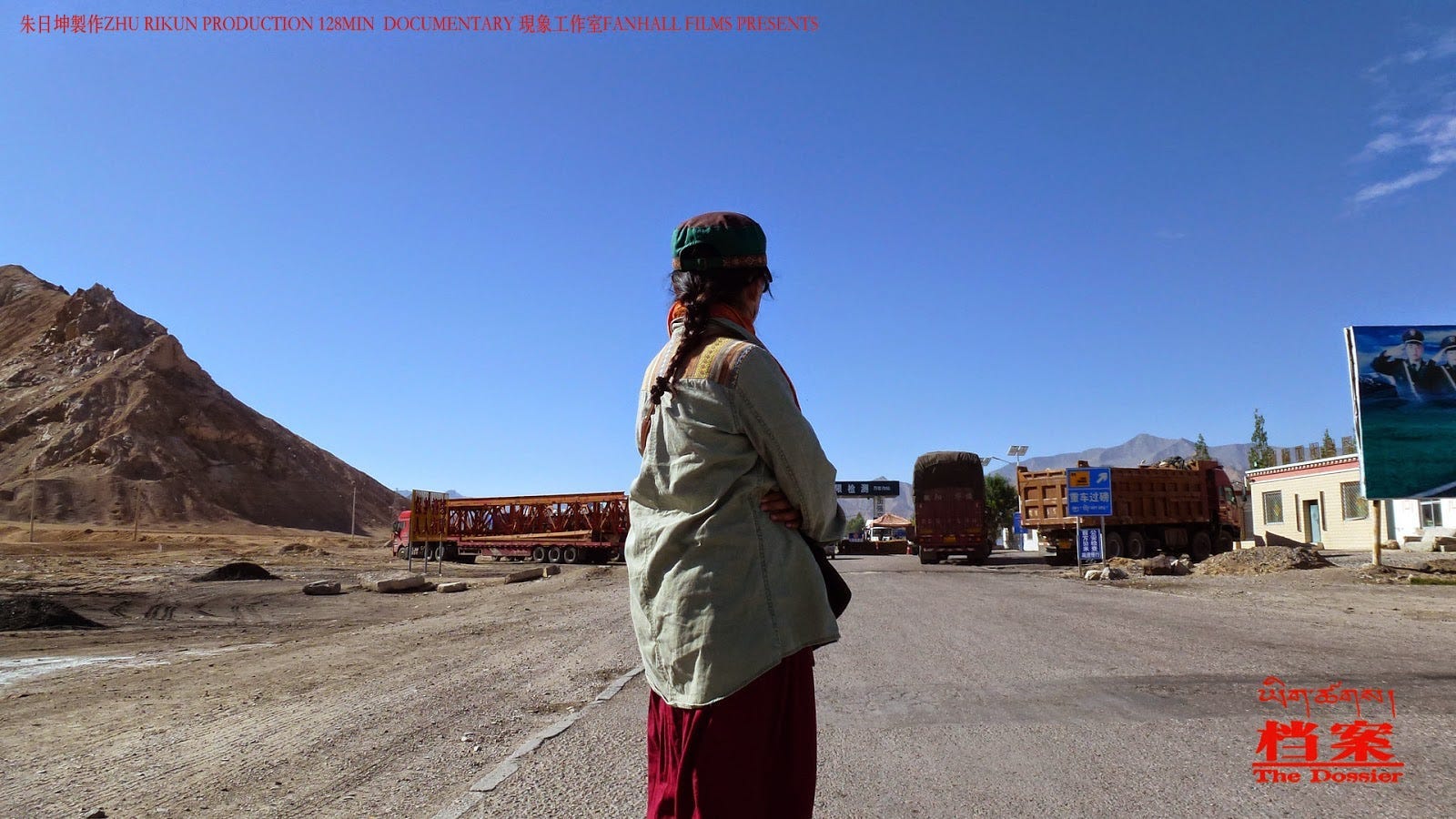
The Dossier documents how, in 2014, Woeser was denied entry into Tibet because of her Tibetan identity while traveling from Beijing back to Lhasa. Military vehicles drove by one after the other, hidden cameras lurked throughout Lhasa, cars followed her, and even the moment she entered, “state security” officers would be right there at her door…
There is one scene that I will never forget.
Woeser’s husband, Wang LiXiong, is at home “instructing” her on what kinds of everyday personal items can be “brought in (to the jail)”; “if you have cash on you, it can be used to bribe the jailers to buy things inside”. Woeser uses a large plastic Ikea bag to pack things one by one: slippers, toothbrush, towel, change of clothing, glasses, etc. She also wrapped three thousand RMB cash in layers of clothing and tucked it into the bottom of the bag, just in case.
Speaking of the body, I couldn’t help but tremble inwardly,
I am most afraid of pain; even a slap to the face would destroy me.
I count for them in shame, their sentences that seem never-ending.
The good hearts of Tibet, not just one, but many, beat persistently in the hell of reality.
Undoubtedly, the dossiers were carefully selected by malicious forces and were incomplete. Reading aloud from the dossiers and making them public were, for Woeser, another agonizing spiritual journey, like peeling back the layers of an onion.
I’m sure I also have a leather bag full of platitudes, exaggerations, and lies, and I don’t know where it’s hiding, haunting me. When it suddenly pops out, I wonder if I’ll have the courage to face it.
After the fall of the Berlin Wall, East German citizens stormed the headquarters of the Stasi (Ministry of State Security), and many files and dossiers were already lost.
徐蕡着:《暴政史-二十世纪的权力与民众》 牛津大学出版社2020年页113
《西藏的秘密-献给狱中的丹增德勒仁波切、邦日仁波切和洛桑丹增》,出自《唯色诗选:雪域的白》 唐山出版社2009年页36-42
王力雄著:《西藏面对的两种帝国主义—透视唯色事件》 博讯网文2006年
冈本雅享:《中国の少数民族教育と言语政策》(増补改订版)社会评论社2008年
唯色着《西藏笔记》 广州花城出版社2003年
在中国,“档案”如影随形,纽约时报,杰安迪 2015年3月17日
Original: 紅旗下破碎的蛋—唯色和她的《檔案》
翻译: 尕登 编辑:GD
图片均来自网络公开搜集,如果有侵权作品请联系我们删除!
All images are collected from publicly available online sources. Please contact us to remove any infringing content.