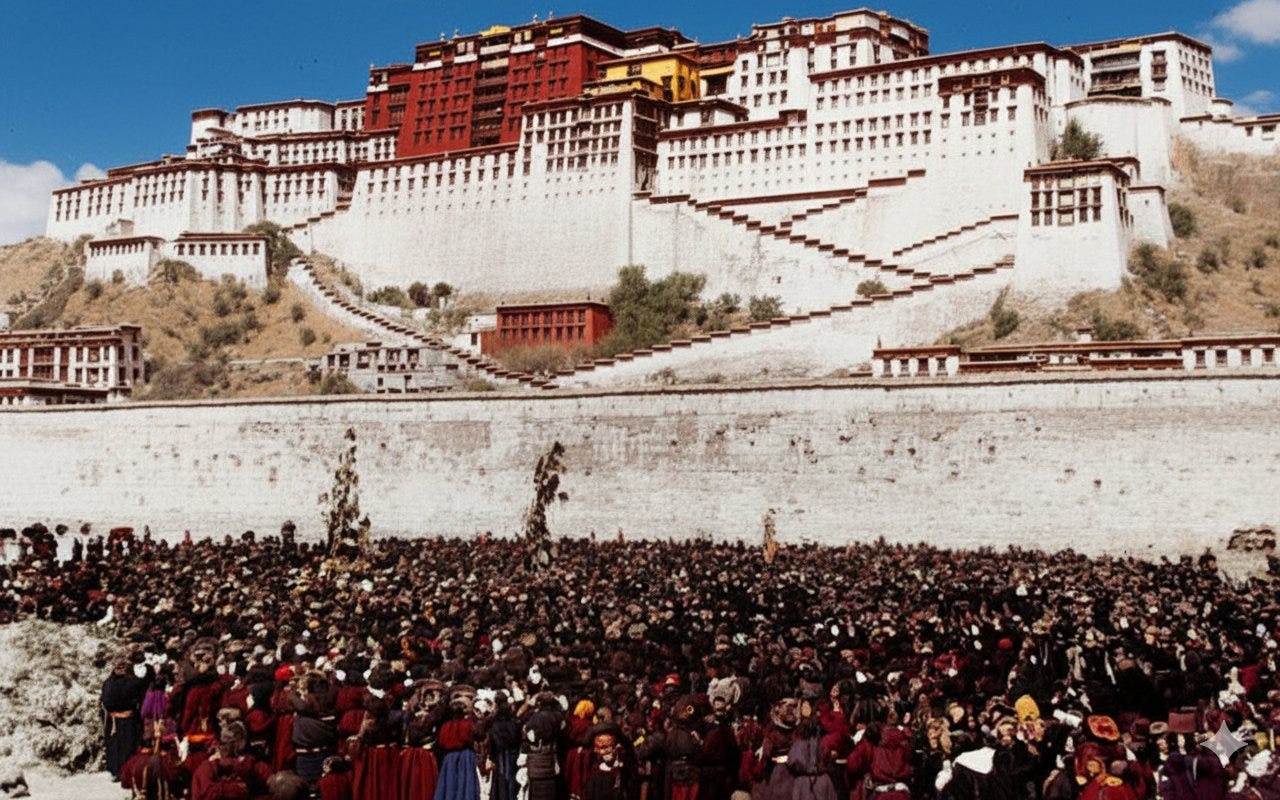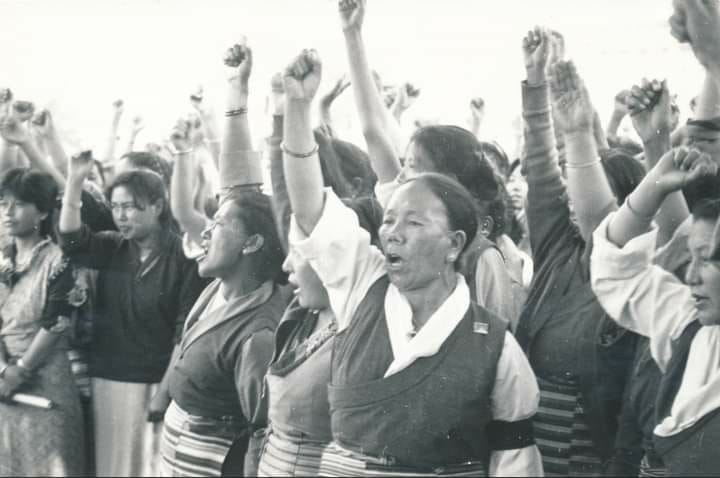
1959年3月12日,超过15,000名藏人妇女聚集在拉萨布达拉宫前,抗议中国对图博的占领。参与者大多是妇女,因为许多男人在前几天的抗议活动中被捕、受伤或被杀。这一天后被称为藏人妇女起义日。
On March 12, 1959, more than 15,000 Tibetan women gathered in front of the Potala Palace in Lhasa to protest against China's occupation of Tibet. Most of the participants were women, as many men had been arrested, injured or killed in the protests in the previous days. This day later became known as the Tibetan Women's Uprising Day.
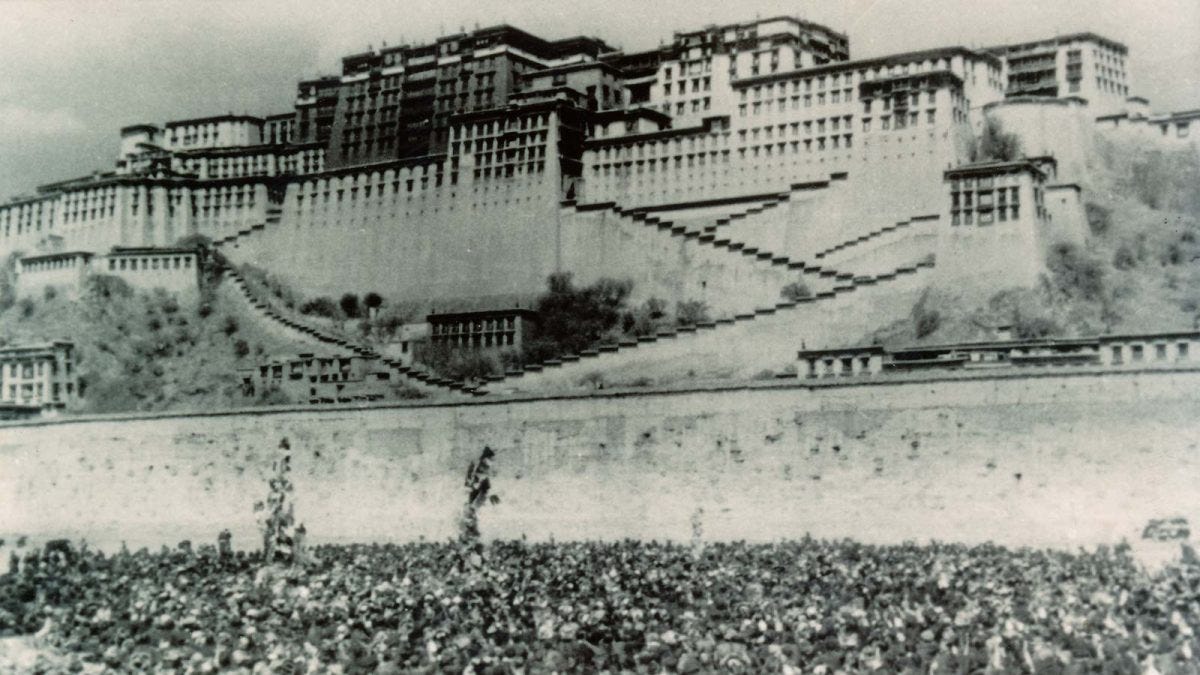
许多人知道 3 月 10 日是藏人抗暴日,但你们是否知道,就在两天后的 3 月 12 日,发生了一场由藏人女性领导的重要事件?如今,这个日子被纪念为 #藏人妇女抗暴日
这次历史性的藏人妇女示威活动决心要求中国人退出藏地;让中国人知道藏地属于藏人;他们(汉人)没有任何权利和权威干涉西藏事务。来自各行各业和不同地区的藏人妇女自发聚集在一起,成立了第一个全国性西藏妇女协会。
这场抗议由 Kundeling 家族的藏人女性 帕莫·库桑 领导。3 月 12 日,她和 拉萨爱国女性阵线 (Lhasa Patriotic Women’s Front) 带领上千藏人女性在布达拉宫前聚集,标志着藏人女性独立运动的开始。两天后的 3 月 14 日,她在布达拉宫发起了同样的抗议。
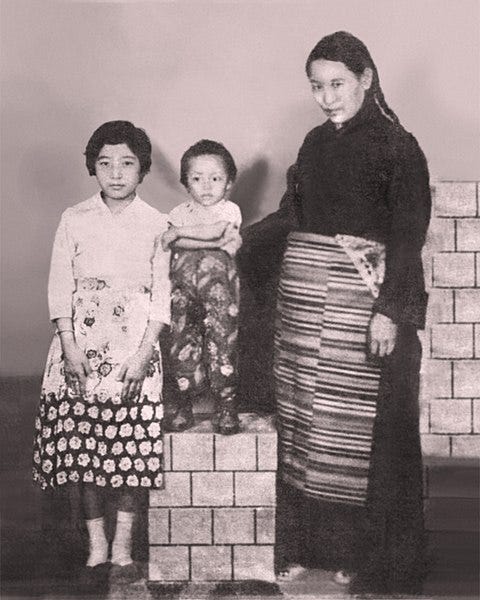
帕莫·库桑,她于 1959 年 3 月 12 日在布达拉宫外大声疾呼,呼吁“藏人不应该用暴力来反击,而应该用和平和同情来迫使中国人回到自己的土地上。” 这一天标志着第一次由妇女领导的反对中国占领的非暴力和平抗议,为西藏历史上的非暴力抵抗奠定了基础。十年后的文革中,帕莫·库桑因组织抗议活动而被处决。
她们的抗争立刻遭到中国当局的严厉镇压。作为六个孩子的母亲,Pamo Kusang 立即被逮捕入狱,与孙女一同被关押在名为 “金秋司令部” 的军事总部,并在之后多年遭受酷刑和审讯。1970 年,她在狱中组织了另一场抗议,与狱中女性一起在空地上游行并高呼反政府口号。这次抗议导致她与其他囚犯一同被处决。与此同时,大量参与起义的女性被囚禁、遭受酷刑、处决,甚至死于狱中。
在 1987-1996 年藏人抗议高峰期,女性至少占抗议者的三分之一,并始终坚持非暴力原则。2012 年初,连续五名藏人女性自焚,抗议中共当局对藏文化和寺庙的破坏。西藏学者 Robbie Barnett 指出,藏人女性的抗议往往比男性更加审慎,更加注重抗议的象征意义以及非暴力信息的传递。
在许多历史记载中,女性对政治和社会运动的参与往往被忽视,但我们不应忘记她们同样是历史的推动者和书写者。对于女权主义支持者而言,#藏人妇女抗暴日 是一个反思的机会,让我们看到 反威权与反父权的共同斗争,以及对自由和平等的普遍渴望。
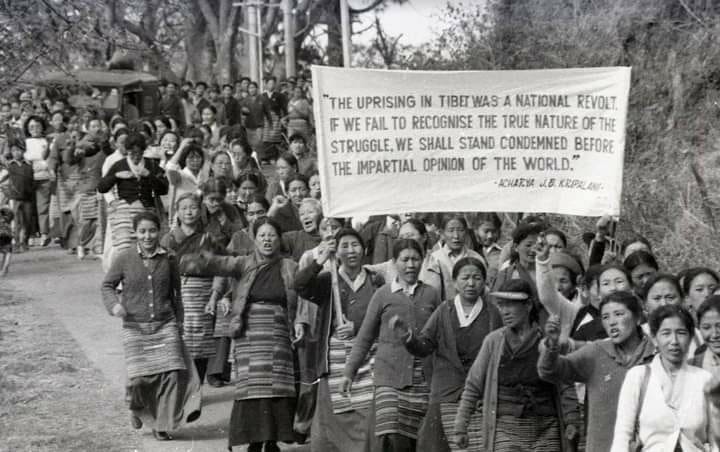
Many people know that March 10 marks Tibetan Uprising Day, but are you aware of another significant event led by Tibetan women just two days later on March 12? Today, that date is commemorated as Tibetan Women’s UprisingDay.
This historic Tibetan women's demonstration was determined to demand that the Chinese withdraw from Tibet; to let the Chinese know that Tibet belongs to the Tibetans; and that they (the Chinese) have no right or authority to interfere in Tibetan affairs. Tibetan women from all walks of life and different parts of Tibet spontaneously came together to form the first national Tibetan Women's Association.
This protest was led by a Tibetan woman named Pamo Kusang from the Kundeling family. On March 12, she and the Lhasa Patriotic Women’s Front led thousands of Tibetan women to gather in front of the Potala Palace—an event marking the start of the Tibetan women’s independence movement. Two days later, on March 14, she launched the same uprising at the Potala Palace once again.
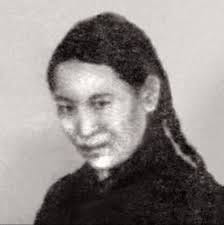
Pamo Kusang, who led the protest outside the Potala Palace on March 12, 1959, spoke out and called for “Tibetans not to fight back with violence, but to force the Chinese back to their land with peace and compassion.” This day marked the first active non-violent protest against Chinese occupation led by women, laying the foundation for peaceful resistance in Tibetan history. Ten years later, in culture revolution, Pamo Kusang was executed for organizing the protest.
Their protest was quickly met with severe repression by the Chinese authorities. A mother of six, Pamo Kusang was immediately arrested and imprisoned, detained together with her granddaughter at a military headquarters called “Jinqiu Siling Bu,” where she was tortured and interrogated for years.
In 1970, she organized another protest in prison, joining other women in a march across the prison yard while shouting anti-government slogans. This protest led to her execution, along with several other inmates. At the same time, many women who participated in the uprising were incarcerated, tortured, executed, or died in prison.
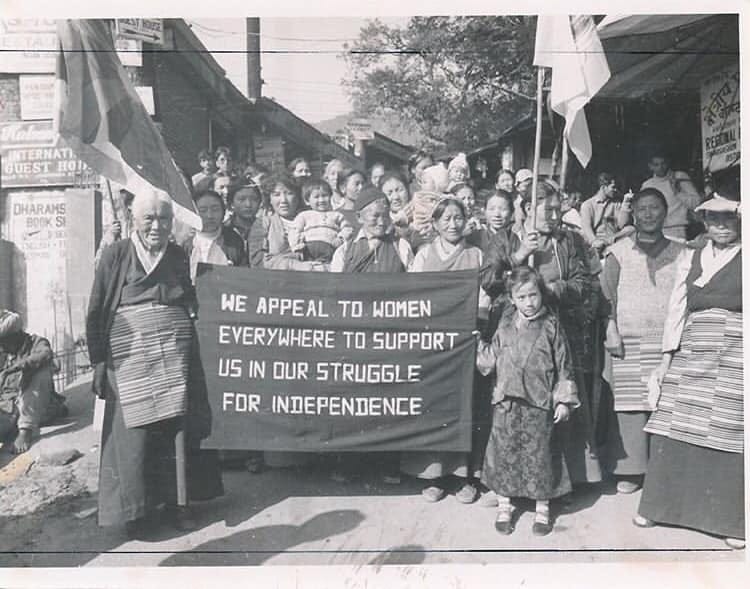
From 1987 to 1996—a period marked by frequent Tibetan protests—women constituted at least one-third of the protesters, consistently adhering to a principle of nonviolence. In early 2012, five Tibetan women self-immolated to protest the Chinese authorities’ destruction of Tibetan culture and monasteries. Tibet scholar Robbie Barnett noted that Tibetan women’s protests are often more deliberate and cautious than men’s, emphasizing symbolic significance and the transmission of a nonviolent message.
In many historical narratives, the record-keepers overlook women’s participation in political and social movements. However, we must not forget that they, too, have propelled and shaped history. For feminist supporters, reflecting on Tibetan Women’s Uprising Day offers an opportunity to recognize the shared struggle against authoritarianism and patriarchy, as well as the universal desire for freedom and equality.
我们和她们站在一起!
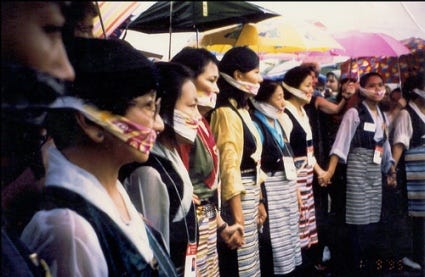
We stand with you, the Devotedly Defiant Tibetan Women!
文:川,GD 编辑: GD 图片来自网络