

展览推荐 Exhibition Recommend |Georgia 佐治亚州
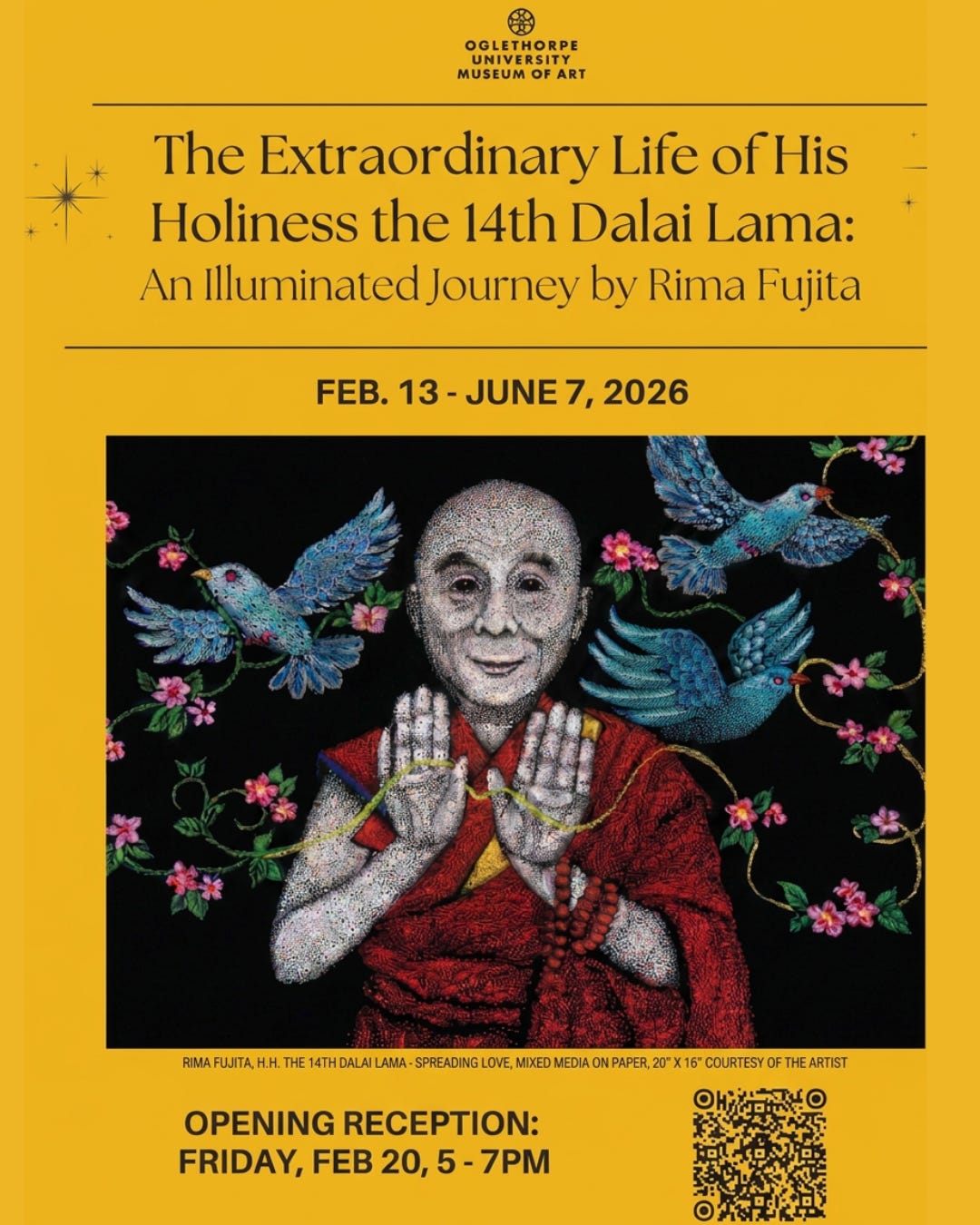
【插画展 | 第14世达赖喇嘛尊者的非凡一生】
🗓 2026年 2月13日 – 6月7日
📍 佐治亚州 Oglethorpe University Museum of Art(OUMA)
4484 Peachtree Road, NE, Lowry Hall, 3rd Floor, Brookhaven, Georgia 30319
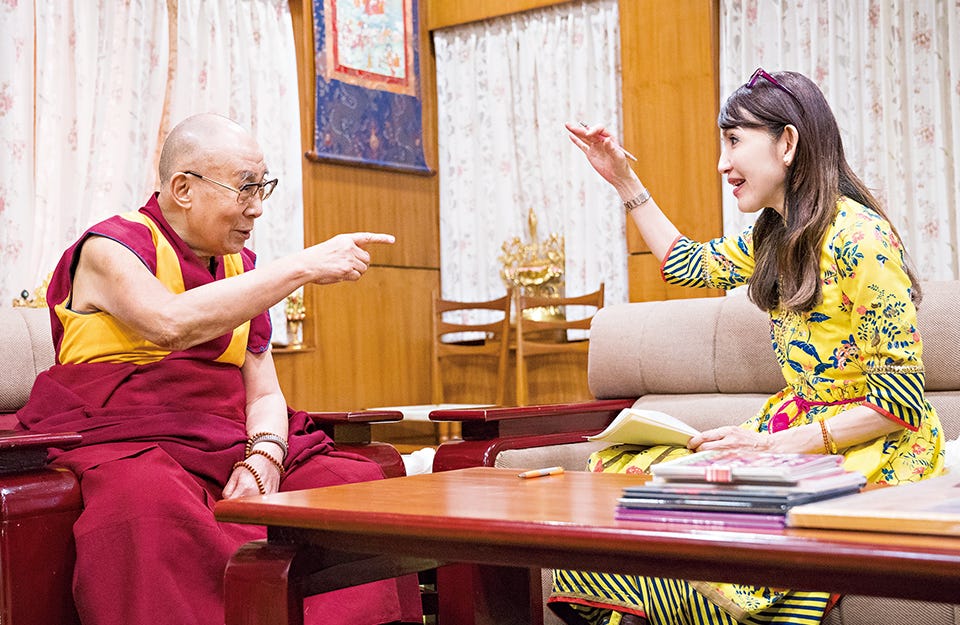
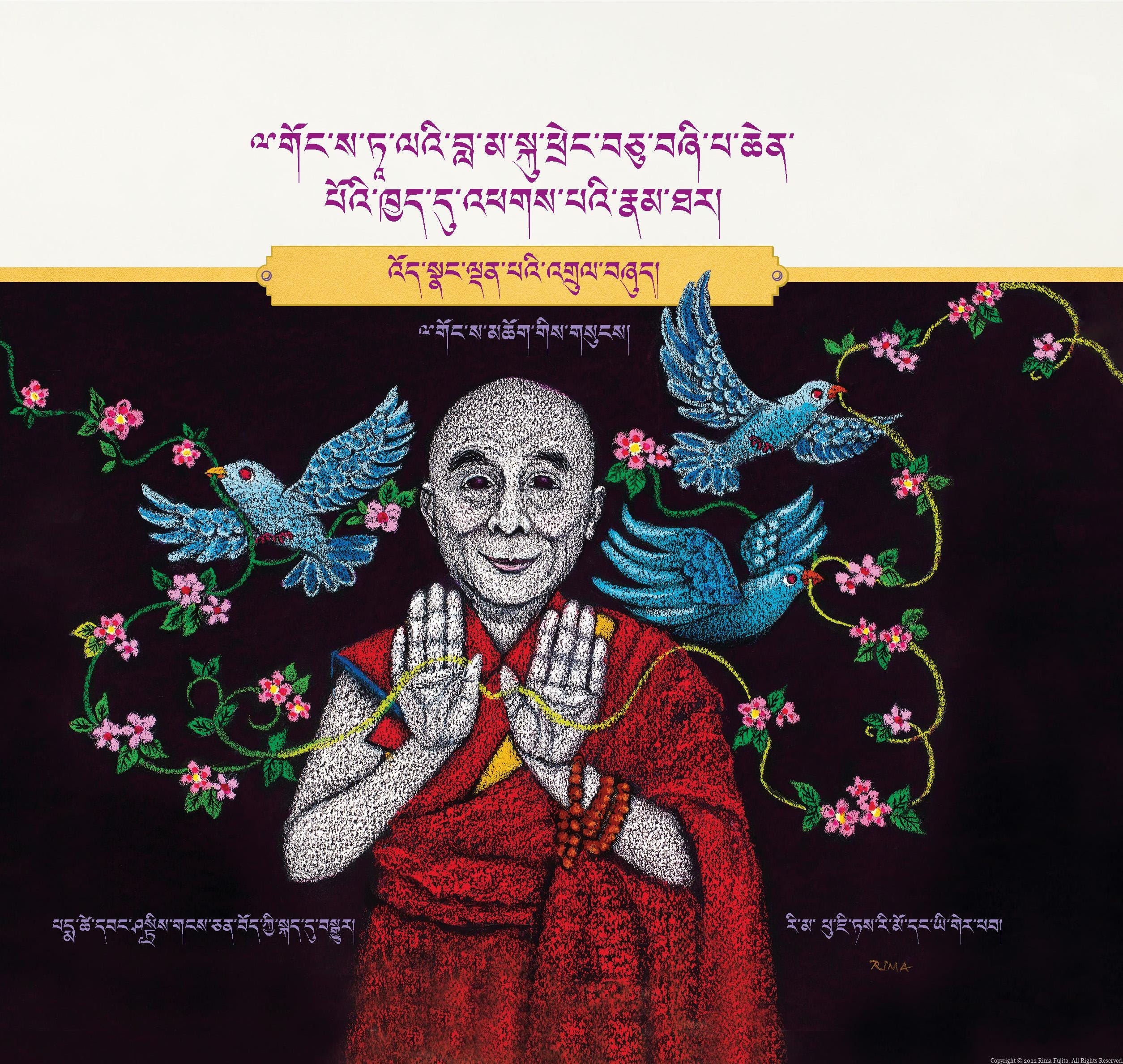
本次展览将展出艺术家藤田里马 创作的 14 幅绘画作品,呈现第十四世达赖喇嘛尊者一生所践行的慈悲、非暴力与和平精神。同时,展览重点展出藤田对第十四世达赖喇嘛的深度访谈。达赖喇嘛一生饱经磨难,辗转各地,并致力于在全球范围内倡导和平。尽管面临诸多挑战,尊者始终以乐观和慈悲著称,他常说:“我很快乐。”藤田的艺术作品生动地展现了这位精神领袖的个人故事,他至今仍在激励着数百万信众。
“全世界都知道达赖喇嘛是谁,但我们对他的经历又了解多少呢?”藤田说道。
此次展览也是为了纪念达赖喇嘛90岁寿辰——2025年7月6日至2026年7月6日被宣布为“智慧与慈悲年”。在这个具有里程碑意义的一年中,尊者达赖喇嘛将继续传递坚韧、希望以及人人皆有获得幸福之潜力的信念。
🎨 艺术家藤田里马 Rima Fujita
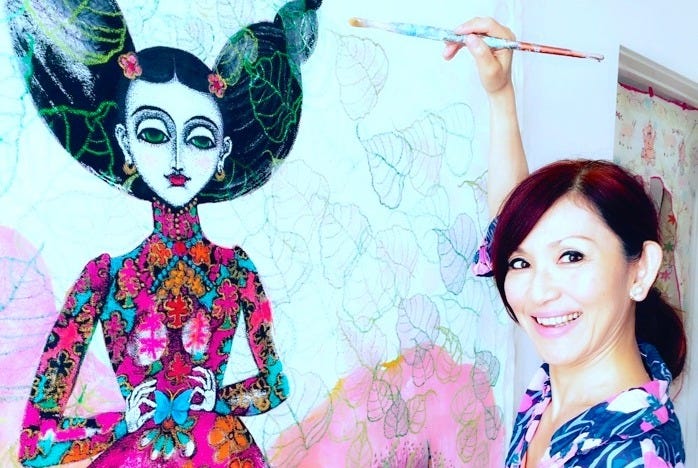
藤田里马 日裔艺术家,出生于东京,曾在纽约生活三十余年,现居南加州,毕业于 Parsons 设计学院。其画作在国际展出,并获得达赖喇嘛尊者、图图大主教及国际和平峰会的认可。她早年在纽约是一名成功的商业艺术家,后在印度和尼泊尔旅行时和一位藏传佛教的高僧对话让她感悟,这位格西对她说:“里马,你必须与他人分享这份喜悦。想想成千上万想来这却无法实现的人,你不能独自承受这份非凡的经历。你必须分享,记住这一点!”
Rima Fujita is a Japanese-born artist who lived in New York for over thirty years and currently resides in Southern California; she is a graduate of Parsons School of Design. Her paintings have been exhibited internationally and have garnered recognition from His Holiness the Dalai Lama, Archbishop Tutu, and the International Peace Summit. In her early career in New York, she was a successful commercial artist; however, during her travels in India and Nepal, a conversation with a high-ranking Tibetan Buddhist master sparked a profound realization. The Geshe said to her, ‘Rima, you must share this joy with others. Think of thousands of people who wish to be here, but cannot. You cannot keep this extraordinary experience to yourself. You must share. Remember that.'
🏛 关于 OUMA
Oglethorpe University Museum of Art 位于美国乔治亚州亚特兰大,是致力于国际与跨文化艺术交流的重要机构。1990 年代曾举办与达赖喇嘛相关的重要展览,尊者亦曾亲临造访。
在尊者 90 岁寿辰之际,这场展览既是致敬,也是一场关于慈悲与良知的当代对话。
欢迎在美东的朋友前往参观与关注!
Atlanta: save the date! To continue celebrating his extraordinary life we are happy to announce this special exhibition at Oglethorpe Museum of Art. This exhibition will be the first time the original artworks from the book, “The Extraordinary Life of H.H.The 14th Dalai Lama,” are presented to the public, and it commemorates the 30th anniversary of HHDL’s visit to Oglethorpe’s exhibition of his personal objects.
The exhibition highlights Fujita’s extensive interviews with the 14th and incumbent Dalai Lama, whose life has been marked by hardship, displacement, and global advocacy for peace. Despite these challenges, His Holiness is known for his optimism and compassion, often remarking, “I am quite happy.” Fujita’s artwork brings to life the personal narrative of a spiritual leader who continues to inspire millions.
“The world knows who the Dalai Lama is, but how much do we know about what he has gone through?” Fujita said.
The exhibition also honors the Dalai Lama’s 90th year — declared the Year of Wisdom and Compassion, spanning July 6, 2025, to July 6, 2026. Throughout this milestone year, His Holiness continues to share messages of resilience, hope, and the belief that “we all have the potential to become happy.”
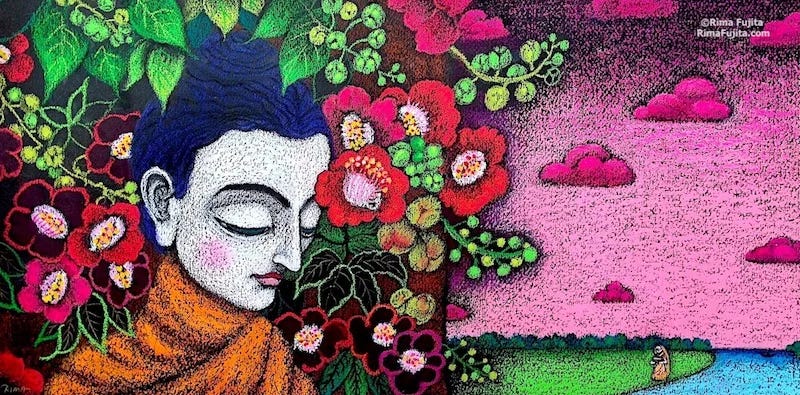
里玛的许多作品并非以佛教为主题,但她却深深喜爱描绘佛像和神祇。“当我情绪低落时,我常常会画佛像,然后便会感到平静祥和。然而,我的职业道德深深植根于佛教和武士道精神,因为我的祖先是最后的武士。我努力尊重与我共事的人、工作流程和方法。我始终以我的作品为荣。”
里玛与印度有着深厚的渊源,但她与藏族文化、人民和艺术的联系也塑造了她独特的人生轨迹。她成长在一个非宗教家庭,对佛教原本毫无兴趣,直到在纽约遇到几位藏族僧侣,他们向她介绍了藏传佛教。“这彻底改变了我对佛教的看法,”她说。“我在日本生活到15岁,在那里我目睹了佛教界的诸多腐败现象,因此对佛教抱有相当负面的印象。然而,当我接触到藏传佛教后,我发现它更接近佛教的本质,当然,这是总体而言的。”
她开始学习藏传佛教后,梦中经常出现佛像,各种神灵也常常在梦中显现,传达讯息。“我经常梦见达赖喇嘛尊者,这让我感到非常幸福,达兰萨拉是我的精神家园,因为他住在那里。他是我的根本上师。我去过达兰萨拉很多次,每次到那里都感觉像回家一样。回到美国后,我非常想念达兰萨拉,常常为此落泪。达兰萨拉的一切都令我心生敬仰——壮丽的喜马拉雅山脉、清新的空气、寺庙、美好的氛围,还有我亲爱的藏族朋友们。”
作为一名年轻的艺术家,她在纽约的艺术生涯开局非常幸运。二十多岁时,她的作品就已经非常畅销——对于一个刚刚起步的艺术家来说,这无疑是一项了不起的成就。然而,成功背后也隐藏着黑暗的一面。“我当时收入颇丰,但我并不喜欢商业艺术圈。我曾遭到一些知名艺术经纪人的虐待和性骚扰。他们偷窃我的作品,而且我经常拿不到应得的报酬。我目睹了商业艺术行业中如此多的贪婪和欺诈,尽管取得了成功,我却并不快乐。后来,一天晚上,我在梦中听到一个声音说:‘你现在必须帮助西藏!’我意识到,艺术并非最终目标,而只是服务他人的工具;是让世界变得更美好的工具,是为弱势群体发声的工具,是帮助全人类的工具。”
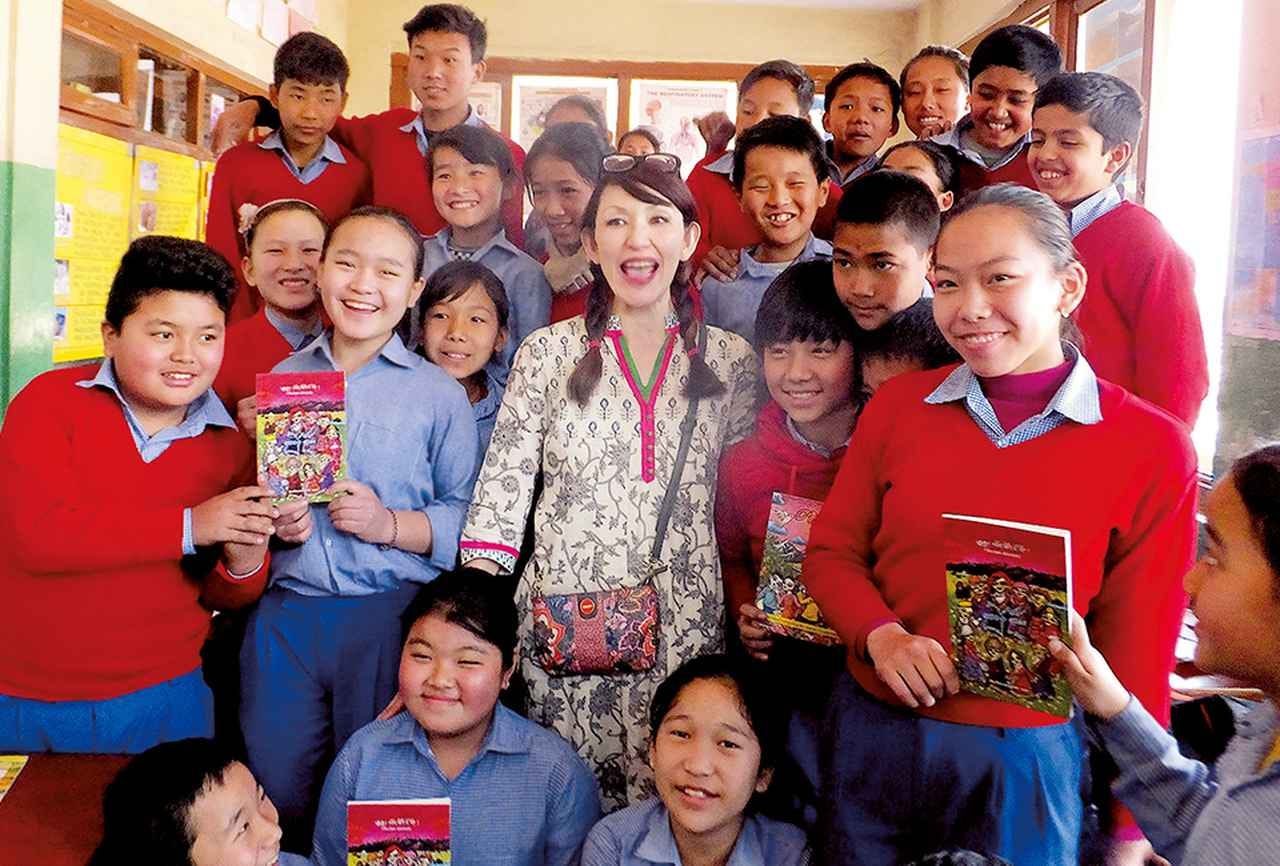
在继续举办展览和出售艺术作品的同时,里玛在发现作品背后的新意义时感到无比自由。她创立了“Books for Children”组织,致力于为藏族难民儿童创作绘本,以帮助他们保护独特的文化和语言。“我已经创作了7本绘本,并向流亡社区捐赠了超过15000册。这些绘本全部是用藏语、英语和日语写成,其中许多还由尊者亲自作序。”她将自己的书籍版税全部捐赠给难民。
“艺术是服务人类的工具,”她坚定地总结道。“我有责任创作艺术,以提高人们对世界重要问题的认识。西藏是我毕生的事业,我会尽我所能继续支持藏人。”
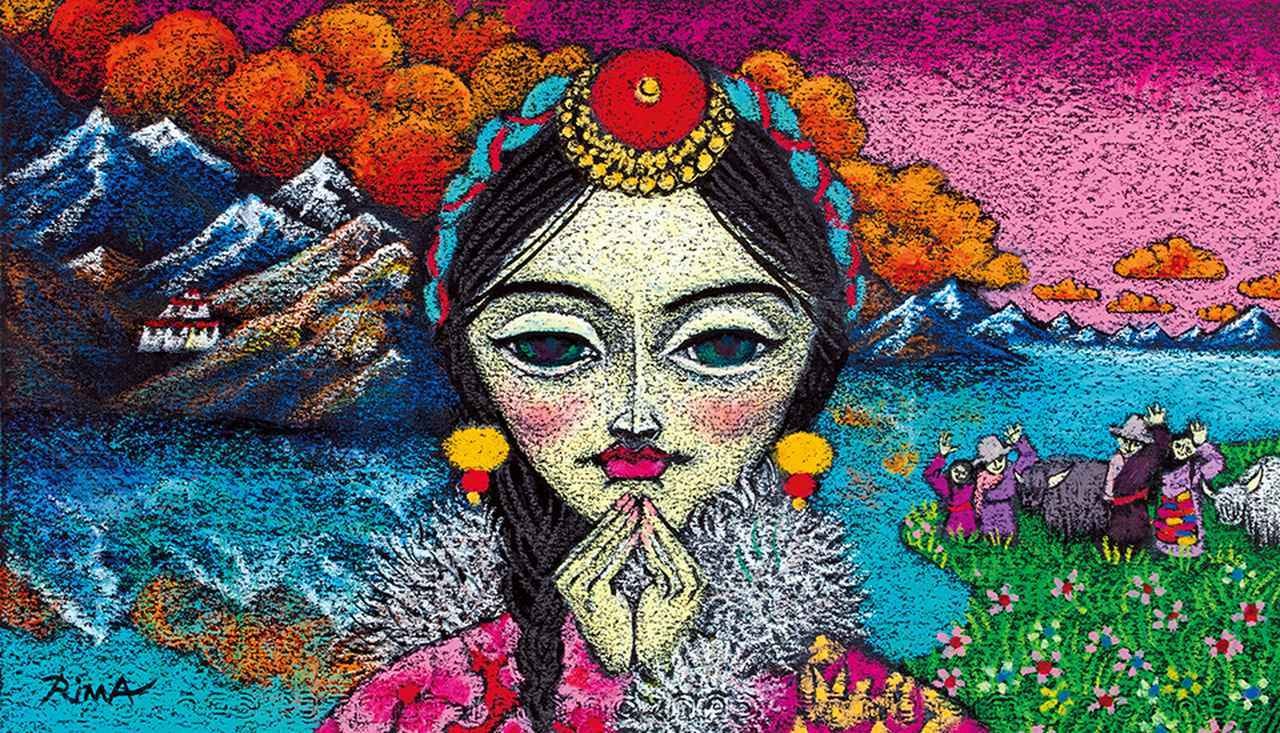
Many of Rima’s works are not Buddhist-themed, but she enjoys painting Buddha and deities deeply. “When I feel low, I often draw Buddha heads, and I begin to feel calm and peaceful. However, my work ethic is strongly based on Buddhism and Bushido, as my ancestors were the last samurais. I try to respect the people I work with, the work process and methods. I keep my pride and honor in what I do.”
Rima and India share a deep bond, but her bond with Tibetan culture, people, and art has also shaped her life in a distinct and unique direction. She grew up in a non-religious family, and had no interest in Buddhism until she encountered several Tibetan monks in New York who introduced her to Tibetan Buddhism. “That completely changed my image of Buddhism,” she said. “In Japan where I lived until I was 15, I had a rather negative image of Buddhism as I witnessed so much corruption in the Buddhist world there. However, when I discovered Tibetan Buddhism it seemed more authentic, generally speaking, of course.”
As she began studying Tibetan Buddhism, she began dreaming about Buddhist images and would often have various deities visit her in my dreams to convey messages. “I feel so happy when I see His Holiness the Dalai Lama in my dreams often, too,” she related to me. “Dharamsala is my spiritual home because he lives there. He is my root guru. I’ve visited Dharamsala many times, and when I arrive there I always feel that I’ve come home. When I return to the USA I miss Dharamsala so much and I often weep. Everything inspires me in Dharamsala—the stunning Himalayan mountains, the crisp air, the monasteries, the beautiful energy, and my dear Tibetan friends.”
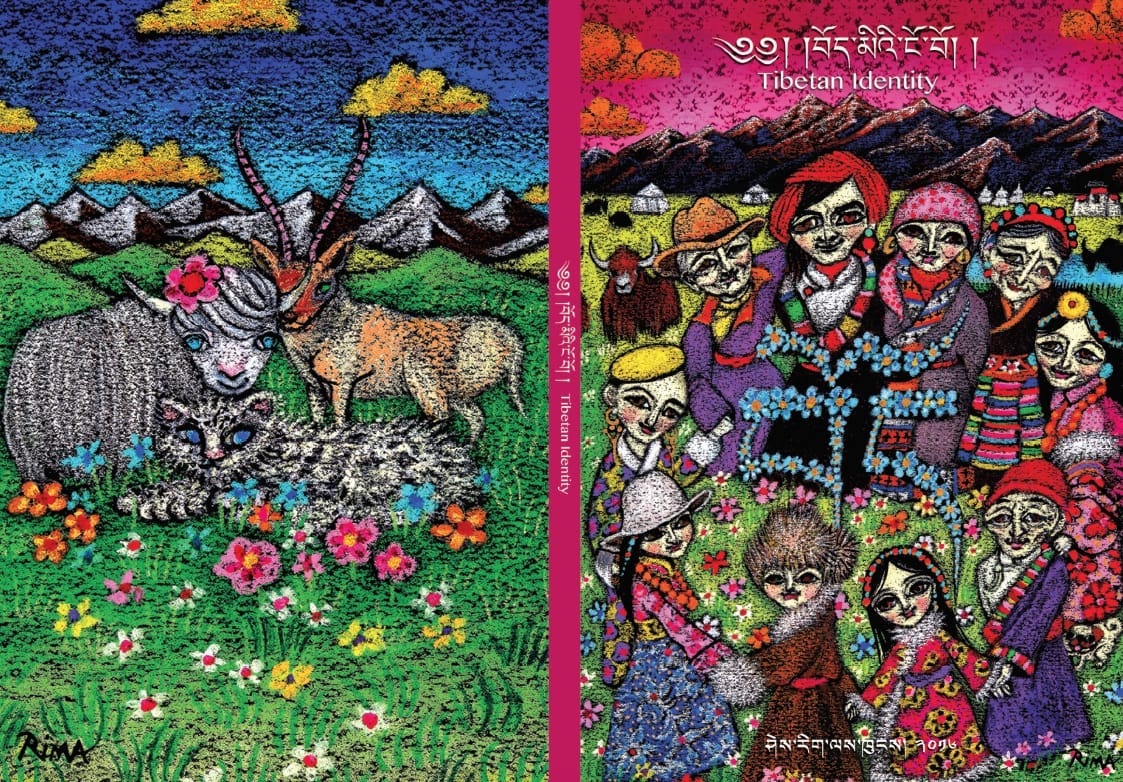
She had a very lucky start as a young artist in New York. During her twenties, her art was already selling very well—an incredible achievement for someone who was only just starting out in her career. Yet there was a dark side. “I was making a very good living, but I didn’t like the commercial art world. I was abused and sexually harassed by famous art dealers. They stole my works and often I never got paid for my art that were sold. I witnessed so much greed and dishonesty in the commercial art industry, and I wasn’t happy despite my success. Then, one night, I heard a voice in my dream and it said, ‘You must help Tibet now!’ I realized that art was not a goal, but only a tool to serve others; a tool to make this world a better place, to be the voice for the voiceless, to help humanity.”
While Rima continued to exhibit and sell art, she felt liberated in discovering a new purpose behind her work. She established Books for Children, an organization that creates picture books for the Tibetan refugee children in order to help preserve their unique culture and language. “I’ve made 7 picture books and have donated more than 15,000 books to the community-in-exile. They are all written in Tibetan, English and Japanese, and many of them have forewords written by His Holiness.” She donates her book royalties to refugees.
“Art is a tool to serve humanity,” she concludes with conviction. “It’s my responsibility to create art to raise awareness of important issues in the world. Tibet is my life-time commitment, and I will keep supporting Tibetans in any way I can.”
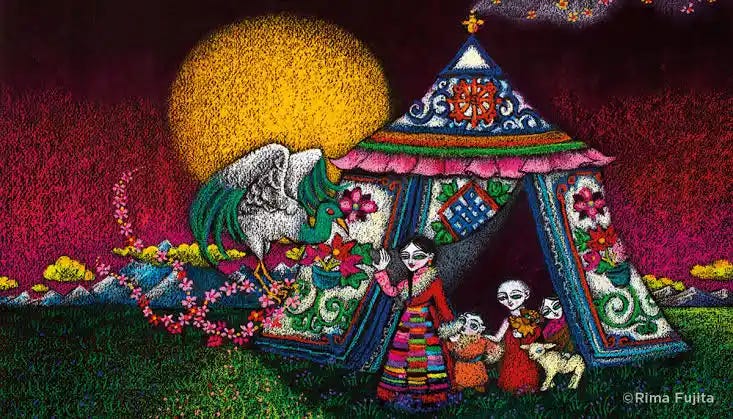
《欢迎回家》(2017年) 日裔艺术家 藤田里马 想象一位为藏民族自由而牺牲的父亲化作一只仙鹤回到草原,看望他在帐篷里的家人。Japanese-born artist Rima Fujita’s work, “Welcome Home,” depicts a 2017 scene in which Fujita imagined a father who sacrificed his life for the freedom of the Tibetan people returning to the grasslands as a crane to visit his family in their tent.