

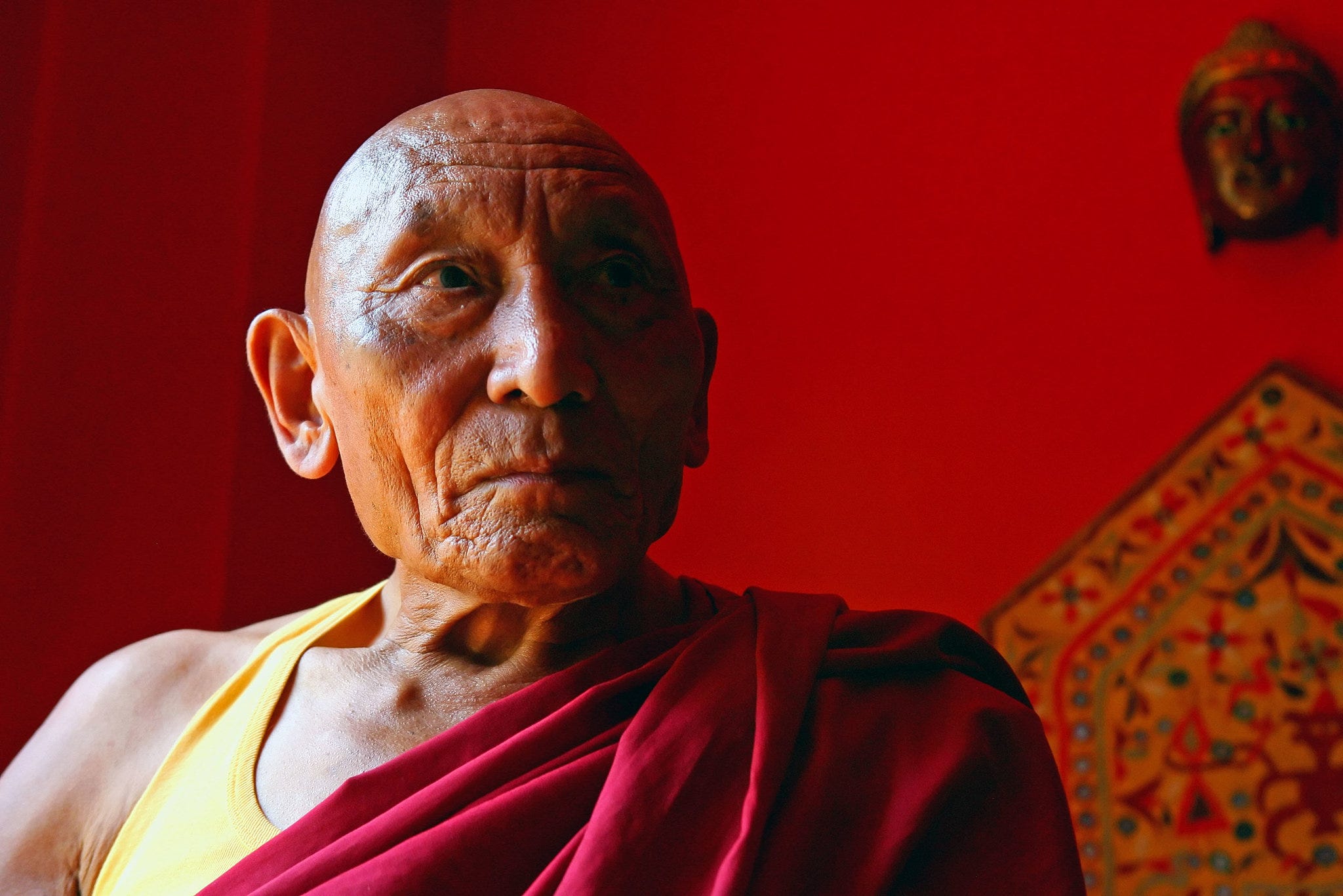
在藏传佛教界,有一个广为人知的僧人班旦加措的故事。在家乡被解放军入侵后,他遭受了总计长达33年的监禁和酷刑。1992年,他终于获释,逃往印度,在那里面见了尊者达赖喇嘛。
In the Tibetan Buddhist community, there is a widely known story about the monk Palden Gyatso. After his hometown was invaded by the PLA, he endured a total of 33 years of imprisonment and torture. In 1992, he was finally released and escaped to India, where he met His Holiness the Dalai Lama.
尊者询问了他在狱中遭受的苦难。班旦加措告诉达赖喇嘛,他曾几次面临真正的危险。尊者问他:“危险?什么样的危险?”,以为他会说中国人的酷刑和狱中生活。班旦加措回答说:“很多时候,我都差点对中国人失去同情心。(I am afraid that I lost my compassion to Chinese people.)”——他认为的最大危险在于害怕自己会对狱卒失去慈悲心。
His Holiness asked him about the suffering he had endured in prison. Palden Gyatso told the Dalai Lama that he had faced real danger several times. “Danger? What kind of danger?” His Holiness asked, assuming he would describe the torture and harsh conditions of Chinese prisons. Palden Gyatso replied, “Many times, I was afraid I might lose my compassion for the Chinese people.” To him, the greatest danger was the fear that he would lose his compassion for the prison guards.


他知道,一旦失去慈悲心,就只有一条路可走:他将被愤怒吞噬,被对自身处境的巨大不公的怨恨所吞噬。
今天是著名僧人政治犯班旦加措去世7周年的日子,我们特此将他的生平整理发布,重温这个伟大的行动者坚韧的灵魂,在苦难中仰望自由,守护慈悲的一生。
He knew that once compassion was lost, only one path remained: he would be consumed by anger, swallowed by resentment toward the immense injustice of his own situation.
Today marks the 7th anniversary of the passing of the renowned monk and political prisoner Palden Gyatso. We commemorate his life by sharing this review post, revisiting the resilient spirit of a great activist—a man who sought freedom amid suffering and dedicated his life to safeguarding compassion.
童年与出家
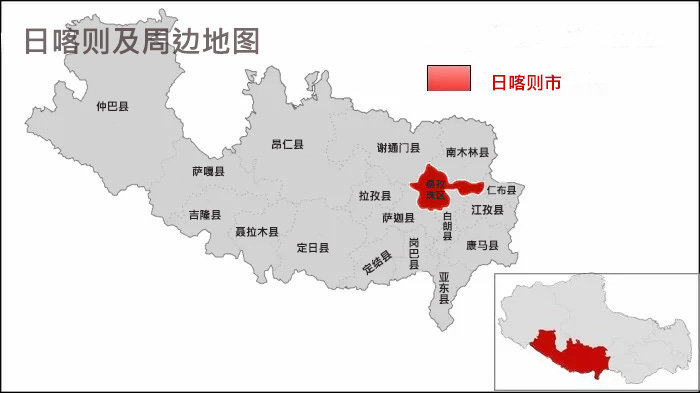
班旦加措དཔལ་ལྡན་རྒྱ་མཚོ། 1933年出生于西藏南部,其家乡位于现在江孜镇和日喀则之间的帕南地区(现白朗县 པ་སྣམ་རྫོང),一个普通的虔诚农家,自幼在父母的熏陶下,他对佛法生起深厚信心。 十岁时,他依照自己与父母的愿望,在嘎东噶东寺剃度出家,跟随堪布更桑多顶学习基础佛法、辩经及坛城绘制等传统僧学。 十七岁后,他不顾父母担忧,毅然只身前往拉萨,加入哲蚌寺罗赛林扎仓,继续精深佛学,师从仁曾丹巴等高僧大德。
Childhood and Ordination
Palden Gyatso དཔལ་ལྡན་རྒྱ་མཚོ། was born in 1933 in southern Tibet, in the Panam region (today’s Bainang County) between what are now Gyantse town and Shigatse. He came from an ordinary and devout farming family. Nurtured by the influence of his parents from a young age, he developed deep faith in the Dharma.
At the age of 10, in accordance with both his own wishes and those of his parents, he took monastic vows at Gadong Monastery. There, under the guidance of Khenpo Gensang Dodin, he studied the fundamentals of Buddhist philosophy, debate, and traditional mandala painting.
After turning 17, despite his parents’ worries, he resolutely set off alone for Lhasa. He joined the Loseling College of Drepung Monastery, where he continued his advanced studies in Buddhist philosophy under renowned masters, including Geshe Rigzin and Rinpoche Rinchen Dampa.


33年苦牢不改慈悲之心
1959年西藏局势剧变之际,班旦加措因被指为“反革命分子”遭到逮捕,先被判处七年刑期,随后在不断加重的指控和再审中,他在监狱和劳改营中断断续续度过了长达33年的岁月,成为被囚禁时间最长的藏人政治犯之一。 在白朗的监狱,他被迫像牲畜一样套在犁上耕地,长时间饥饿劳作,冬天被泼冷水、夏天被火焰炙烤,甚至被迫啃食皮鞋、草根和昆虫以维持生命。
33 Years of Imprisonment Without Losing Compassion
During the upheaval in Tibet in 1959, Palden Gyatso was arrested for being accused of being a “counter-revolutionary.” He was initially sentenced to seven years, but as accusations were repeatedly intensified and retrials conducted, he spent a total of 33 years intermittently in prisons and labor camps, becoming one of the longest-imprisoned Tibetan political prisoners.
In the prison at Panam, he was forced to plow the fields like an animal, endure long hours of hunger and labor, be doused with cold water in winter and scorched by flames in summer, and even eat shoes, roots, and insects to survive.
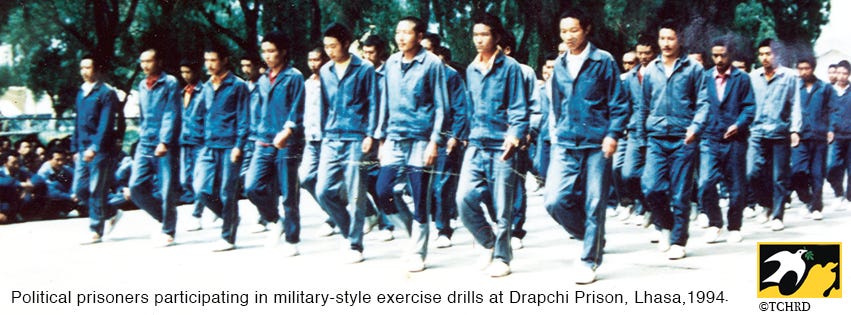
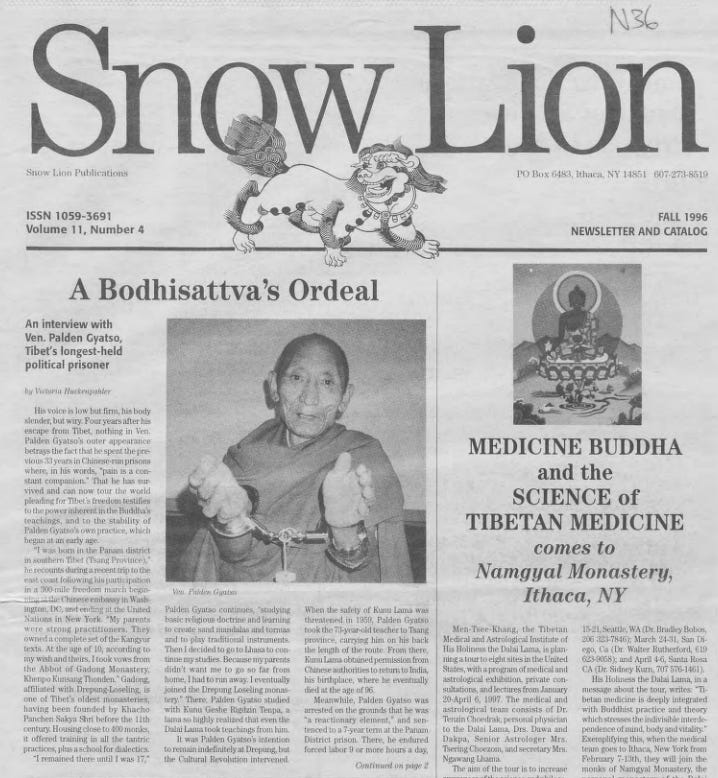
在之后漫长的牢狱生活中,他被转押扎奇,山南,罗布昆泽,江孜,生叶波,俄日尺度等地的监狱,遭遇包括电击、烫伤、捆绑悬吊等酷刑,牙齿被电棍击碎、皮肉被滚烫热水灼伤,身体留下终身难以愈合的伤痕。 然而,他始终拒绝在“改造”中承认藏地理应被并吞或放弃自己的佛教信仰,这种坚持也让他的刑期一次次被延长。
During the long years that followed, he was transferred through multiple prisons, including Drapchi, Shannan, Lhobukünze, Gyantse, Shengye Po, and Erjishaidu. He suffered torture such as electric shocks, scalding burns, suspension by ropes, and beatings that shattered his teeth and left his flesh burned by boiling water, leaving scars that never fully healed. Yet he steadfastly refused to acknowledge that Tibet should be annexed or to abandon his Buddhist faith under “re-education,” a resolve that repeatedly extended his sentence.
监狱中的修行与菩萨心
在极端残酷的环境中,支撑班旦加措活下来的不是对仇恨的执着,而是对佛法的信仰与修行。 虽然在监狱中被严格禁止正式诵经、持戒或公开修习,他仍在心中观修因果、皈依与菩提心,把堪仁波切和达赖喇嘛视为内心的依止与护佑。
Practice and the Bodhisattva Heart in Prison
What sustained Palden Gyatso in the face of extreme cruelty was not an attachment to hatred, but his faith in the Dharma and his spiritual practice. Although formal recitation of scriptures, adherence to vows, and open practice were strictly forbidden in prison, he continued to meditate in his mind on karma, refuge, and the Bodhicitta, regarding his Khenpo Rinpoche and the Dalai Lama as his inner support and protection.
他尤其强调“修习观想‘施受法’(tonglen)”,在遭受电击和酷刑时,将一切痛苦观想为众生业力的化现,自愿在观想中“代受众苦”,并回向他们得到解脱。 他回忆,很多时候,原本应让身体痉挛的电流,在这种观修中反而像一股冰凉的流动,这种转化使他从地狱般的折磨中保持一丝清明与尊严。 正是这种菩萨式的心态,使他在多年牢狱中没有被仇恨吞噬,反而对加害者仍保持基本的人性与慈悲。
He placed particular emphasis on practicing the visualization of tonglen — the “giving and taking” meditation. When subjected to electric shocks and torture, he would visualize all suffering as the karmic manifestation of sentient beings, willingly “taking on the suffering of others” in his mind and dedicating the merit to their liberation. He recalled that often, the electric current that would normally cause his body to convulse felt like a cold, flowing stream during such meditation. This transformation allowed him to maintain clarity and dignity amidst hellish torment.
It was precisely this Bodhisattva-like mindset that prevented him from being consumed by hatred over decades of imprisonment, allowing him to retain basic human compassion for his oppressors.
二度抗争与惊险出逃
1962年,班旦加措曾经成功越狱,却在接近印藏边界时被捕,刑期被加重,双手双脚长期带铐,生活几乎完全被囚笼所限制。 获释后,他被强制送往拉萨以西约十五英里的宁塘劳改营,继续从事重体力劳动,不得返乡与亲人团聚。
A Second Resistance and a Daring Escape
In 1962, Palden Gyatso managed to escape from prison, but he was captured again as he approached the Indo-Tibetan border. His sentence was extended, and he was shackled by his hands and feet for long periods, with his life almost completely confined within an iron cage. After his release, he was forcibly transferred to the Nyethang “reform-through-labor” camp, about 15 miles west of Lhasa, where he was required to continue performing heavy manual labor and was forbidden from returning to his hometown or reuniting with his family.
1979年,在长期劳改和折磨之后,他作出一个极具风险的决定:夜间从劳改营潜出,到拉萨医学院附近,用标语遮盖墙上的毛泽东语录,公开张贴要求藏人自由的标语,试图用自己的思想和经历唤起人们对藏人处境的关注。 在当时的政治氛围下,这种行为本可立即招致处决,但由于那时达赖喇嘛的代表团正在访问西藏,当局顾及形象,没有立即执行死刑。 然而,在1983年的再度被捕,判刑9年,他被送往扎奇监狱,酷刑再度升级,他却依然不愿屈服。
In 1979, after years of forced labor and torture, he made an extraordinarily risky decision: under the cover of night, he slipped out of the labor camp and went to the area near the Lhasa Medical College, where he covered Mao Zedong’s quotations on the walls with slogans calling for freedom for the Tibetan people. He wanted to use his own thoughts and experiences to awaken public awareness of Tibetans’ plight. In the political climate of the time, such an act could easily have resulted in immediate execution. However, because a delegation representing the Dalai Lama was visiting Tibet at that time, the authorities, concerned about their image, did not carry out the death sentence on the spot. Nevertheless, he was arrested again in 1983 and sentenced to nine years. Sent to Drapchi Prison, he faced an escalation of torture, yet he still refused to yield.
走出牢狱:流亡、见证与著述
1992年,班旦加措终于获释,并在十三天之后设法抵达印度,流亡至达兰萨拉,在那里的流亡政府与寺院僧团中获得庇护。 临行前,他冒险贿赂一名中共官员,设法把曾经用于折磨他和难友的电击棍等刑具带出藏地,希望能当面呈给达赖喇嘛,也向国际社会直观展示酷刑的真实存在。
Emerging From Prison: Exile, Testimony, and Writing
In 1992, Palden Gyatso was finally released. Thirteen days later, he managed to reach India and went into exile in Dharamsala, where he found refuge within the Tibetan government-in-exile and the monastic community.
Before departing, he took a great risk by bribing a Chinese Communist Party official, obtaining the electric batons and other torture instruments that had been used on him and his fellow inmates. He hoped to present them in person to the Dalai Lama and to show the international community tangible evidence of the reality of torture in Tibet.
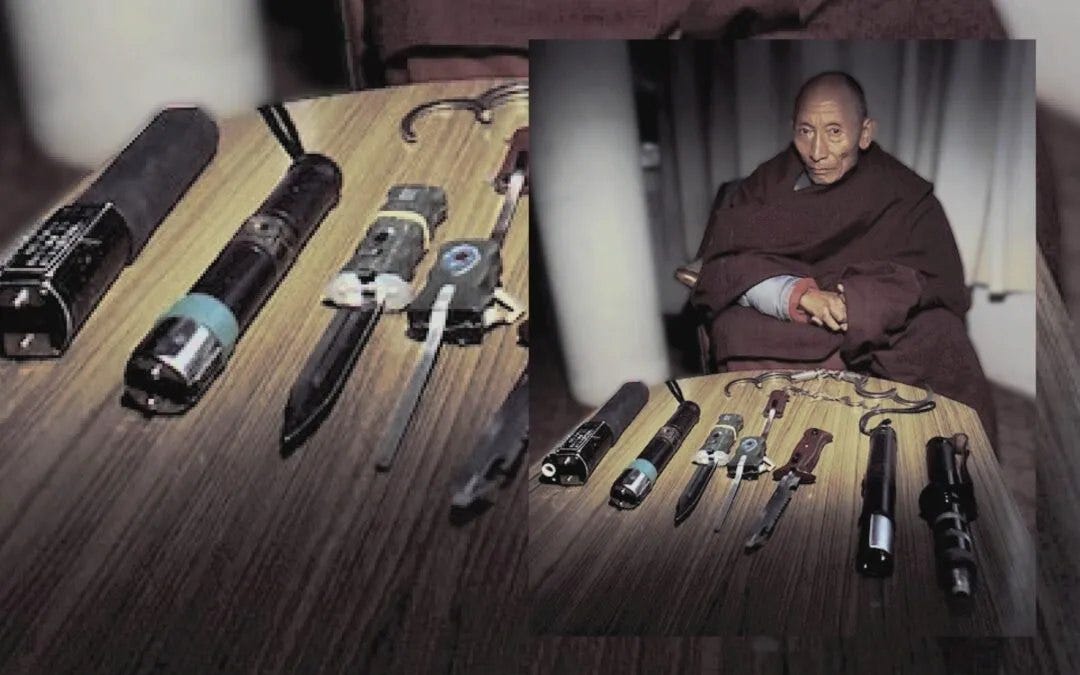
抵达印度仅数日后,他获准晋见达赖喇嘛;多年牢狱之后终于能够面见尊者,这让他激动得几乎说不出话,不断落泪。 此后,他定居达兰萨拉,一方面作为僧人继续保持日常修行,一方面则密集接受媒体采访,应邀到学校和公众场合演讲,将自己在监狱中的亲身经历讲述给更多人听。
Just a few days after arriving in India, Palden Gyatso was granted an audience with his spiritual master, the Dalai Lama. After so many years in prison, finally being able to meet His Holiness left him so overwhelmed that he could barely speak and was moved to tears again and again.
Afterwards, he settled in Dharamsala. On the one hand, he continued his daily monastic practice; on the other, he gave frequent media interviews and accepted invitations to speak at schools and public events, sharing his personal experiences in prison with ever more people.
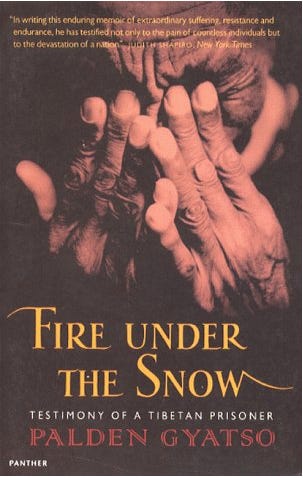
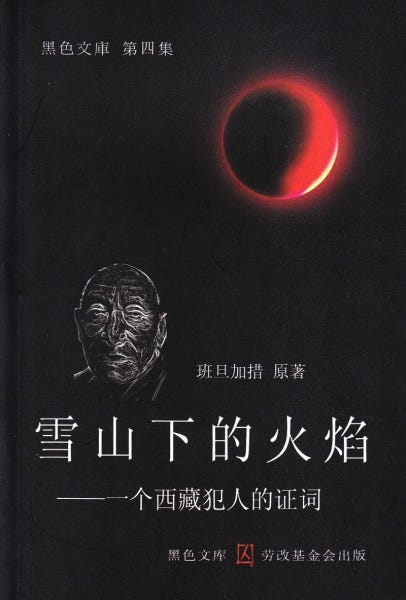
他用藏语写下自传《雪山下的火焰》(Fire Under the Snow: Testimony of a Tibetan Prisoner),记录自身成长、行动、入狱、酷刑与修行的全过程,后被译为多种文字,并在国际上出版发行。 这部作品不仅成为了解当代西藏政治迫害的重要文献,也启发了同名纪录片《雪下火焰》,让更多读者与观众看到一个在苦难中仍守护慈悲的僧人形象。
He wrote his autobiography in Tibetan, Fire Under the Snow: Testimony of a Tibetan Prisoner, documenting the full arc of his life — his upbringing, activism, imprisonment, torture, and spiritual practice. The book was later translated into multiple languages and published internationally. It became not only an essential source for understanding the political repression in contemporary Tibet, but also inspired the documentary Fire Under the Snow, which allowed even more readers and viewers to encounter the image of a monk who safeguarded compassion even in the midst of suffering.
走向世界的人权捍卫者
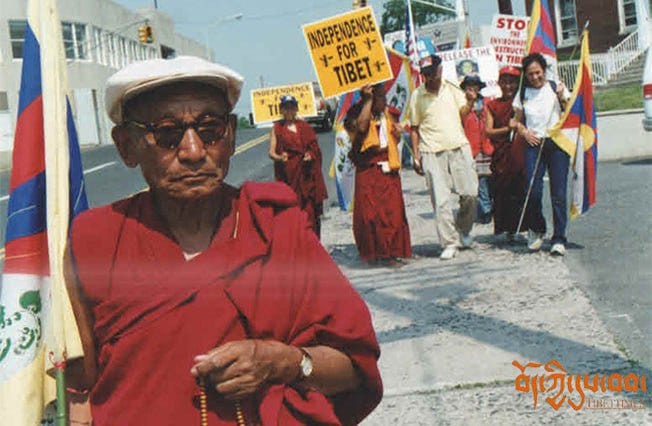
走出监狱之后,班旦加措几乎把全部余生投入到为西藏发声的公共行动之中。 他曾参与从华盛顿中国使馆到纽约联合国总部约三百英里的“自由长征”,在沿途不断讲述亲身经历,呼吁国际社会关注西藏问题。1995年,他成为第一位在联合国人权机构正式发言的藏人政治犯,也先后在英國下議院和美国国会众议院的人权委员会作证,以细节丰富的证词呈现监狱中的制度性暴力与酷刑。
A Human Rights Defender on the World Stage
After leaving prison, Palden Gyatso devoted nearly the rest of his life to public advocacy for Tibet. He participated in the “Freedom March,” a roughly 300-mile march from the Chinese Embassy in Washington, D.C. to the United Nations Headquarters in New York, sharing his experiences along the way and calling on the international community to pay attention to Tibet.
In 1995, he became the first Tibetan political prisoner to give an official address at a United Nations human rights body. He also testified before the Human Rights Committees of both the UK House of Commons and the U.S. House of Representatives, offering detailed accounts that exposed the systematic violence and torture within Tibetan prisons.
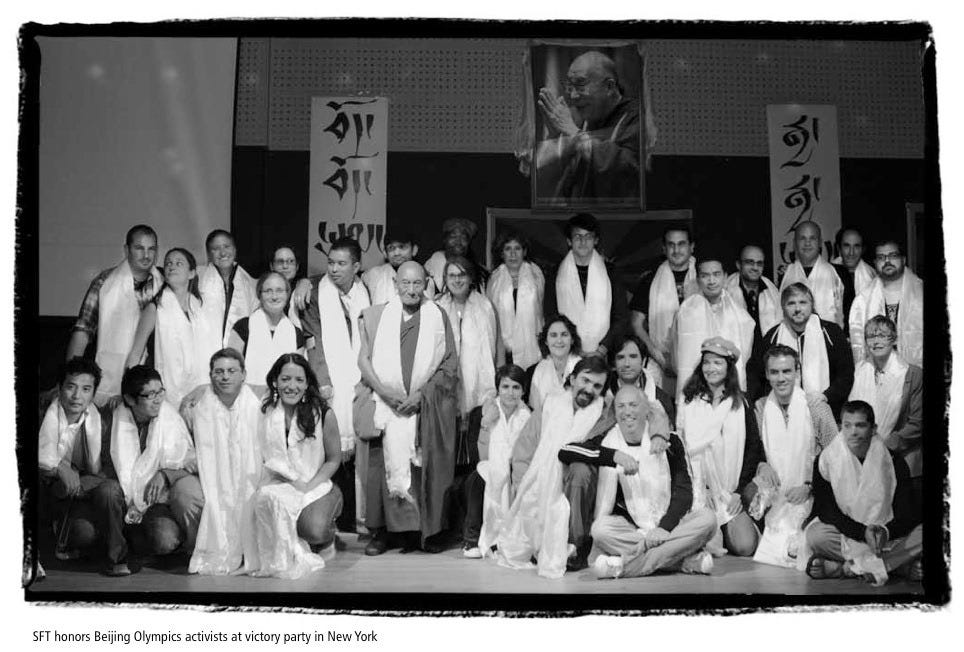
北京于2001年成功申办2008年奥运会。为表达对此的抗议,在2006年都灵冬奥会期间,他与其他藏人一起在都灵进行绝食抗议,呼吁国际奥委会在人权、政治犯、以及被强迫“失踪”的班禅喇嘛等问题向中方施压。 在欧洲和北美多国,他始终以僧人和证人的双重身份出现:一方面极力揭示西藏现实的残酷,一方面又强调,真正的出路必须以非暴力和慈悲为根基。
When Beijing won the bid to host the 2008 Olympic Games in 2001, Palden Gyatso joined other Tibetans in protest. During the 2006 Winter Olympics in Turin, he participated in a hunger strike, calling on the International Olympic Committee to pressure China on issues such as human rights, political prisoners, and the enforced disappearance of the Panchen Lama.
Across many countries in Europe and North America, he consistently appeared in a dual role — as a monk and as a witness. On the one hand, he worked tirelessly to expose the harsh realities faced by Tibetans; on the other, he emphasized that the true path forward must be rooted in nonviolence and compassion.
不弃慈悲,不忘真相:班旦加措的精神遗产
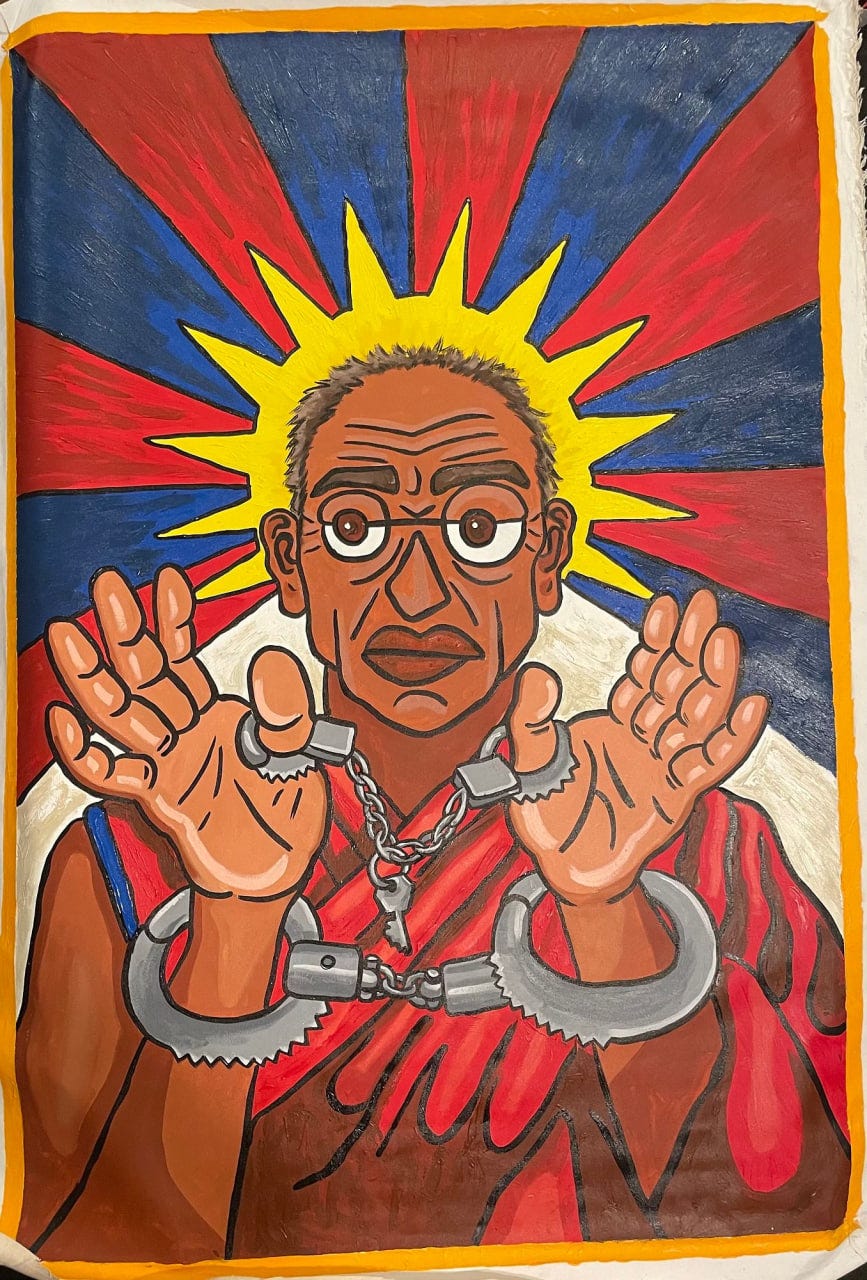
尽管经历了超乎常人想象的折磨,班旦加措反复强调藏民族的悲剧主要是制度造成的,汉人当中也有富有同情心的人,不能把仇恨一概指向汉人。他区分统治者的政策与普通人的处境,坚持以佛教教义来理解加害者的无明与业力。 在公开发言中,他经常谈到一种“责任感”:如果不把自己所受的苦难讲出来,就辜负了那些在监狱中死去的同伴,也辜负了佛法所赋予他的觉悟与勇气。
Unyielding Compassion, Unwavering Truth: The Spiritual Legacy of Palden Gyatso
Despite enduring suffering far beyond what most people can imagine, Palden Gyatso repeatedly emphasized that the Tibetan tragedy was fundamentally the result of a system — and that many Han Chinese are compassionate individuals. He insisted that hatred must not be directed at the entire Han Chinese. He differentiated between the policies of those in power and the circumstances of ordinary individuals, and he sought to understand the ignorance and karma of his oppressors through the teachings of Buddhism.
In his public speeches, he often spoke of a sense of “responsibility”: if he did not speak out about the suffering he had endured, he would be failing those fellow prisoners who died behind bars, and he would be failing the insight and courage that the Dharma had given him.
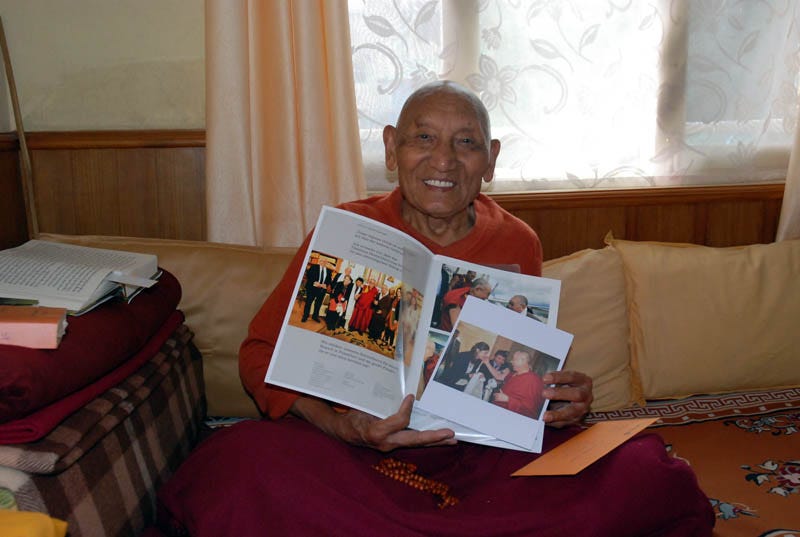
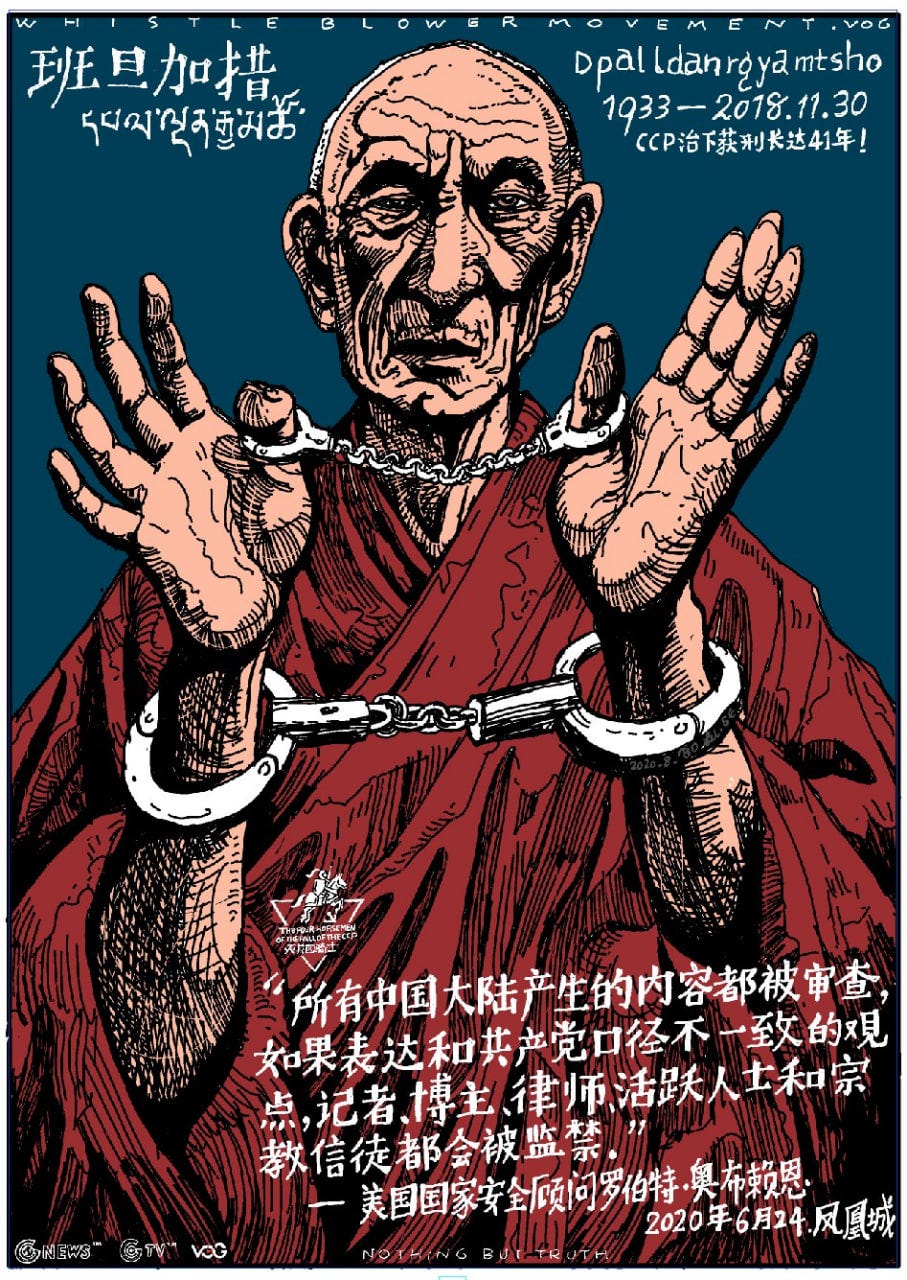
2018年11月30日,班旦加措在印度达兰萨拉因肝癌去世,享年85岁,一生几乎与藏地当代最黑暗的时代重叠。 在许多藏人和支持者眼中,他既是一位在酷刑中仍保持清明与慈悲的佛教修行者,也是一位用自己身躯见证历史、在国际舞台上为无声者发声的人权捍卫者。 他的生命故事,既是个体忍辱与修行的极致展示,也是理解二十世纪后半叶藏人命运时无法绕开的关键见证。
On November 30, 2018, Palden Gyatso passed away from liver cancer in Dharamsala, India, at the age of 85 — a life that nearly overlapped entirely with the darkest decades of modern Tibetan history. In the eyes of many Tibetans and supporters, he was both a Buddhist practitioner who maintained clarity and compassion even under torture, and a human rights defender who bore witness to history with his own body and spoke for the voiceless on the international stage.
His life story stands as both an extraordinary testament to personal endurance and spiritual discipline, and an indispensable witness for understanding the fate of the Tibetan people in the latter half of the twentieth century.
参考资料:
Palden Gyatso, Tibetan monk who was tortured and jailed for 33 years, passes away
Palden Gyatso, Monk Who Suffered for a Free Tibet, Dies at 85
The Autobiography of a Tibetan Monk Palden Gyatso , Tsering Shakya , Dalai Lama
The Autobiography of a Tibetan Monk By PALDEN GYATSO with TSERING SHAKYA
The Way of the Bodhisattva (Shambhala Library)
文:Ginger Duan 在Perplexity 辅助下完成
校对编辑:Hu Yuqiao
图片均来自网络公开搜集,如果有侵权作品请联系我们删除!
All images are collected from publicly available online sources. Please contact us to remove any infringing content.
I still tell my students and anyone interested in Buddhism about this story whenever I can think of it - it is one of the most stunning examples of empowerment and compassion I have ever heard - thank you so much for writing this so I could learn more about him 🙏🙏🙏