

Original by Zhang Jiu, AsideFromBooks, May 11, 2025
Tibetan cinema documents the evolution and development of the ethnic groups of the Tibetan region, employing multiple narrative strategies to clarify the distinctive ethnic ideologies at various historical stages. After 2000, filmmakers from Tibet and the exile community began producing films in their native languages about their own people, offering a strong response to some of the deep-rooted Western and Chinese stereotypes about Tibet.
Thus, the purpose of this article is to compare the representation of Tibet and its people in domestic Chinese films with that of contemporary Tibetan films, revealing the power dynamics between different ethnic groups on-screen under China’s mainstream ideology.
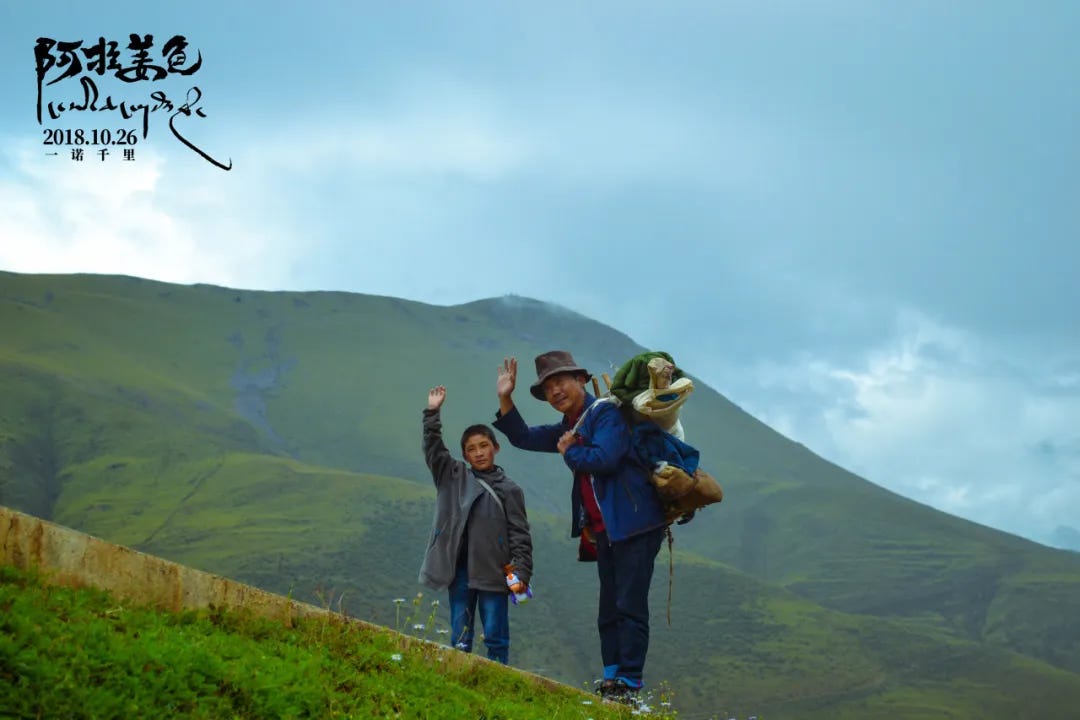
Stills from the film “Ala Changso”
Based on existing Chinese literature on the developmental stages of Tibetan cinema, and to clarify the development of Tibetan film within the Chinese context, the author divides the discussion into three phases: before 1949, from 1949 to 1966, and after 2005.
Before 1949: The Curious Western Gaze
The first stage is defined primarily by the influence of Western directors using an “Orientalist” perspective. During this period, Western filmmakers produced numerous films about Tibet, portraying it through an exoticized lens as a mystical, enchanting land renowned for its esoteric knowledge. This type of cinematic representation not only shaped perceptions of Tibet but also established the standard narrative framework for Tibetan-themed films.


1949–1966: From the Founding of the PRC to the Opening-Up
The second stage is described as a period of “ideological construction.” In October 1948, the Central Propaganda Department of the CCP issued a key document to the Northeast Bureau titled Guidelines for Film Work, marking the first outline of guiding ideology and principles for film creation. Afterward, through a series of meetings and consultations, the Central Film Bureau was established under the Central Propaganda Department’s leadership. This institutional development signaled a significant transformation in the industry, enabling centralized planning, topic selection, distribution, and exhibition of films.
The establishment of the Film Bureau symbolized that China’s film industry had been incorporated into mainstream discourse and administrative planning. During this period, films directed by Chinese Han filmmakers and sponsored by state propaganda organs presented a Tibet starkly different from the romanticized “Shangri-La.”
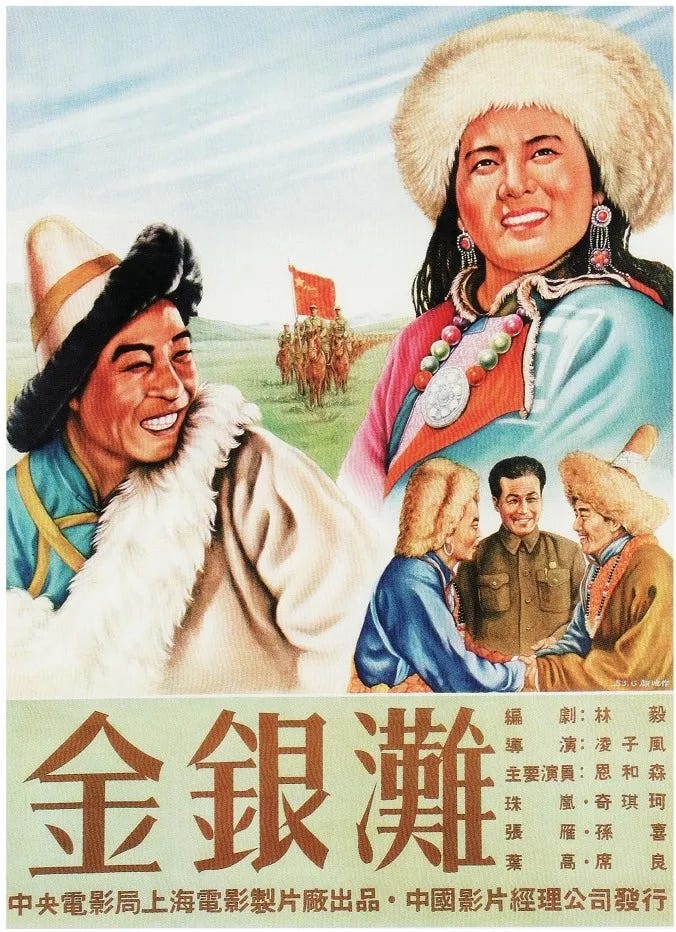
To ensure Tibetan-themed films fulfilled their propagandistic role, Tibetans were portrayed as uncivilized and in need of rescue. In The Gold and Silver River Band (Ling Zifeng, 1953), the People’s Liberation Army’s intervention ends the intense inter-tribal conflicts typical of “old Tibet.” From this film onward, official propaganda emphasized the liberation of the Tibetan people from their backward living conditions.
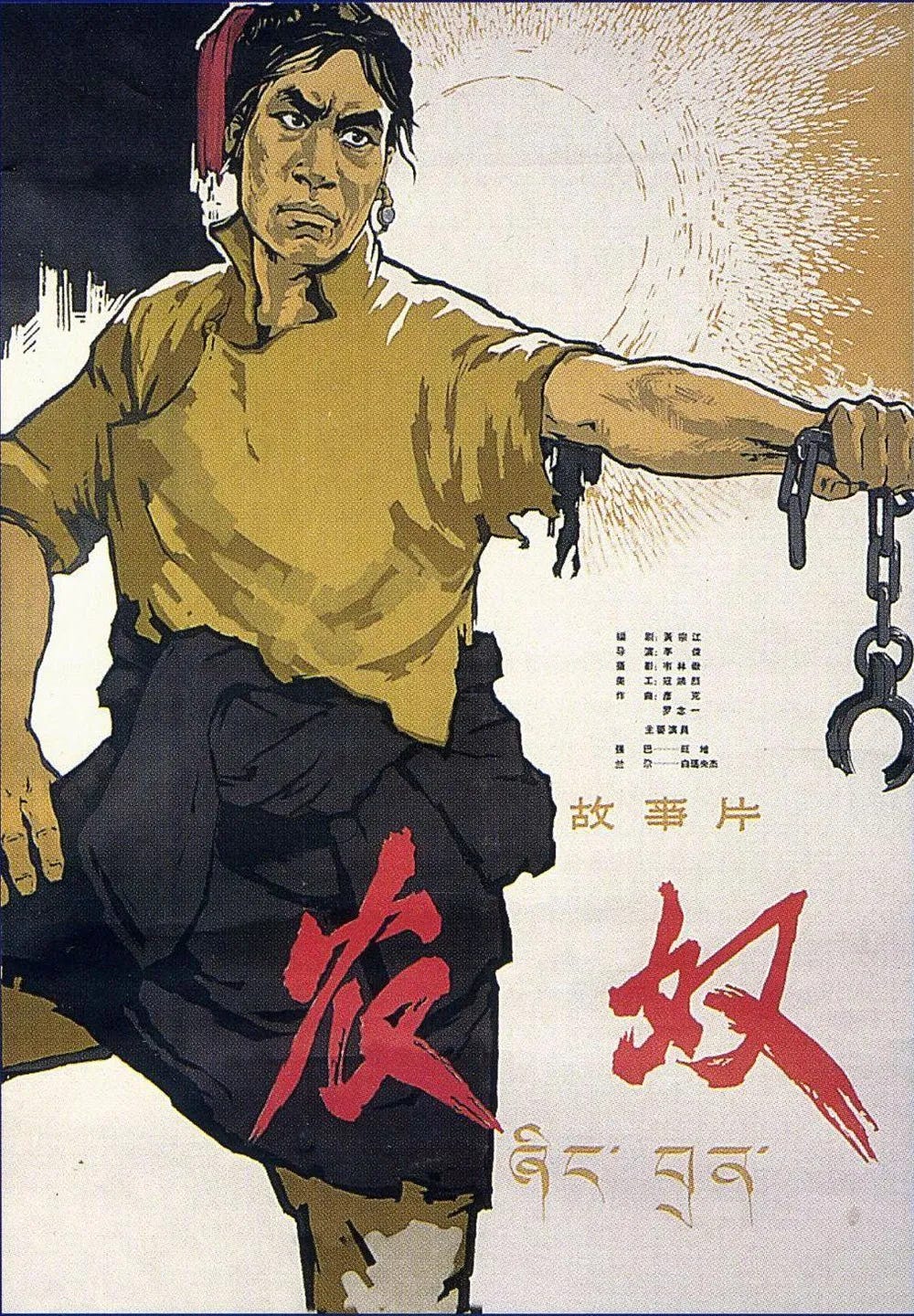
Serfs (Li Jun, 1963), widely regarded as the pinnacle of minority films of the time, depicts old Tibet as a brutal and exploitative feudal theocracy. The CCP is portrayed as the heroic liberator of serfs. They not only protect serfs from humiliation by their lords but also allow the protagonist, Jampa, to ride their horse, symbolizing equality and civilization. This rescue narrative implies that Tibet could not liberate itself without the CCP.
Meanwhile, according to Chris Berry and Mary Farquhar, minority films before and after the Cultural Revolution differ significantly. Early films depicted minorities as liberated from feudal systems and led toward modernization by their Han “elder brothers.” Later films, however, displayed a stronger exotic appeal on-screen.
During this period, representations of Tibet were intertwined with the Han audience’s curiosity and imagination. The depiction of Tibetans by Han directors shifted dramatically — from “primitive” and “barbaric” portrayals to more exoticized images. Films set in Tibet often emphasized majestic landscapes and traditional ethnic culture. Interestingly, selective depictions of the natural environment helped construct an image of Tibet as a geographically untouched, pure “other.”
In Mountain Patrol: Kekexili (Lu Chuan, 2004), the visual narrative focuses on Tibetan landscapes and mythology. From a journalist’s perspective, the film portrays the Tibetan patrol team’s persistent fight against poachers and offers insight into the Tibetan spiritual world through symbolic depictions of the body.

Louisa uses the term “internal Orientalism” to describe the relationship between ethnic imagery and cultural domination within China. “Orientalism” itself concerns the study of Arab and Islamic cultures, especially the stereotypes and distortions imposed on the Arab world.
In this context, using the term “internal Orientalism” to describe the Han-directed imaginative and cultural framing of minority groups in ethnic-minority films may not be entirely accurate. However, the power relations between the Han and other ethnic groups do resemble Said’s model of the Self and the Other.
As Edward Said argues, such a process is beneficial. It produces hegemonic ideas and narratives that define the object being represented. Those who are represented become voiceless, while the producers’ culture gains strength and identity by positioning the Other as a contrasting, substitute, and subterranean version of the Self.
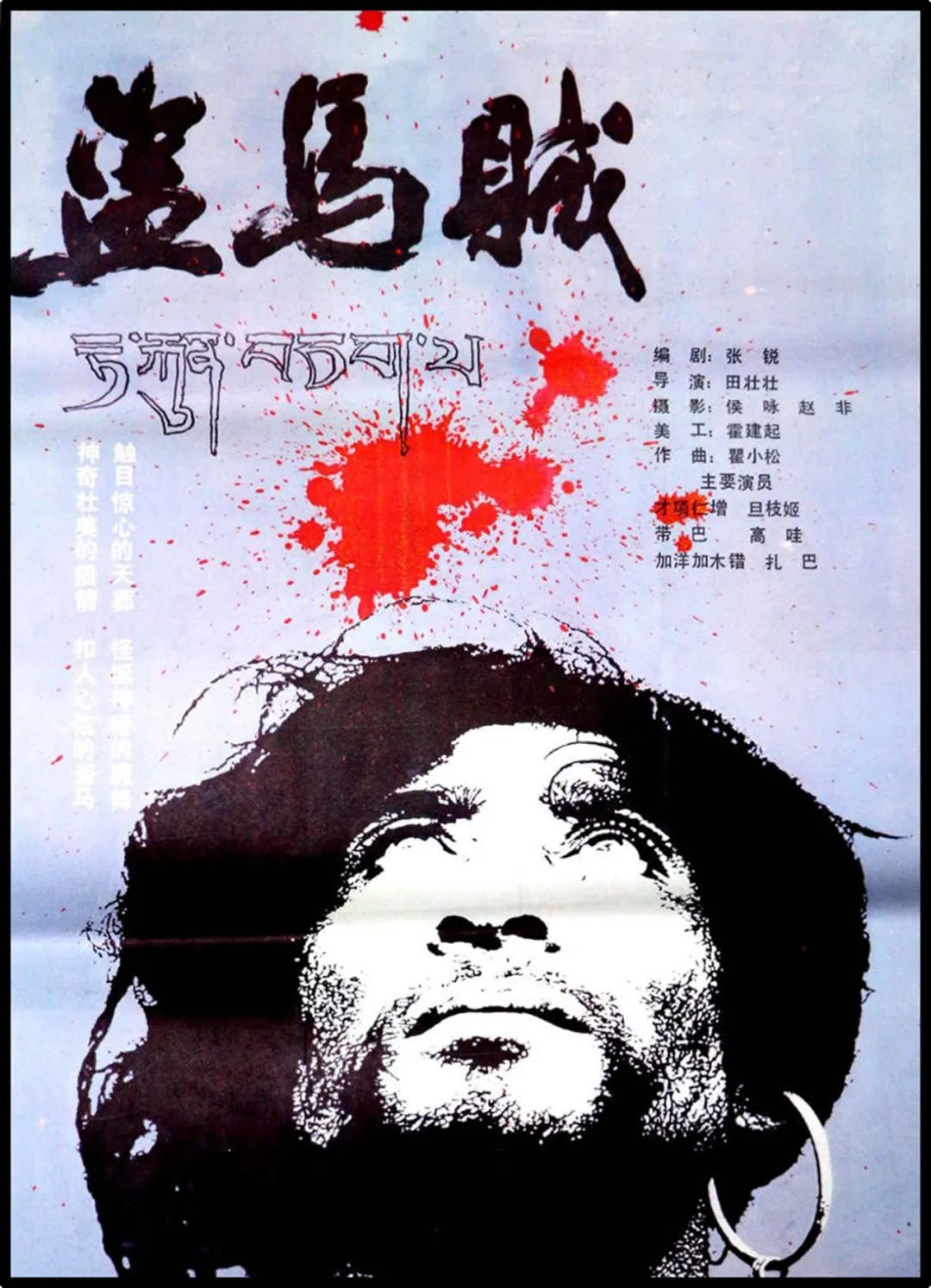
Another particularly notable film is The Horse Thief (Tian Zhuangzhuang, 1986), which occupies a unique place. Although praised internationally, it sparked controversy within the Chinese-speaking world. Its distinctiveness lies in its bold exploration of religious themes.
In The Horse Thief, Tian Zhuangzhuang delves into a remote landscape to reveal moral degradation caused by excessive bureaucratization and urbanization. Through processions, natural justice, and brutality, the film conveys a message to China’s alienated urban population: their lives are insufficiently spiritual or natural, constrained by the complexities of modernity.
Although Tian’s films adopt a more direct and critical stance, like earlier ethnic minority films, they still portray minorities as colonized and Orientalized subjects.
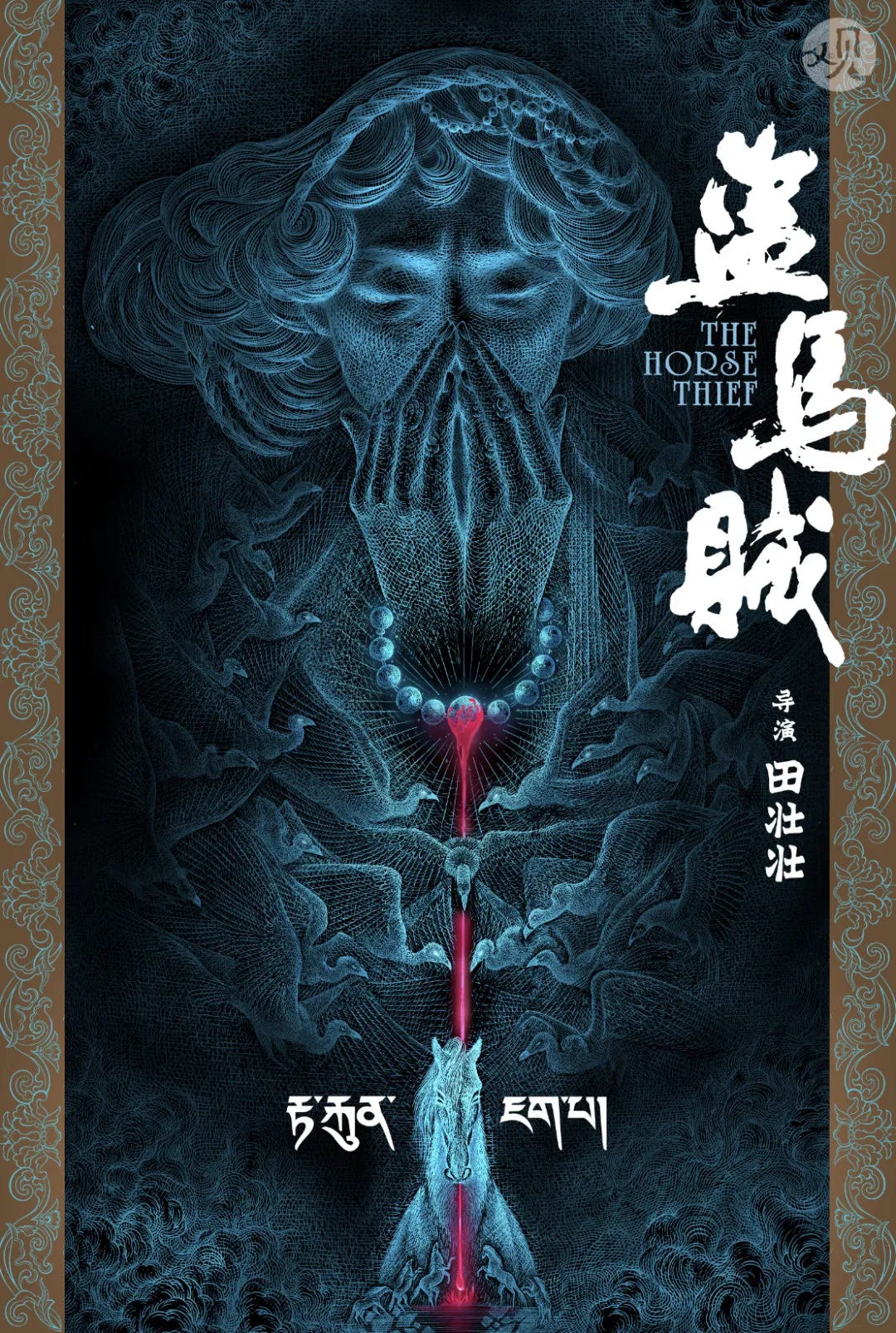
Zhang Yun’s reinterpretation of The Horse Thief poster #YouJian Project#
Formally, all Tibetan-themed films directed by Han filmmakers are officially classified in China as “ethnic minority films.” Although they tell stories of “ethnic minorities,” the minority groups depicted never had the opportunity to present their own languages or images in these works.
Benedict Anderson emphasizes the role of standardized national language in shaping modern nation-states. In films like Serfs, Tibetan actors speak Tibetan during filming, but the dialogue is dubbed into Mandarin for mainland audiences.
With the Reform and Opening-up, artistic freedom expanded. Films like The Horse Thief could initially be shot in Tibetan, but were still dubbed into Mandarin for public release. Bilingual Tibetan cinema gained momentum with the overseas screenings of Song of Tibet, a.k.a. Yeshe Dolma (Xie Fei, 2000) and Prince of the Himalayas (Hu Xuehua, 2006), both presented overseas in Tibetan with original audio.


Stills from “Song of Tibet”
Since 2005: A New Wave of Tibetan Cinema
Following several policy proposals, including the 2004 Opinions on Accelerating the Development of the Film Industry, China’s film industry underwent a major transformation, shifting from being led by individuals and enterprises to an industry-driven model.
In this context, the release of The Silent Holy Stones (Pema Tseden, 2005) marked a new era of Tibetan filmmaking. Its production team was entirely Tibetan, and the film was shot wholly in Tibetan. Although it did not make a major impact in the Chinese market, it received acclaim internationally. One reason is that Han directors often depict Tibetan landscapes as the narrative’s focal point, imbuing them with spectacular, gaze-centered qualities.


Stills from “The Silent Holy Stones”
In contrast, Tibetan directors born and raised locally tend to treat landscapes as narrative background, illustrating aspects of everyday life that are evolving, modernizing, secularizing, and commercializing.
In Ala Changso (Sonthar Gyal, 2018), the director frequently uses close-ups and mid-shots with shallow depth of field to depict Tibetan landscapes. As a result, the majestic mountains, vast grasslands, and snowy plains in the background are often blurred, shifting attention to the characters. While non-Tibetan directors often emphasize how the environment shapes people’s behavior, local Tibetan directors highlight the abandonment or preservation of Tibetan customs and culture.
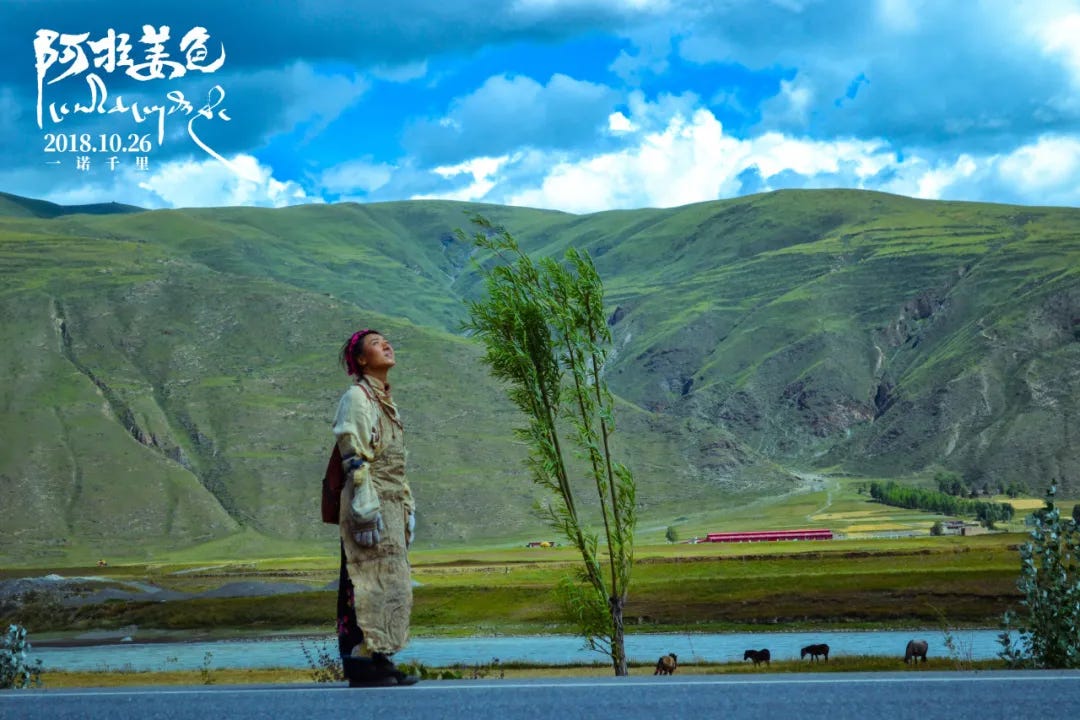
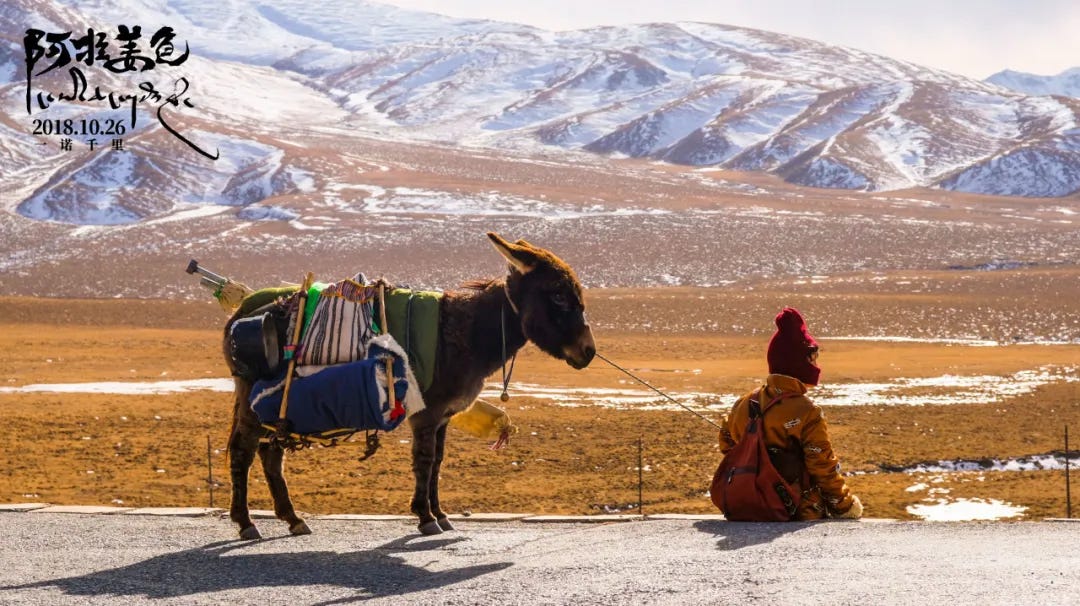
Stills from “Ala Changso”
This contrast is especially clear in Tharlo (Pema Tseden, 2015). The film begins with the protagonist — a shepherd who has spent half his life in Tibet’s mountains — reciting famous quotations in a police station.
The pervasive use of mirrors in Tharlo symbolizes the personal sacrifices made in the process of modernization and the abandonment of innate cultural identity. The film ends with Tharlo returning to the starting point of his journey to find his identity — the police station — but having lost his extraordinary memory, representing a complete loss of cultural memory.
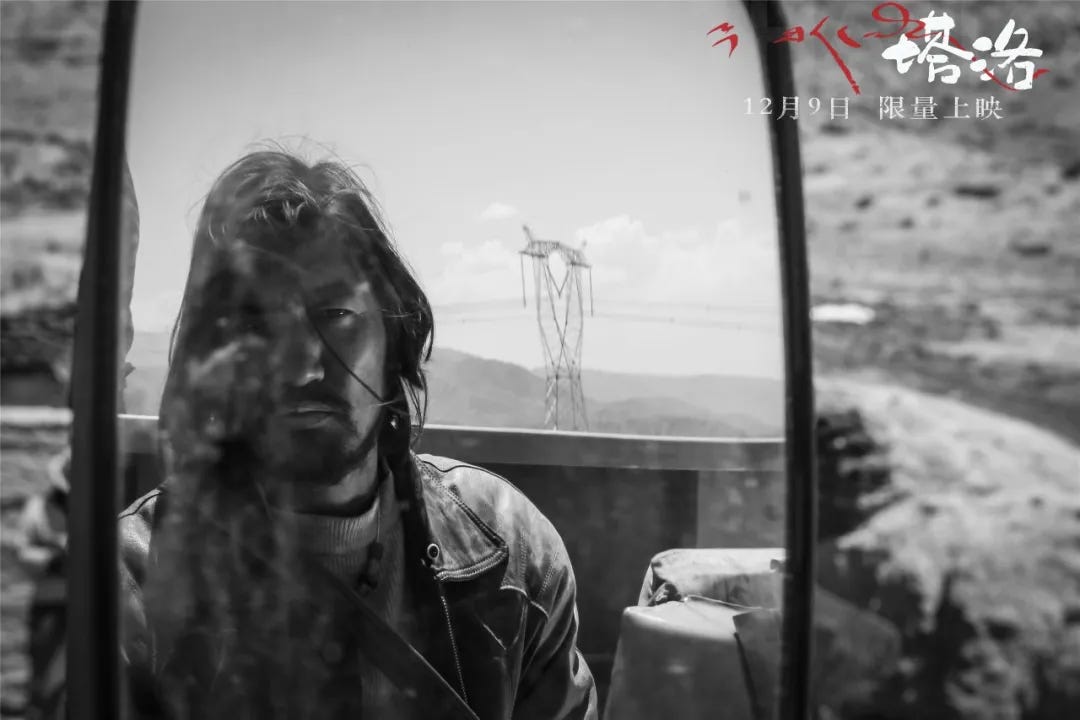
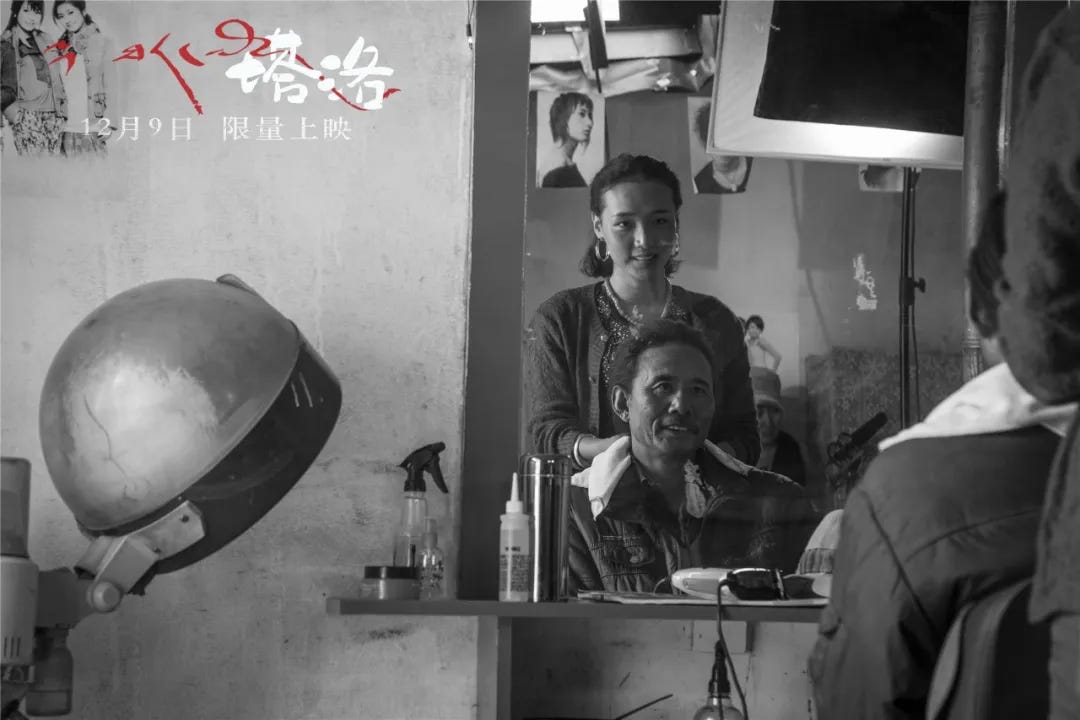
Stills from “Tharlo”
In The Search (Pema Tseden, 2009), traditional Tibetan opera faces the threat of extinction, while The Silent Holy Stones depicts a young monk’s inner conflict influenced by Journey to the West. The protagonist of Balloon (Pema Tseden, 2019) struggles to defend her reproductive freedom under the dual pressures of patriarchy and religious belief. In Old Dog (Pema Tseden, 2011), an elderly man laments his son’s decision to treat the last pure-bred Tibetan mastiff as a pet — using a personal narrative to illuminate broader cultural concerns.
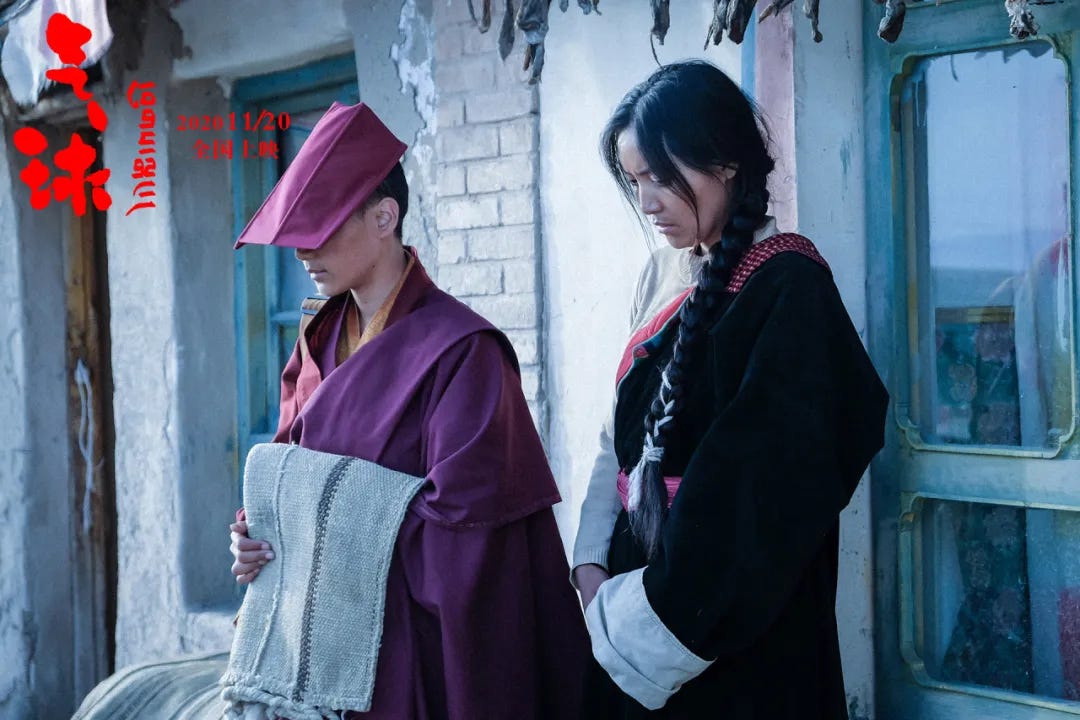
Stills from “Balloon”
Whether portrayed as a barbaric land awaiting rescue or later as a pure land in Han imagination, these films’ narrative perspectives remain rooted in China’s civilizing project. The depiction of ethnic groups in the films mentioned above emphasizes distinctions among them. Ethnic markers such as language, food, clothing, and customs help construct a sense of “us,” while simultaneously forming a sense of “them.”
This mindset, which confines ethnic minority groups within unequal hierarchical relationships, impedes the development of egalitarian perspectives and the appreciation of diversity — key elements of China’s national project. Yet, as Baranovitch suggests, these representational practices pave the way for domination and submission.
Broadly speaking, Gramsci argues that cultural products are shaped by the societies that create them and by the power balance between social groups.
In Robin’s view, this very rough framework is apt for evaluating the status and representation of today’s Tibetan cultural industries — especially film, which can be regarded as cultural products shaped by “active resistance to and rebuttal of economic domination” by the subordinated group. Tibetan cinema of this period focuses on ordinary Tibetan lives, as personal narrative crises reflect broader cultural identity crises across the Tibetan community.
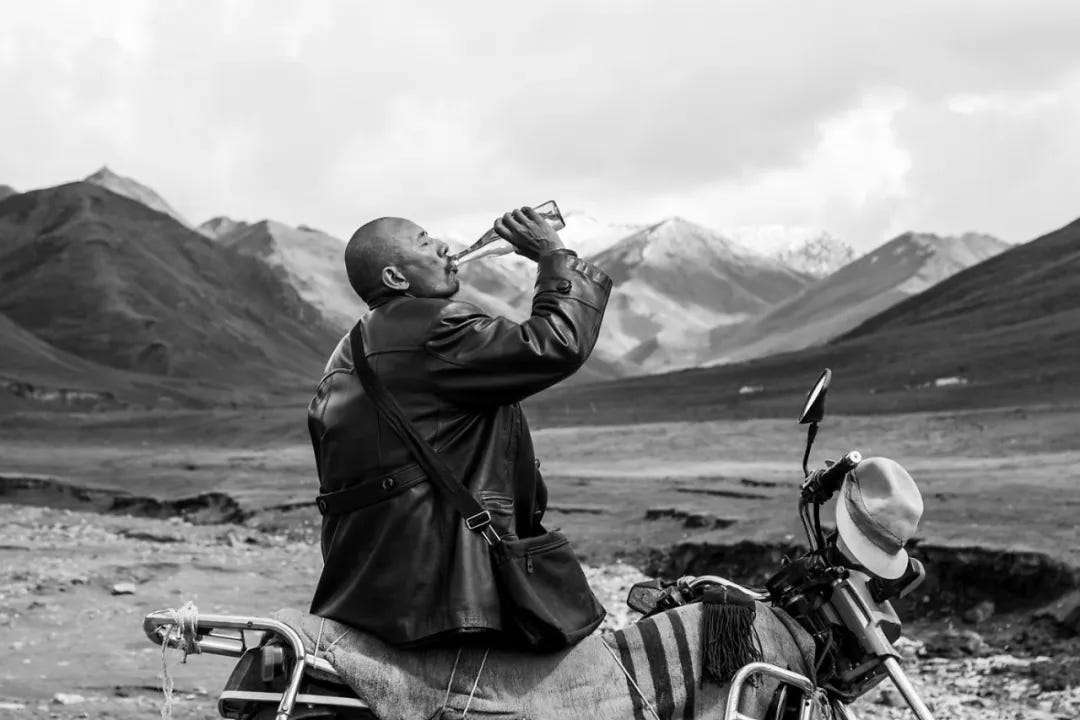
Stills from “Tharlo”
Conclusion
In Chinese cinema, Tibetan directors are reshaping the representation of Tibetans on screen, though they face constant challenges from censorship. As Tony Rayns noted in the case of Pema Tseden (2005), censorship prevents many potential stories from addressing untouchable topics.
Yet, as China’s film industry transformed in the 2000s, the new generation of Tibetan filmmakers is attempting to move beyond traditional ideological constraints and to reflect more directly the realities of Tibetan life and culture. Meanwhile, Tibetan cinema also offers Western audiences a perspective distinct from contemporary Chinese cultural atmospheres, helping reshape Tibet’s image on the international stage.
Author: Zhang Jiu 章久
Editor: Zhang Junma 张骏马
Executive Editor: Liu Xiaodai 刘小黛
Planning: AsideFromBooks Editorial Team 策划:抛开书本编辑部

Translate : Yuqiao Hu
Editor: GD
Meanwhile in Southern Mongolia:
https://open.substack.com/pub/soyonbo/p/direct-connection-or-vpn-how-twitters?r=38fbm3&utm_campaign=post&utm_medium=web&showWelcomeOnShare=false