

Introduction
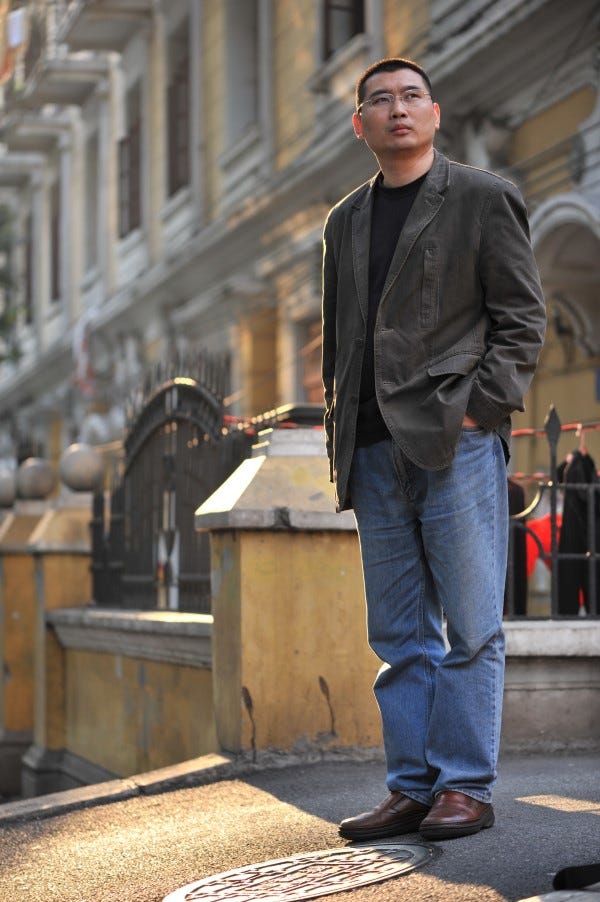
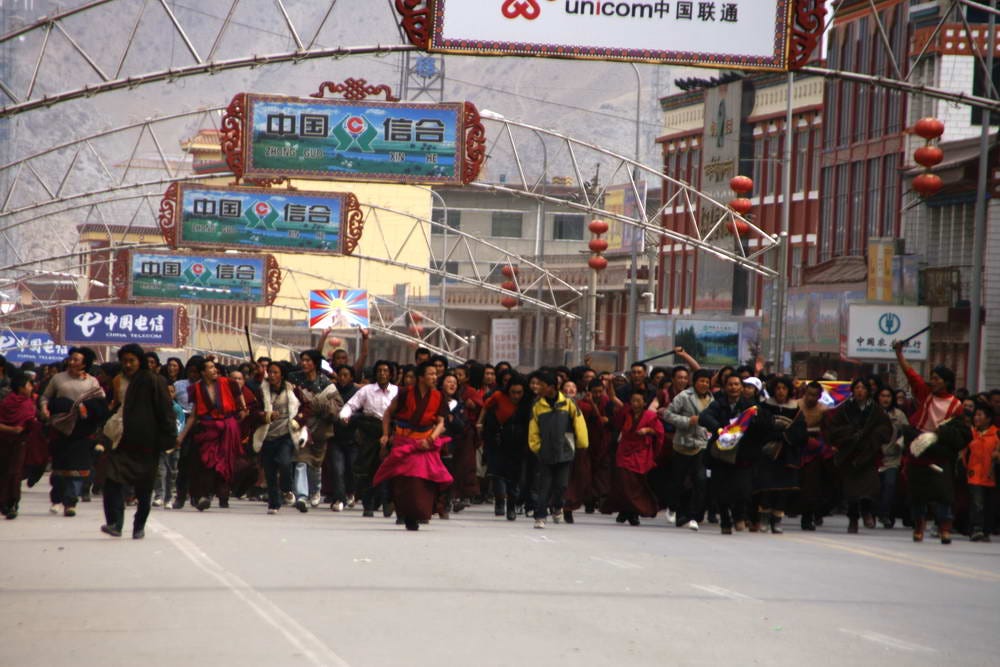
Chang Ping (长平) is a well-known Chinese journalist and commentator who once served as deputy editor of Southern Metropolis Weekly, one of China’s most influential liberal media outlets in the 2000s. He became famous for his sharp, independent writing on social justice and freedom of expression. In 2008, after publishing an article about Tibet that urged more open reporting and reflection on ethnic prejudice, he was fiercely attacked by the Chinese nationalists and then banned from publishing in China. Facing continuous censorship and pressure, Chang was eventually forced into exile. Next, let’s revisit Chang Ping’s article and the events surrounding it in the aftermath of the March 2008 protests across Tibetan regions—referred to by the Chinese authorities as the “3·14 incident.”
They have found that Western prejudice against China stems from a sense of cultural superiority. We should then ask: are the Han people guilty of a similar prejudice toward ethnic minorities born of cultural superiority?
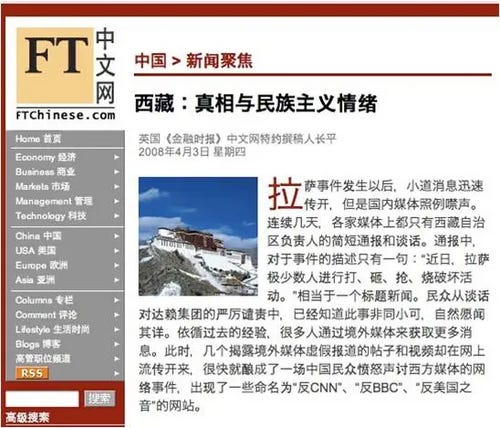
Eighteen years ago, on April 6, 2008, shortly after the protests that erupted in Lhasa that March, Chang Ping, then Deputy Editor-in-Chief of Southern Metropolis Weekly, published an article on www.ftchinese.com titled “Tibet: Truth vs. Nationalist Sentiment.” In the piece, he urged the government to lift reporting restrictions on the recent Lhasa riots, encouraged open public discourse, and argued that Han Chinese harbor cultural superiority and prejudice toward ethnic minorities, much like Western societies. His remarks swiftly drew a firestorm of attacks from nationalist netizens, who branded him a “traitor” and “anti-China.”
The online vitriol was soon echoed by state media. Beijing Evening News condemned his views, stating that his “freedom of speech had reached a terrifying level.” This official branding effectively sealed his fate; Chang Ping was promptly removed from his post and reassigned as Chief Researcher at the Southern Metropolis Communication Research Institute. Two years later, the Southern Media Group declined to renew his contract, citing his “trip to India to meet the Dalai Lama” as the reason. Simultaneously, police launched an investigation into him for “colluding with overseas hostile forces to subvert state power.” His name was subsequently scrubbed from the Chinese internet, rendering his body of work unsearchable within the country.
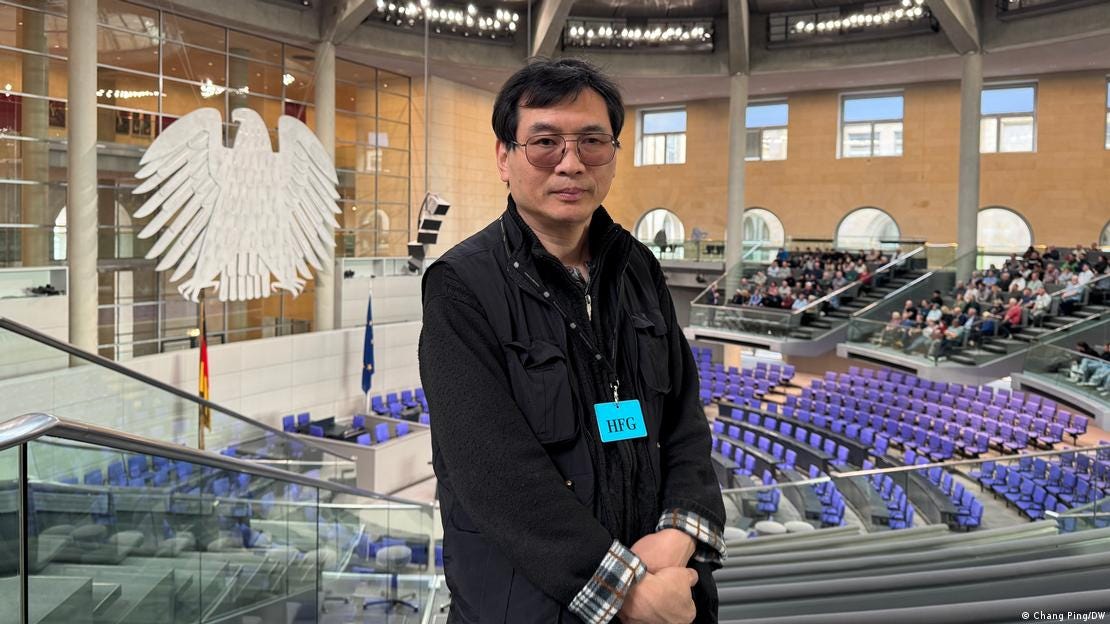
In 2011, Chang Ping left mainland China for Hong Kong, a move that would lead to a permanent separation from his home. After receiving word that he was on a secret arrest list and learning that police had visited his family, he was forced into exile. After traveling through several Southeast Asian countries, he eventually settled in Germany, where he resides today.
Now 57, Chang Ping (born Zhang Ping) grew up during the Cultural Revolution. In 1989, as a sophomore at Sichuan University, he participated in the pro-democracy protests in Chengdu and was briefly detained in the aftermath. Following graduation, he entered journalism and rose to prominence within the “Southern Media Group”—exemplified by Southern Weekly—where he authored acclaimed investigative reports, including “A Review of the Zhang Jun Case.”
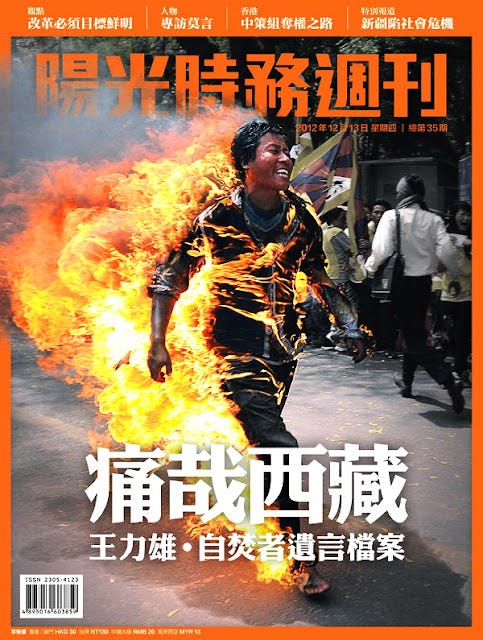
"To mitigate the danger of ethnic conflict, start by listening to the voices of Tibetans who have self-immolated," Chang Ping wrote in late 2012. At the time, he was serving as an editor for the Hong Kong-based iSun Affairs. The appeal appeared in his editorial for the magazine’s 35th issue, titled "The Sorrow of Tibet."
Truth vs. Nationalist Sentiment
Chang Ping publish Date: 2008-04-08
Following the unrest in Lhasa, rumors spread rapidly while domestic media remained characteristically silent in China. For several consecutive days, news outlets carried nothing but brief bulletins and statements from officials of the Tibet Autonomous Region. Descriptions of the event were reduced to a single sentence: “Recently, a tiny minority of people in Lhasa engaged in destructive activities involving rioting, smashing, looting, and arson.” This amounted to little more than a headline. However, judging by the severe condemnation of the “Dalai clique” in official remarks, the public sensed the gravity of the situation and naturally sought further details. Drawing on past experience, many turned to overseas media for information. It was at this juncture that posts and videos exposing “fake news” from foreign media began to circulate online. This quickly snowballed into a massive internet campaign by the Chinese public to denounce Western media, leading to the creation of websites such as “Anti-CNN,” “Anti-BBC,” and “Anti-VOA.”
According to materials compiled by netizens, media outlets in countries including Germany, the United States, Britain, and India committed glaring factual errors in their coverage of the Lhasa incident. From a professional journalistic standpoint, some errors were remarkably amateurish, even suggesting deliberate distortion. Although several outlets issued apologies or corrections, the damage caused by the misinformation was already a fait accompli, making it difficult for the Chinese public to move toward reconciliation. As with any false reporting, the primary victim is the credibility of the media itself; ten thousand truths cannot salvage a single lie. In subsequent reporting on this issue, or other major events in the future, if Chinese media remains unable to report freely while overseas media becomes increasingly suspect, where then will the truth be found?
Some netizens exposing these “fake reports” claim their actions are intended to show the world the “truth” of the Lhasa incident. Logically, this claim is flawed; their actions only reveal the truth that Western media reporting was inaccurate. What actually happened in Lhasa? Most Chinese citizens saw only the uniform news released by the government after several days of information blackout. Regarding any monopolized news release from a single source, I would not dare claim it is false, but neither can I confirm it is true. Indeed, most overseas media outlets labeled it “the truth carefully woven by the Chinese government.” Later, when the government organized foreign journalists to visit Tibet, most of their reports remained untranslated in the domestic sphere. Amidst the heat of the anti-Western media wave, even if they had been translated, few would have believed them.
The anger continues to spread. Although the “Anti-CNN” website declared, “We do not oppose the media itself, only unobjective reporting; we do not oppose the Western people, only prejudice,” the reality is not always so nuanced. Many netizens have veered in the opposite direction, or stood there from the start. They do not truly care about journalistic objectivity; they care about the media’s stance. Prejudice is not necessarily unacceptable; it simply depends on which side you favor. If one truly stood for journalistic values, they would not only expose the false reporting of Western media but also question the Chinese government’s dual control over information sources and domestic media. Undoubtedly, the latter causes greater harm to journalistic integrity than the former. As facts have shown, correcting an outlet’s error is relatively easy—a few patient netizens can manage it. However, protesting against state-controlled news means facing state power, leaving the world feeling helpless.
Some Chinese citizens have realized that false reporting and prejudice are not the most frightening threats. As long as there is an open environment for public opinion that allows for full disclosure and discussion, there remains a chance for truth and justice to prevail. This successful counter-strike by netizens against overseas media is a prime example. Overseas Chinese students were the first to identify the issues and react. Their debunking images circulated freely on BBS forums and went viral on famous sites like YouTube. Had these online platforms been restricted, the process of exposure would have faced immense hurdles.
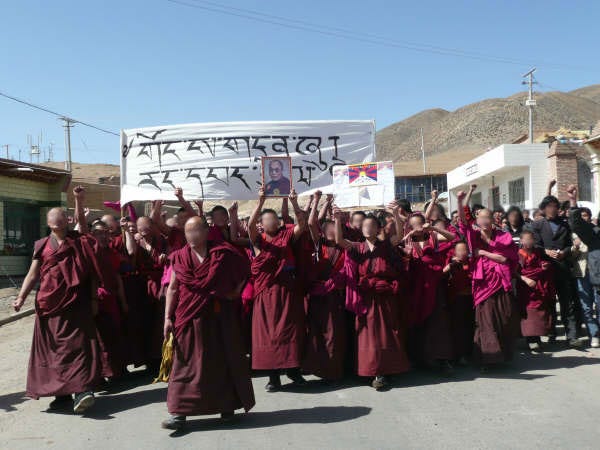
The greatest damage these false reports inflict on journalistic values is that they cause many people to abandon their belief in objectivity and fairness in favor of narrow nationalism. They conclude that “universal values” are merely deceptive tools and that the world is nothing more than a zero-sum struggle for national interest. They even use these errors as justification to claim that lying is “international standard practice,” thereby excusing the lies within their own surroundings or history. Of course, some held these views already; the media incident simply provided them with new evidence to proselytize to others.
However, I also see many Chinese people using this opportunity for broader discussion and deeper reflection. They have found that Western prejudice against China stems from a sense of cultural superiority. We should then ask: are the Han people guilty of a similar prejudice toward ethnic minorities born of cultural superiority? If Western distortions of China stem from a refusal to listen and an obsession with “Orientalist” tropes, as described by Edward Said, then how do we treat our own ethnic minorities? If we use nationalism as a weapon to resist the West, how do we persuade ethnic minorities to abandon nationalism and join the mainstream project of nation-building? The Dalai Lama has asked the government for a re-evaluation of his status; what kind of person is he, truly? Beyond official characterizations, can the media be allowed to discuss this freely to further reveal the truth?
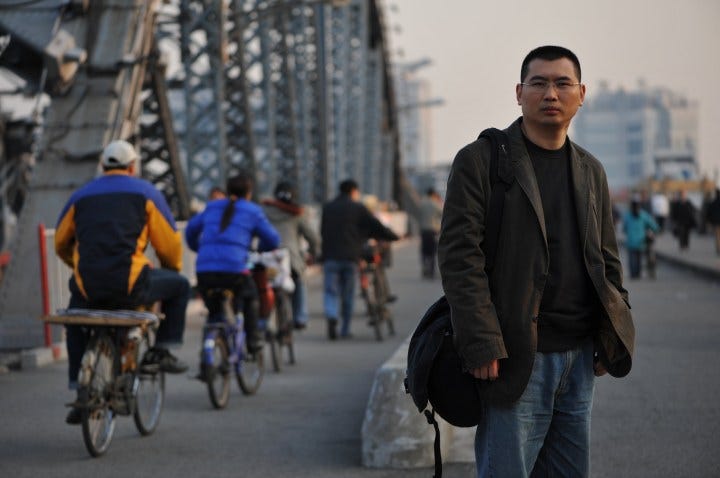
(The author, Chang Ping, is a veteran journalist. He formerly served as the News Director of Southern Weekly and Deputy Editor-in-Chief of The Bund Magazine. He was the Deputy Editor-in-Chief of Southern Metropolis Weekly by the time he published this article.)
“The Rumor-Mongering Freedom of Nandu Chang Ping”
Author: Wen Feng Beijing Daily Online (www.bjd.com.cn)
Date: April 11, 2008
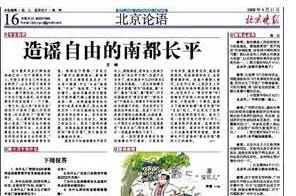
Recently, a person known as “Nandu Changping,” who has been fiercely criticized and denounced by netizens, may once again defend himself in the name of freedom of speech, claiming that online users are trying to deprive him of his right to speak. I usually do not pay much attention to online forums, but this time, due to the intensity of the public backlash, I took a closer look at Changping’s remarks. What I found was that his notion of “freedom of speech” has reached an alarming—even “terrifying”—level.
The core of the statement for which he has been criticized is this: “Freedom of speech naturally includes the freedom to make mistakes, especially the freedom to question power. More frightening than rumors is the deprivation of freedom of speech.” He has even openly labeled this as a universal value. According to this logic, “freedom of speech” would allow one to turn black into white, fabricate facts, distort history at will, speak irresponsibly, and “freely” spread rumors, smear others, and make baseless accusations. This is no different from the hysterical behavior recently displayed by Western media regarding the Tibet issue in China. Is this what freedom of speech means? This is nothing but verbal violence. I have never seen any Western media enjoy such freedom in their own countries, because such “freedom” would infringe upon the rights of others, trample social justice, and abandon even the most basic morality. If this is the “universal value” that Nandu Changping seeks to defend, then it can only be a value devoid of shame.
I did not previously know who Nandu Changping was, but after a brief inquiry, I learned that he is a prominent figure in the Southern Media Group. This is hardly surprising. Newspapers under the Southern Media Group, represented by Southern Weekly, have long prided themselves on being the most “Westernized” publications in China—among the boldest, most insightful, and most profound—and have spared no effort in promoting Western-style “universal values” and “freedom of the press.” It is therefore unsurprising that Changping would hold such views. The reason this incident has caused such a stir is that it comes at a time when Western media are openly fabricating rumors, smearing, and distorting the Tibet issue. Under such circumstances, it is difficult to believe that he or others are merely advocating for “freedom of speech”; it seems they have even cast aside their last fig leaf.
In the eyes of people like Nandu Changping who advocate so-called universal values, anything Western is universal and must be upheld—including the right to spread rumors. This raises an unavoidable question: since modern times, many of the wars and colonial ventures in human history have been initiated by Western countries—where, then, are the “universal values” in these? The existence of people like Nandu Changping and the views they express only demonstrate one thing: those who loudly proclaim and champion “universal values” and “freedom” are merely using them as pretexts to achieve their own ulterior motives. But lies will ultimately remain lies. In the face of facts and truth, the role of lies is only to make people see hypocrisy more clearly, and to ensure that the “universal values” promoted by people like Nandu Chang Ping are rejected by the public.
来源:中国数字时代|中国猛博之十一: 长平——被围殴后,举起双刃剑
相关文章:
翻译:Wilson 编辑文案:Jiangyu 综合编辑:GD