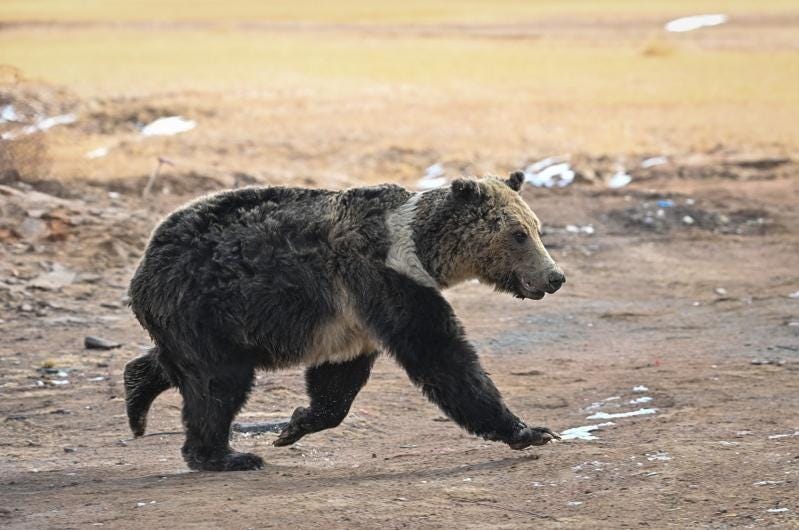
The Tibetan blue bear (Ursus arctos pruinosus) is one of the largest carnivores on the Tibet Plateau and is classified as a Category II protected species under Chinese national law.
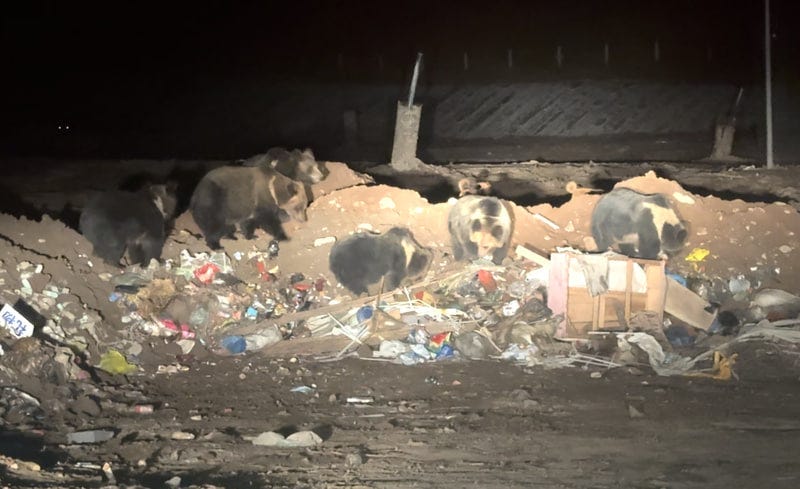
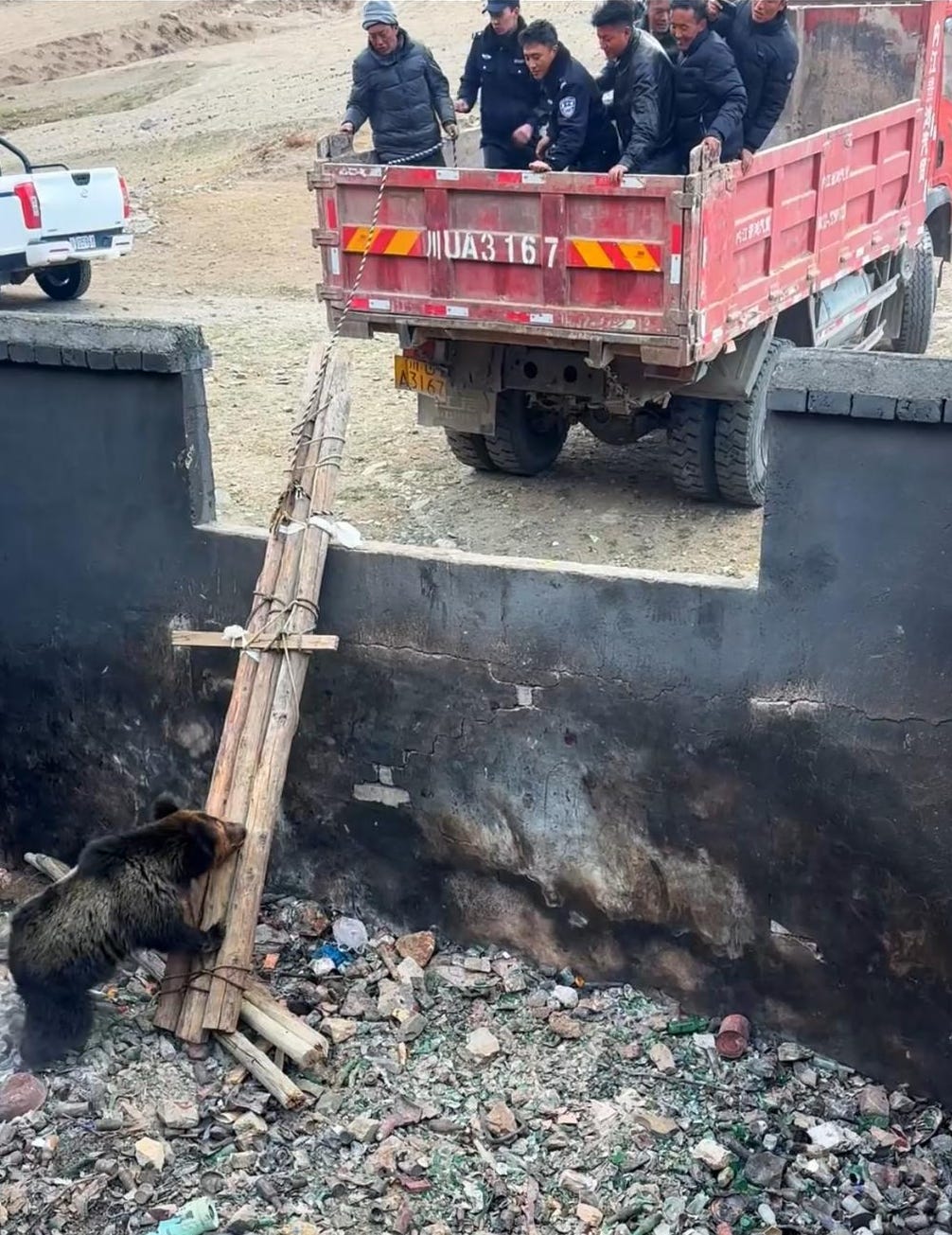
Human-bear conflicts in Tibet have escalated to unprecedented levels in recent times. From bears congregating at a landfill in Banbar County, Chamdo, to repeated and severe livestock attacks across pastoral areas, and even a series of human casualties, frontline herders have been pushed to the breaking point. Meanwhile, online debates over “protection versus culling” have devolved into bitter, entrenched confrontations.
The surge in human-bear conflict over the past two to three decades is no illusion born of the information age. The author of this article, a native of Nyingchi, Tibet, moves beyond the black-and-white framing of conventional debate to examine the root causes of the Tibetan blue bear crisis. At its core, this is a governance vacuum produced by the collapse of an old order and the failure of a new one to take its place — a structural rupture brought on by modernization. What follows is the author’s analysis of the deep structural forces, lived realities, and political philosophy underlying this human-wildlife conflict.
Introduction
The topic of Tibetan blue bears repeatedly intruding into pastoral areas and triggering human-bear conflicts has generated intense discussion online. Many young Tibetans have been sharing videos and framing the issue in terms of human safety and the fundamental right to survival; others, arguing from a wildlife conservation standpoint, have pushed back just as forcefully.
As someone who grew up in Nyingchi and witnessed human-bear conflict firsthand, I find much of this debate detached from Tibetan reality. I would like to offer some tentative thoughts. What few people seem to ask amid all this argument is the most fundamental question: why have conflicts become so acute in precisely the last two to three decades?
The answer does not lie in the bears themselves. It lies in a deep structural rupture: the dynamic equilibrium between humans and wildlife — sustained over centuries — has been dismantled piece by piece by modernization, while the modern governance systems meant to replace it have yet to establish an equivalent balance. The old world is dead; the new world is not yet born. What follows is an account of this governance vacuum crisis.
The Old Order: A Stable Dynamic Equilibrium Under Spontaneous Governance
Before modernization and modern regulation made their forceful entry into Tibetan pastoral society, a spontaneous order refined over a thousand years maintained a dynamic equilibrium between humans and bears. It rested on four interlocking mechanisms.
The First: The “Boundary Deterrent” of Firearms and Occasional Lethal Force. Traditional herders routinely carried firearms and bladed weapons for self-defense. Shaped by Tibetan Buddhist values, herders did not kill carelessly — but the mere existence of these tools sent a powerful boundary signal. A bear that ventured too close would be driven away or shot. This latent threat of lethal consequence inscribed a behavioral red line into the bear population’s collective memory: humans are dangerous, and crossing the boundary carries a price.
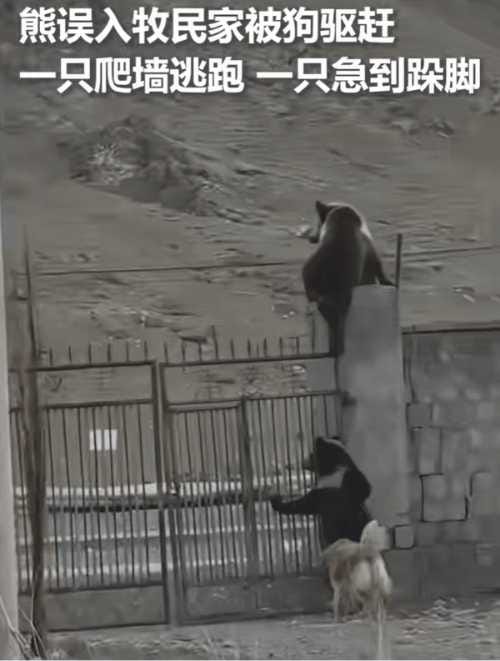
The Second: The “Outer Perimeter” of Domestic Animals. Every household kept large Tibetan Mastiffs whose role was to guard livestock and protect settlements. Packs of these dogs formed the first line of defense around human habitation, significantly raising the cost of any intrusion by blue bears.
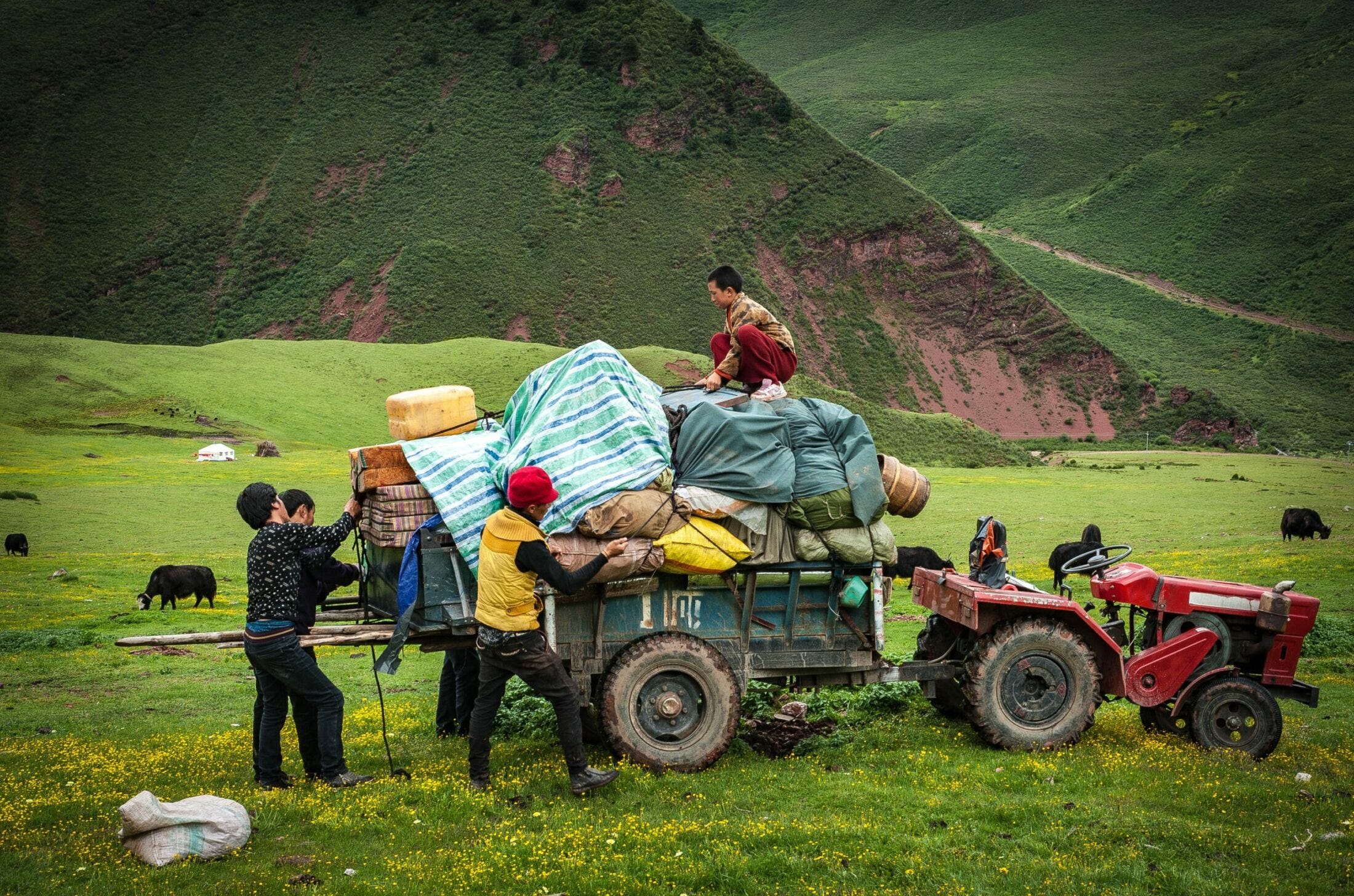
The Third: The “Buffer Space” Created by Nomadic Mobility. Traditional nomadic life followed seasonal rhythms; human presence did not accumulate at any fixed location. To bears, humans were a moving presence. The migrations of nomadic communities left room for wildlife to retreat, creating a natural buffer zone between the two.
The Fourth: The “Flexible Constraint” of Indigenous Religious Ethics. The Buddhist precept of non-killing, in its traditional Tibetan context, was not an absolutist animal-rights doctrine but an ethical framework. It discouraged gratuitous killing while recognizing that defensive action taken to protect life and property was not morally equivalent to wrongdoing. This created a space for judgment between “species protection” and “human self-defense.”
The Dismantling of the Old Order Through Modernization
With the full advance of modernization, all four of these mechanisms were broken down. Four transformations stand out.
Transformation One: The Elimination of Lethal Deterrence and the Collapse of Defensive Perimeters. Following the implementation of firearms control policies, herders’ weapons were progressively confiscated, reducing the potential lethal deterrent against blue bears to zero. Bears are highly capable learners; once they discovered that approaching humans no longer posed a danger, this knowledge was passed on across generations. Simultaneously, policies targeting the collection of stray dogs and restrictions on domestic dog ownership caused a sharp decline in the number of dogs in pastoral areas, destroying the defensive perimeter that had once ringed nomadic camps.
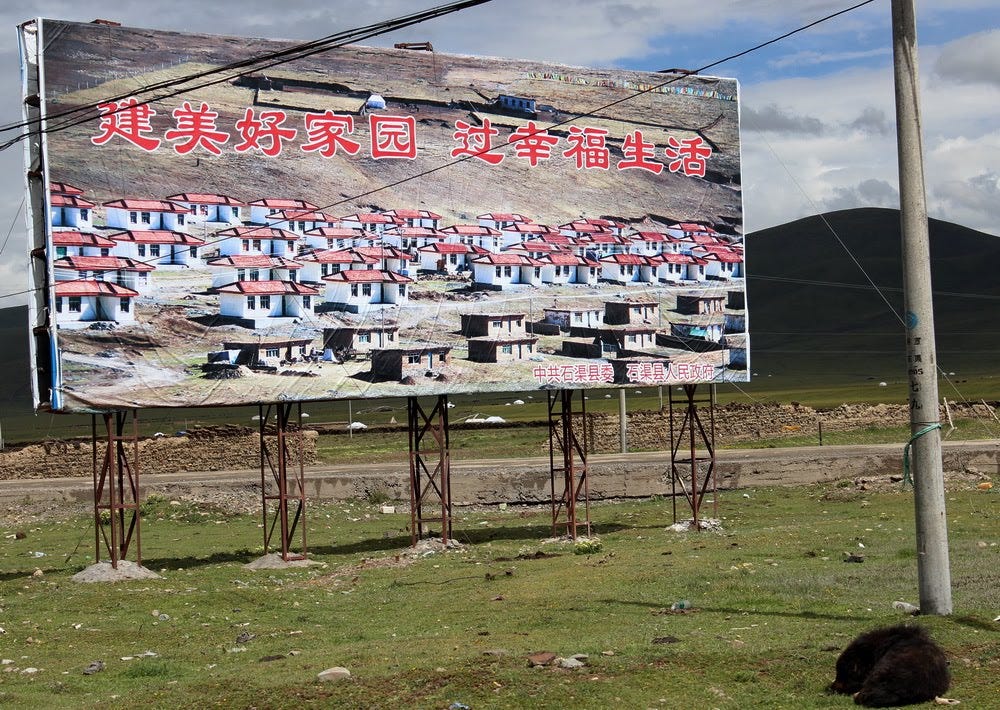
Transformation Two: From Nomadic to Sedentary — The Creation of Fixed Foraging Sites As large numbers of herders transitioned from nomadic or semi-nomadic life to permanent settlement, fixed structures, predictable food storage, and consistent waste production turned human settlements into reliable foraging stations that bears could visit repeatedly for stable energy returns.
Transformation Three: From “Private” to “Public” — The End of Community Self-Help As a Category II protected species, the Tibetan blue bear is shielded by absolute legal protection. Social media has made information from remote pastoral areas instantly visible to the outside world, meaning that any act of self-defense by a herder against an attacking bear now risks legal prosecution and moral condemnation from online audiences. The transparency of the information environment has eliminated the space for community self-help, profoundly deepening herders’ sense of powerlessness.
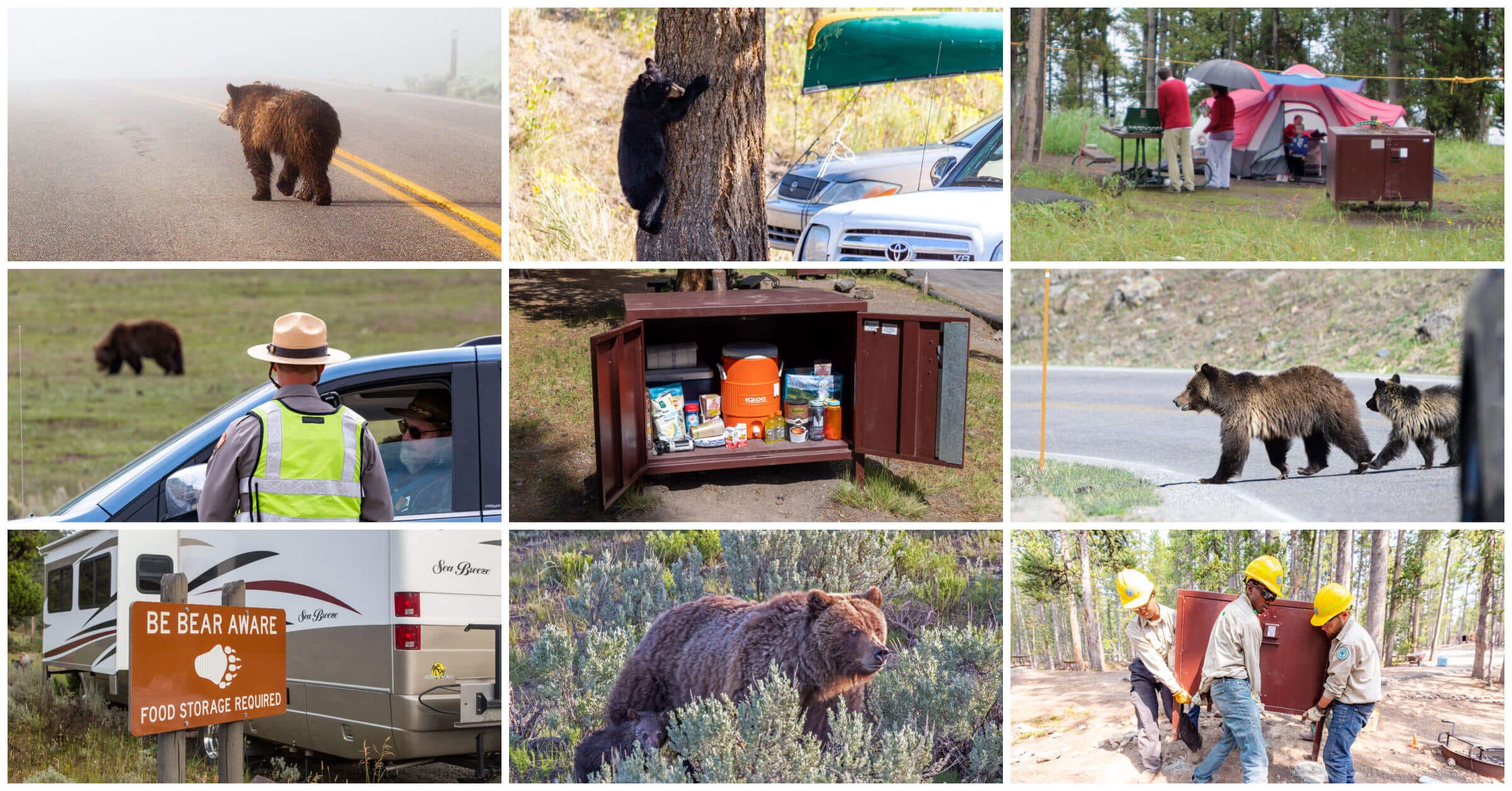
Transformation Four: Tourism Waste and Feeding Behavior Produce Systemic Food Conditioning. The explosion of modern tourism has deposited vast quantities of packaged food waste along roadsides across the plateau. At the same time, large numbers of self-driving tourists actively feed bears in pursuit of viral content. Together, these two factors have produced a catastrophic phenomenon known as food conditioning. Once a blue bear learns to associate human food — obtained from waste dumps or tourists’ hands — with an easy reward, its foraging behavior is irreversibly altered. When it subsequently seeks food from humans and is refused, it escalates to force.

The Cost of Imbalance: Eroded Boundaries and the Testing of Limits
When food-conditioned bears encounter humans constrained by modern legal institutions, the entire ecological equilibrium of the plateau breaks down.
Bears optimize their foraging strategies through trial and error. A first approach to a dwelling, with no gunshot and no barking, teaches the animal that “proximity is safe.” A successful break-in that yields food teaches it that “intrusion is highly rewarding.” Boldness is trained into them through each successive successful incursion. Today, bears face no effective penalty for their escalating behavior, while human self-defense carries legal risk. The result is an inversion of boundaries — it is no longer humans encroaching on wildlife habitat, but bears systematically testing the limits of human space and claiming it as their own.
The Failures of the New Order
In place of the old system, modern institutions offer herders a rigid arrangement: hard legal prohibitions paired with after-the-fact economic compensation. This logic has revealed three fundamental flaws in practice.
Modern Law Eliminates the Spectrum of Graduated Response The law has entirely removed the traditional order’s graduated continuum — from warning and deterrence, to proportional harm, to lethal force as a last resort. Facing a two-hundred-kilogram predator breaking down a door, the legally permissible responses available to herders, such as banging pots or shouting, are simply ineffective against a determined animal.
Compensation Is Reactive and cannot Address Core Fear. Economic compensation is an after-the-fact mechanism. Money may reimburse the market value of a lost animal, but it cannot undo the psychological trauma of daily life under threat, nor address the profound fear for one’s physical safety.
Macro Policy Lacks Local Agency. The components of the old world formed a mutually reinforcing system. Modernization dismantled that system and replaced it with legal prohibitions and compensation procedures for herders — as if asking frontline communities to achieve enormous objectives with minimal resources. It is puzzling that in a governance culture long defined by the principle of “seeking truth from facts,” the responsiveness of the relevant authorities has been so slow. Should officials not be learning from neighboring Qinghai Province — specifically, the community co-management experiments underway in the Sanjiangyuan National Park?
Structural Inequality of Voice and the Transfer of Costs
Stepping back, this situation reveals a profound asymmetry of power and voice: the state is the agent of protection; universities and research institutions are the producers of knowledge; urban publics provide the moral oversight.
Yet the herders — those who have lived here for generations and who possess genuine local knowledge — have been stripped of any meaningful role in decision-making. Netizens thousands of miles away can moralize on social media about herders’ failure to cherish wildlife, precisely because they have never been jolted awake at three in the morning by the sound of a two-hundred-kilogram beast breaking down their door.
Urban residents enjoy the moral gratification of news reports about recovering wildlife populations, while Tibetan herders on the frontlines of survival bear the full, unmediated weight of the real costs and threats to their lives. The long-term benefits of ecological conservation are shared by all of society, while the immediate and devastating costs are borne exclusively by its most vulnerable members. This is not ecological governance — it is a system of cost externalization produced by the unequal distribution of knowledge and power.
Conclusion: Rethinking the “Governance Vacuum” of Modernization
The intensification of human-bear conflict is, on the surface, a clash of values. In substance, it is a symptom of the governance vacuum generated by the forceful imposition of statist modernity.
Rather than stopping at the circulation of emotion and outrage, I hope Tibetan youth will think seriously about these deeper questions. Human-bear conflict is only one symptom of the broader difficulties of Tibet’s modernization: traditional forms of social organization, livelihood practices, and indigenous knowledge systems have been casually labeled “backward” and dismantled in the utilitarian calculus of development, while the modern institutions erected in their place are often blunt and rigid, lacking personnel who combine contemporary expertise with genuine local understanding. The gap through which the Tibetan blue bear now enters the herder’s home is the most visible crack torn open by modernity's rupture of the traditional order.
A truly effective new order requires legal flexibility in grassroots implementation, deep community participation, and genuine respect for the people who live here. We must not approach tradition with the arrogance of those who would sever history without a second thought. Political philosophy has long taught us that modernizations that radically rupture traditional continuities tend to exact high costs — the pursuit of rapid institution-building is not an unqualified good. Governance that endures is governance that respects historical evolution rather than cutting it off: governance that is whole, organic, and natural.
The above represents one person’s view. Comments and criticism are welcome.

Editor’s Addendum
Rebuilding an effective order requires breaking through on at least three fronts: opening legal space for graduated deterrence; restoring local herders’ autonomous authority to manage bear encounters; and addressing the source of food conditioning by improving waste management and developing modern bear-resistant infrastructure. Approaches along all three of these lines have reached considerable maturity abroad, and partial precedents already exist in Qinghai. There is no reason for Tibetan communities elsewhere to continue waiting.
原文:洛桑顿珠:藏马熊的问题是一个共性的问题 |论被忽视的藏地新旧秩序的失衡的问题
大河报:夜半叩门的藏马熊:入户夺食、杀畜伤人,人熊冲突何解?
Author: Lobsang Dondrub
Editor: Ginger Duan